

Ken Nwadiogbu is having the kind of year that shifts a career from promising to undeniable.
The Nigerian-born, London-based artist has won the 2026 Young Generation Art Award, walking away with €10,000 and a solo exhibition at Frieze London, one of the most influential contemporary art platforms in the world.
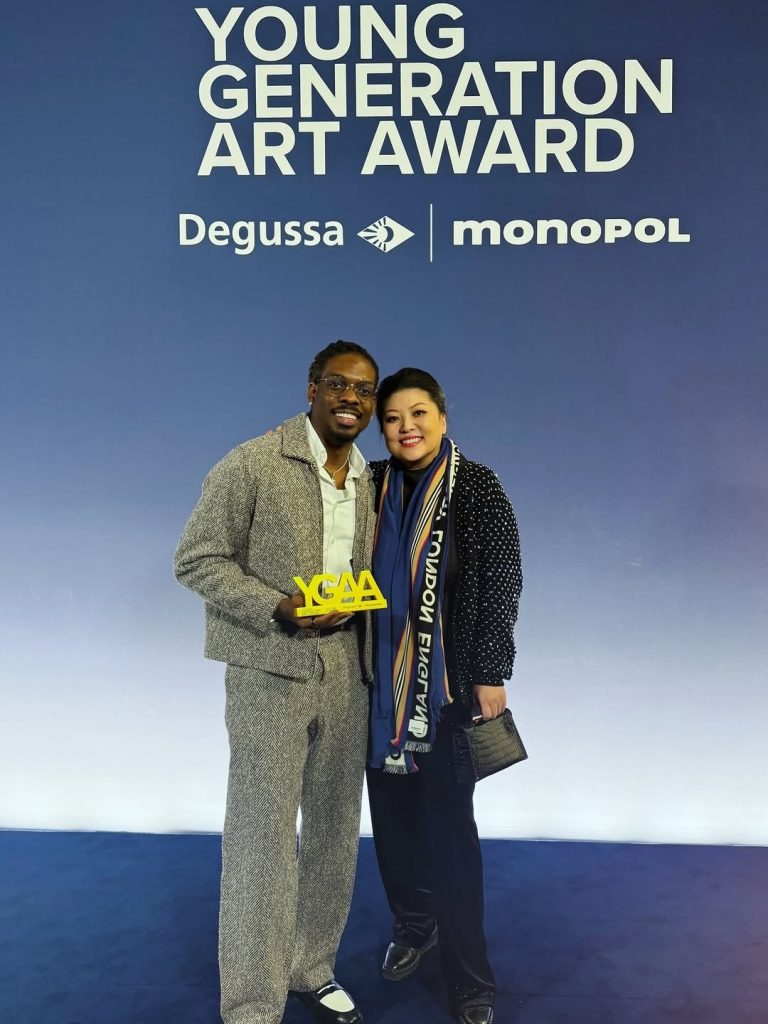
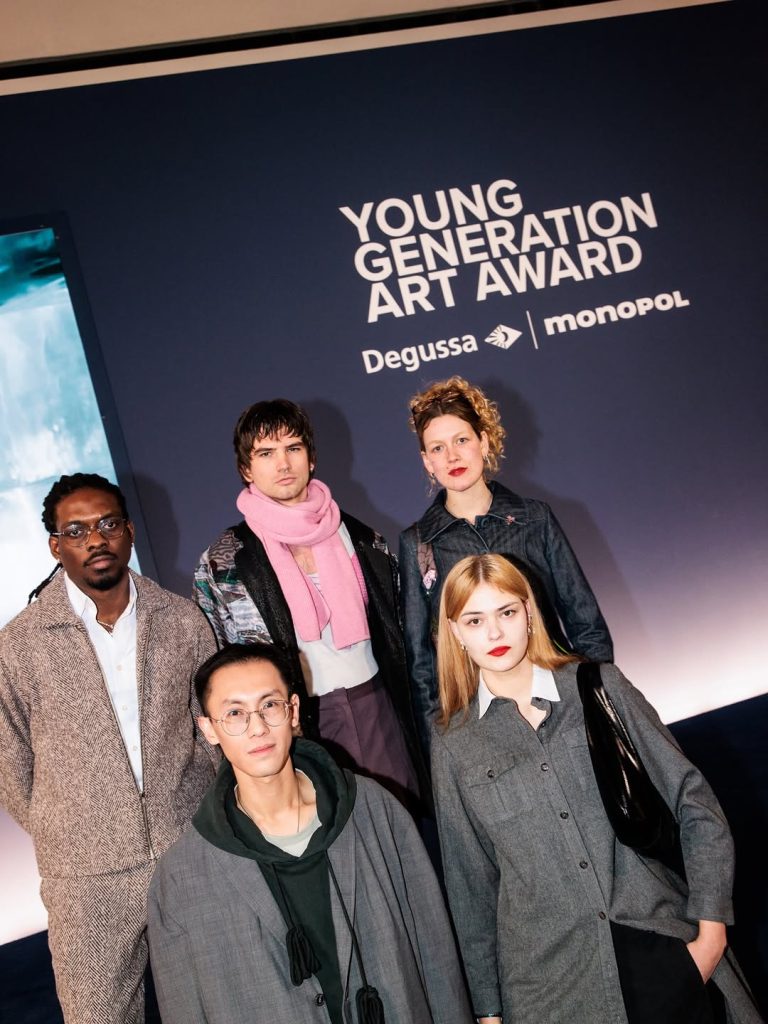
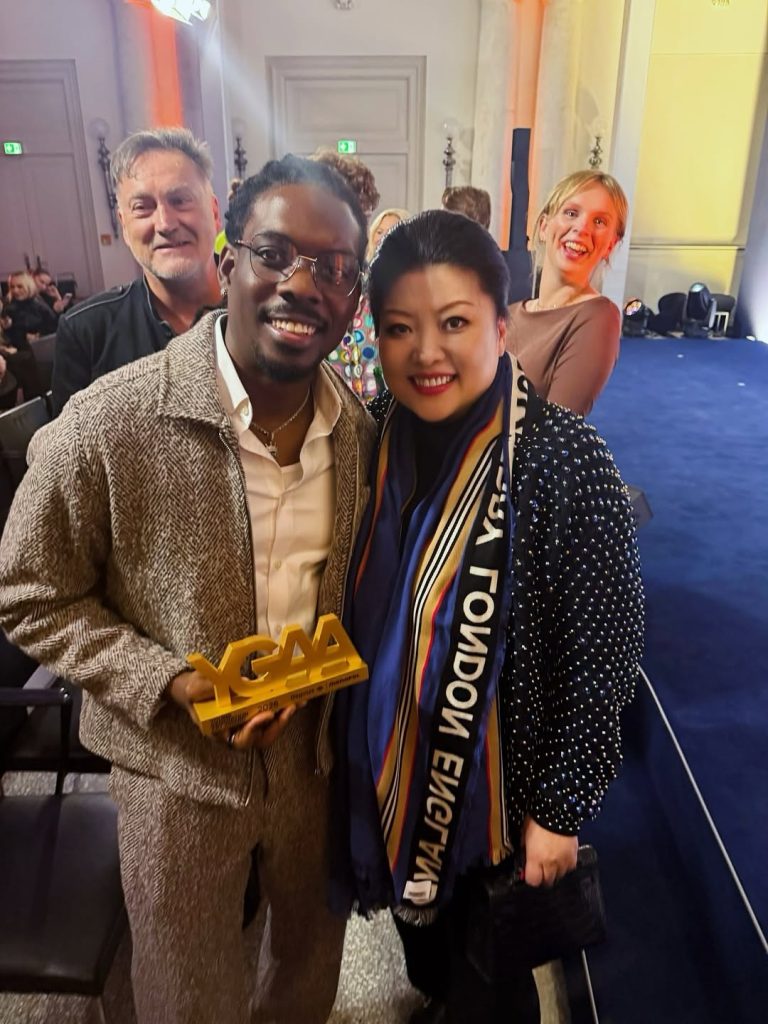
Selected from a shortlist of five artists out of nearly 400 applicants, Nwadiogbu received the award at a ceremony held on 19 February 2026 at the Hotel de Rome in Berlin. Presented by Degussa CEO Christian Rauch, the prize created by Degussa in partnership with Monopol magazine is designed to spotlight emerging artists at the earliest stages of their careers. With hundreds of applicants in the running, the recognition carries weight.
The win comes with more than prestige. In addition to the €10,000 prize money, Nwadiogbu will stage a solo exhibition at Frieze London 2026 and embark on a one-year travelling exhibition across multiple international locations. For an artist whose work already circulates globally, this is amplification at scale.

If you are just discovering him, here is the context. Nwadiogbu studied at the University of Lagos before earning a postgraduate degree from the Royal College of Art in London but his journey did not begin in lecture halls. He started as a self-taught artist without formal training, and at one point intended to pursue civil engineering instead. That pivot now reads like destiny rerouted.
He is the founder of “Contemporealism,” a movement he describes as existing between hyperrealism and contemporary social commentary. His signature bright yellow portraits powerful, hyper-detailed depictions that honour members of the Black community have become instantly recognisable. The colour is not decorative; it is declarative. It reframes visibility, identity, and presence against stark backdrops.
His résumé already includes exhibitions at the Royal Academy of Arts, Somerset House, Hauser & Wirth, and the Saatchi Gallery institutions that shape global art conversations. This latest award doesn’t introduce him to the scene; it confirms his position within it.
For an artist who once taught himself the fundamentals, winning a Europe-based award with nearly 400 contenders feels less like a breakthrough and more like a continuation.