

LA MODE: Fashion Meets Art Announces Designers and Artists for UK Showcase

LA MODE: Fashion Meets Art heads to Chichester Cathedral, UK, on July 31 with leading fashion designers, visual artists, live performances, exhibitions, and networking opportunities.
Marina Abramović Makes History with Solo Show at Gallerie dell’Accademia Venice
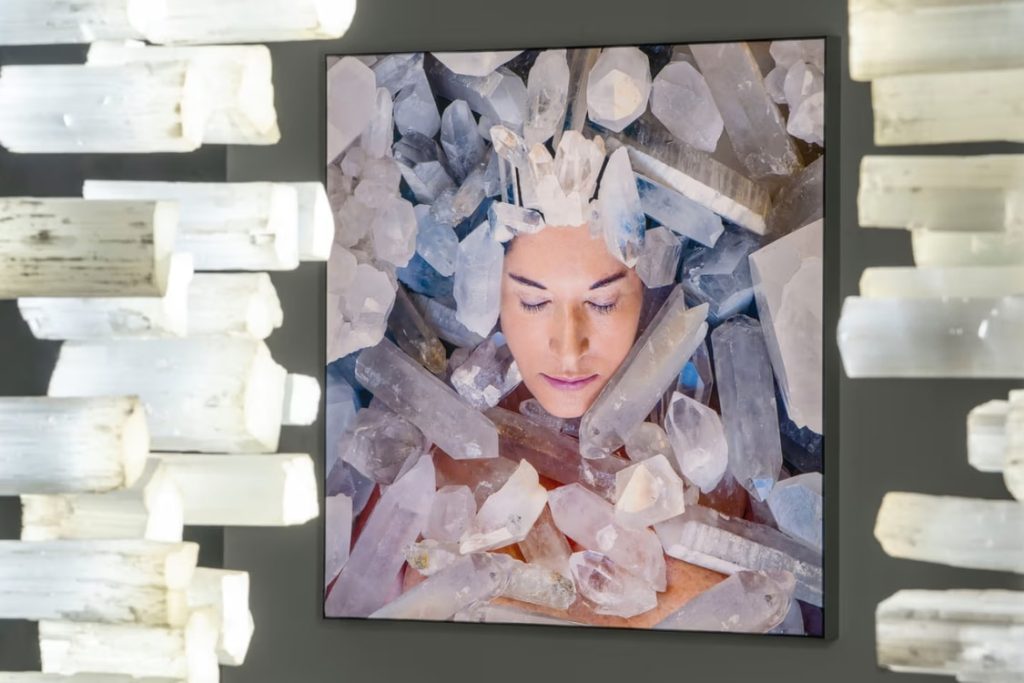
Marina Abramović presents Transforming Energy at Gallerie dell’Accademia, the first major solo exhibition honoring a living woman artist in the institution’s history.
AFTER THE RAINS VIRTUAL INTERNATIONAL EXHIBITION CONCLUDES SUCCESSFULLY
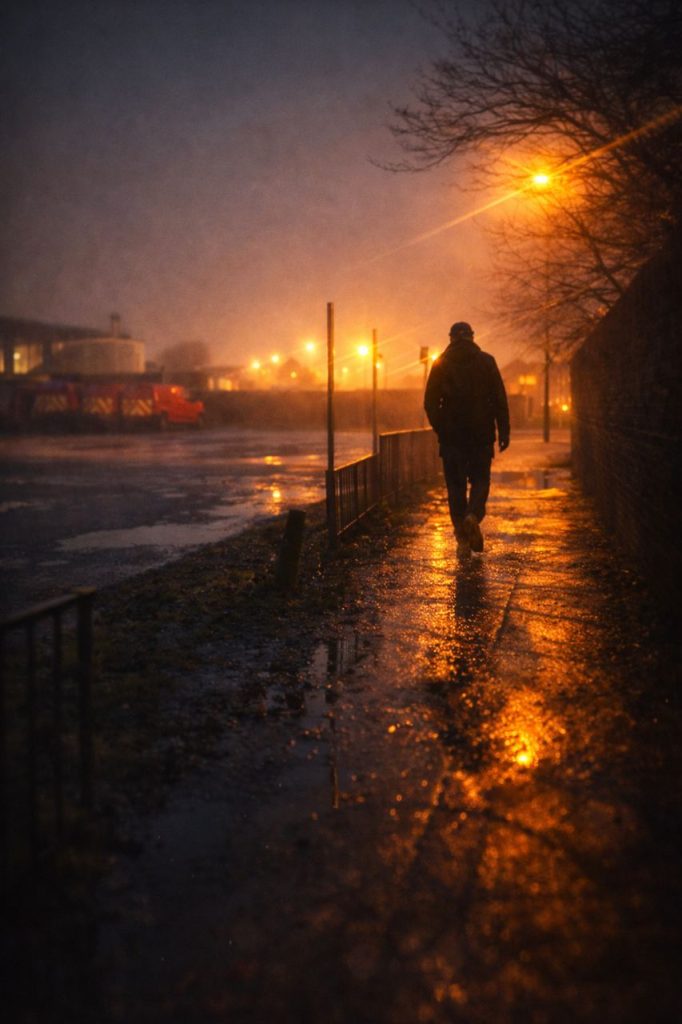
The virtual international group exhibition After the Rains concluded successfully in April 2026, following its run from April 1 – 30, 2026, as a UK-based online exhibition that brought together artists and audiences from different parts of the world in a powerful exploration of resilience, renewal, and transformation. Through a diverse collection of contemporary artworks, the exhibition examined the experiences, emotions, and lessons that emerge after periods of difficulty and change. The virtual format enabled viewers from across various countries to engage with the works, creating a global platform for artistic exchange and meaningful dialogue. Among the featured artists was Nigerian visual artist Orisakwe Emmanuel Chizitere, whose contribution added depth to the exhibition’s narrative of hope and perseverance. His work was showcased alongside those of Agata Henderson, Amanda Lebus, Anthonia Nnenna Ndukauba, Beth Neal, Deborah Abosede Ibeme, Elizabeth Roberts, Erika Loch, Evangelia Hamilton, Georgia Cadden, Georgina Zafeiri, Gurmant Kaur, Hector Geoffrey Dokopoulos Hamilton, Justin James, Kayla Michelle, Lin Ye, Lior Locher, Louise Heaton, Monika Tkaczyk, Mr Bruiser, Obiora Vincent Nwankwo, Paul Durber, Phil Bixby, Sean BW Parker, Sepideh Shagholi, and Vans Mead. Together, the artists offered unique interpretations of the exhibition theme, presenting works that spoke to healing, reflection, recovery, and the enduring strength of the human spirit. Despite differences in style, medium, and cultural background, the exhibition revealed a shared commitment to storytelling through visual art. The success of After the Rains demonstrates the growing importance of virtual exhibitions in connecting artists and audiences beyond geographical boundaries. By creating a digital space for creative engagement, the exhibition fostered meaningful conversations while celebrating the diversity and richness of contemporary artistic practice. As the virtual doors close on After the Rains, the exhibition leaves behind a lasting impression of hope, resilience, and the remarkable ability of art to unite people across cultures and continents.
The Room Deborah Abosede Ibeme Enters and What the Rooms Say
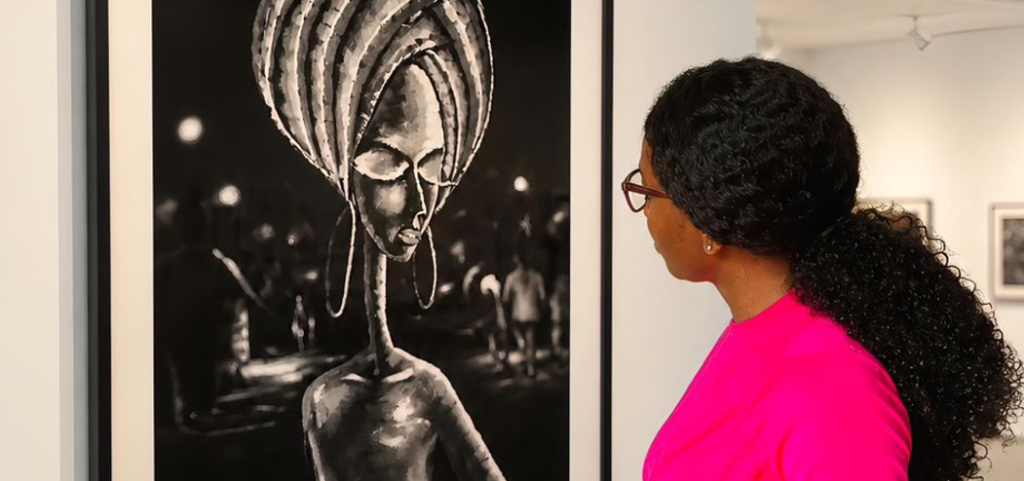
An exhibition is not a display, but a declaration. The choice of what to show, where toshow it, and when are not just logistical decisions, rather, they are a statement and anargument. And an artist’s exhibition history, read carefully, tells you not just what theyhave made but what they believe the world needs to receive.Most people encounter an artist’s exhibition record as a list. Dates, venues, titles,locations, the skeletal administrative record of a practice. Read that way, it tells you verylittle. It tells you where someone was and when. It does not tell you why, neither does ittell you what the choice of Oghara over Lagos meant, or what it cost to bring a full bodyof work to London without softening a single frame, or what it means that aphotographer five years into a professional practice has shown her work on fourcontinents and in every significant region of her own country. You have to read Deborah Abosede Ibeme’s exhibition history as the argument itactually is in order to understand each show not as a career milestone but as adeliberate act of cultural placement. That understanding reveals something essentialabout the intelligence behind the practice, as she does not exhibit randomly oropportunistically. She exhibits with intention. Every room she has chosen to enter hasbeen chosen because entering it said something specific that she needed said, in thatplace, at that time, and to that audience.The exhibition record, read this way, is itself a work of art. It has a shape and a thesis. Ithas been built with the same deliberateness that she brings to every frame she selectsfrom the hundreds she does not. 2021: The Digital OpeningDigital Contemporary Photography Showcase — Uganda (Virtual Exhibition,December 2021)Her public exhibition life begins in a screen, a virtual showcase hosted in Uganda thatplaced her emerging practice within a pan-African digital creative community at the verymoment when the pandemic had forced the art world to reckon seriously with digitalexhibition as a legitimate rather than a compensatory format.This is worth noting not because the exhibition was her most significant but because ofwhat the choice of participation revealed: from the very beginning, Deborah understoodthat the geography of visibility is not limited to physical rooms. The virtual exhibition wasnot a fallback for someone who could not yet access gallery walls. It was an entry pointinto a continental conversation, a way of establishing, before the physical exhibitionsbegan, that her practice was already in dialogue with a broader African creativeecosystem.The Rising Talent Recognition from the Niger-Delta Creative Arts Platform the sameyear confirmed that the regional creative community had already identified her assomeone to watch. The recognition and the exhibition together mark 2021 as the yearthe practice announced itself in digital space, with the patience of someone whounderstood that the foundation matters more than the speed of the build.2022: The Year She Walked Into the RoomNew African Voices — Nairobi, Kenya (Group Exhibition, August 2022)“Where Ancestors Still Breathe” — Nike Art Gallery, Lagos (Solo Exhibition,March 2022)She had two exhibitions in 2022, one physical solo, the other an international groupshow. “Where Ancestors Still Breathe” at the Nike Art Gallery in Lagos was, by any honestmeasure, an audacious debut. Nike Art Gallery is not a space that accommodatesmediocrity or rewards ambition that exceeds ability. It is one of Nigeria’s most seriouscultural institutions, a place with a history of presenting significant work by artists whosepractices have defined Nigerian fine art across generations. For a photographer in onlyher second year of professional work to mount a solo exhibition there was definitelymore than just a simple achievement, much more like a statement of earned presencerather than a premature exposure. The title of the exhibition itself is drawn from the cosmological reality of Niger Deltaspiritual tradition, its works examining the living, breathing presence of ancestralconsciousness in contemporary African life. It established the philosophical territory thatall subsequent series would navigate and deepen. Viewers encountered something theyhad not anticipated: not emerging work finding its footing but fully formed work inconfident possession of its own language. The response was the particular kind ofstillness that precedes genuine recognition, more like the moment before words arrive,when the body has already understood something the mind is still catching up to. “New African Voices” in Nairobi the same year placed her practice in its continentalcontext for the first time, situating the Niger Delta visual vocabulary within the broaderlandscape of contemporary African creative production and establishing, throughparticipation, that what she was building was not a local practice with national ambitionsbut a nationally rooted practice with continental ones. The UBA Merit Award for Creative Conceptual Portraiture, also received in 2022,completed the year’s picture: critical institutional recognition in Nigeria, internationalgroup exhibition presence in East Africa, and a solo debut that would have satisfiedmost artists as the culmination of a long career’s work. She was in her second year.2023: Returning to Ground, Reaching Further“Threads of the Unspoken” — Onobrak Art Centre, Ughelli, Delta State (SoloExhibition, August 2023)Afrocentric Perspectives — New York, USA (Group Exhibition, July 2023)Visual Storytelling Africa — Lagos, Nigeria (Art Showcase, November 2023)The geography of 2023 is deliberately wide and deliberately specific simultaneously.New York in July. Ughelli in August. Lagos in November. The sequence frominternational megacity to Delta State town to Nigerian commercial capital is the year sheestablished, through physical practice that her exhibition circuit was going to operate onher own terms rather than the industry’s default assumptions about which rooms matterand which ones don’t. Ughelli is not a city that appears frequently in discussions of Nigerian fine art. It doesnot have the gallery density of Lagos or the institutional weight of Abuja. It is a DeltaState city with a specific character and a specific community, the community whosecultural heritage Deborah’s work is, in significant part, documenting and honoring. Tobring “Threads of the Unspoken” to Onobrak Art Centre in Ughelli after showing in theUnited States was not a step backward on a conventional career ladder was theexecution of a philosophy: that the most important rooms are not always the mostprestigious ones, and that the work owes its first
An interview with Deborah Abosede Ibeme on Belief, Beauty, and What Photography Owes the People Inside It

From the very limited time and moment shared with Deborah Abosede Ibeme, it isdistinguishable the kind of artists who make work, and the ones who hold positions.Deborah is firmly, uncompromisingly the second kind. The Nigerian fine artphotographer whose solo exhibition “Rituals of Presence” is currently showing at theAfrican Centre, London does not simply produce images of African women. She hasbuilt, over five years of deliberate and philosophically rigorous practice, an entireframework for what photography is, what it owes its subjects, and what it demands ofthe people who look at it. We sat with her to go inside that framework and to understandthe beliefs that are driving one of the most serious fine art practices in contemporaryAfrican photography. La Mode : There is a question that finds every serious artist eventually, not what isthe work about, but what is it for. Have you answered that question for yourself? Deborah: I did answer it before I could make anything worth making.Photography, for me, is a vessel. Not a medium. A vessel. The distinction matters. Amedium is something you work with. A vessel is something that exists to carrysomething else, something that derives its significance entirely from what it holds andwhere it delivers it. When I pick up a camera, I am not picking up a tool for makingimages. I am picking up something that I am responsible for filling with the right contentsand delivering to the right place. The contents, in my case, are three things: memory, dignity, and transformation. Thoseare not casual words. They are the specific obligations the work carries. Memory,because the cultural knowledge I am working with, the cosmological traditions of theNiger Delta, the specific symbolic vocabulary of Ijaw and Urhobo spiritual life, lives inthe body and in practice before it exists anywhere else. When the body stops and thepractice ceases, the memory goes with it unless someone has held it in another form.Dignity, because the women I photograph have not always been photographed with it.The history of the camera in Africa is complicated in ways that I carry consciously everytime I set up a frame. And transformation, because the photograph that holds memoryand restores dignity does not leave its viewer unchanged. It asks something of them. Itrequires them to see differently. That asking and that requirement, is the transformation. La Mode: You have said that you don’t photograph women. You photograph whatwomen carry. Can you unpack that? Deborah: It is a rejection of the portrait tradition in its conventional sense, where thesubject is the endpoint, the thing the photograph is “of”. In my framework, the subject isnot the end but the beginning. The woman in the frame is not the subject in thephotographic sense but the carrier. She is the living repository of something the imageis trying to reach, something older and deeper and more important than any individualface. What women carry, in the specific context of my practice, is the accumulated weight of aculture’s deepest knowledge. The memory of how things were done. The rituals, theceremonies, the forms of adornment and communication and spiritual practice thatconstitute a community’s self-understanding across generations. They carry the grief ofwhat has been lost and the resilience of what has survived. They carry, in their posturesand their gestures and their faces, evidence of everything they have endured andeverything they have maintained despite the endurance.To photograph this carrying, to make it visible with the full technical and conceptualauthority I can bring to the work, is what the work owes its subjects. Not flattery. Noteven beauty, though beauty is present. The work owes them accuracy. The accuraterendering of what they carry, in a quality of light that makes the carrying look like what itis: a form of strength so complete it has become invisible to the culture that depends onit. La Mode: And what does the work not owe them? Deborah: Comfort. The work does not owe its subjects the version of themselves that iseasiest to receive. It does not owe them the performed grace of women who know theyare being watched and have learned to manage the watch. It does not owe them theflattering surface.The work owes them truth. And truth, in my practice, is more demanding and morehonoring than any of the alternatives. When a woman stands in front of my camera andwhat emerges is the full, unmanaged reality of who she is and what she carries, thenthat is a more profound form of respect than any beautiful lie I could ever construct. La Mode: The quality of stillness in your images is something every serious viewernotices immediately. But it reads as something more than a compositional choice. Deborah: Much more even. Stillness, for me, is not the absence of movement or theabsence of expression. It is the presence of concentration. The stillness of a containerholding something under pressure. The stillness of water before it floods. When people say my photographs are still, I hear a compliment they don’t know they’regiving. Because stillness is not absence. Stillness is the whole conversation.In the contemplative traditions of West African spiritual life that inform my work, stillnessis the form of activity. The state in which the most important things become audiblebecause the noise has been removed. The great portrait, whether painted orphotographed, is the one in which the subject appears to be thinking, in which thestillness contains an interior life so palpable it makes the viewer lean forward. I havemade the creation of that quality the central technical and philosophical ambition of mypractice. La Mode: Which is why the silence on your sets is deliberate. Deborah: The silence I create on set is not a working preference. It is an instruction toeveryone in the room, including the subject. It says: what is happening here issignificant. It deserves this quality of attention. Nothing is incidental. The subject doesnot need to perform for me. She does not need to give me anything. I am here to findwhat is already true about her and make it visible. The silence is the condition in which itbecomes possible to
Presence Beyond the Physical: Rituals of Presence by Deborah Abosede Ibeme Leaves a Lasting Mark on London
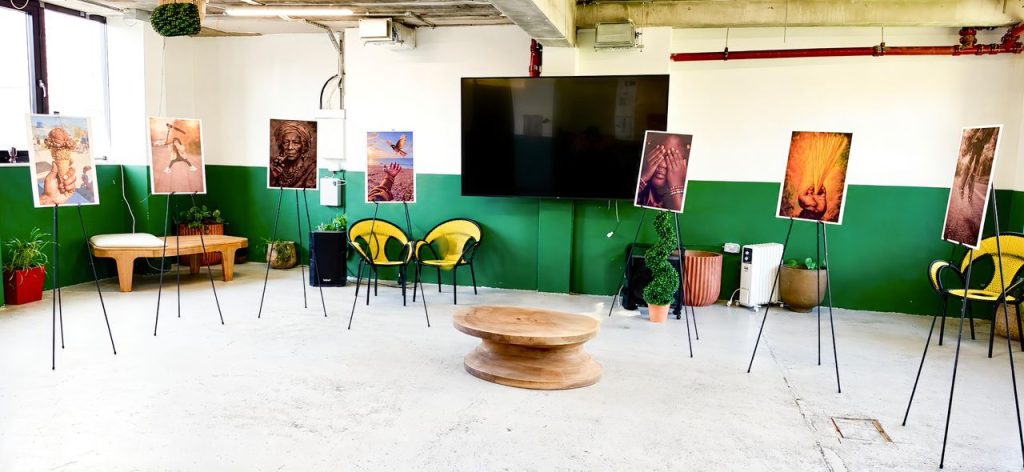
London, United Kingdom April 25, 2026 In a striking demonstration of the power of image over physical presence, fine art photographer Deborah Abosede Ibeme’s solo exhibition Rituals of Presence concluded at The African Centre, London, to critical engagement and public resonance despite the artist not being physically present. The exhibition drew a thoughtful and steady audience, each encountering a body of work that felt both intimate and expansive. In Ibeme’s absence, the photographs themselves carried the full weight of the conversation quietly commanding attention, reflection, and emotional response. Rituals of Presence examined what it means to truly exist in a moment spiritually, emotionally, and physically through carefully composed fine art photography rooted in symbolism and stillness. The works moved fluidly between themes of release and connection, inviting viewers into a contemplative space where the ordinary became sacred. A recurring visual language, hands extended, bodies grounded, elements in motion created a sense of dialogue between human vulnerability and natural forces. One particularly arresting motif, depicting an outstretched hand meeting a bird in flight along a coastal horizon, emerged as a powerful metaphor for surrender, trust, and unseen connection. Without the artist in the room, audiences leaned deeper into the work itself. Conversations unfolded organically, interpretations layered, and meaning became a shared experience rather than a guided one. Visitors described the exhibition as “quietly powerful,” “emotionally precise,” and “lingering long after leaving the space.” The African Centre provided a fitting environment for this encounter, reinforcing its commitment to elevating diasporic narratives and contemporary African artistry within London’s cultural landscape. Rituals of Presence ultimately demonstrated that absence does not diminish impact instead, it can amplify it. Ibeme’s work stood independently yet intimately connected to each viewer, proving that presence, in its truest form, transcends the physical. As anticipation builds, this body of work is expected to continue its journey through future exhibitions and international platforms, further establishing Deborah Abosede Ibeme as a distinct and necessary voice in contemporary fine art photography.
Emmanuel Orisakwe Chizitere on Decisive Moments, the Space Between Storm and Stillness
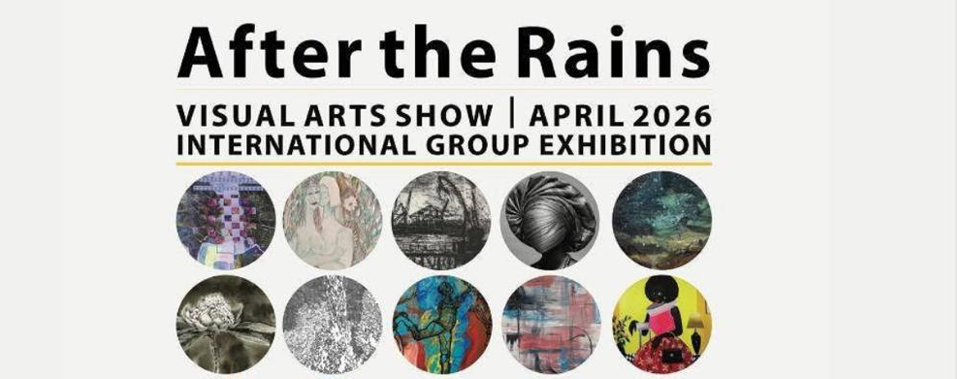
When the rain finally stops, what is left? That question sits at the heart of After the Rains, an international online group exhibition gathering twenty-seven artists for the whole of April 2026. Among them is Emmanuel Orisakwe Chizitere, a photorapher whose canvases refuse easy comfort, holding tension and hope in the same breath. We caught up with him to talk process, the exhibition’s theme, and what it means to make art for a world still drying off. La Mode: When you first heard the title “After the Rains,” what came to mind? Emmanuel: Immediately, I thought about light. The specific quality of light that follows heavy rain, that strange luminosity where everything is saturated and raw at the same time. As a fine art photographer, you are always chasing conditions, and that post-storm window is one of the most alive moments you can put in front of a lens. But beyond the literal, I thought about aftermath as an emotional state. That suspended feeling of not quite knowing what shape the world will take now that something has passed through it. “Post-storm light is one of the most alive moments you can put in front of a lens. The world is saturated and raw and completely itself.“ La Mode: Tell us about the specific work you’ve brought to this exhibition. Emmanuel: The image I’m showing sits firmly within my fine art practice which means it’s not documentary, not photojournalism. The photograph is constructed with intention: composition, light, subject, and post-processing all serve a single idea. I’m working with the tension between stillness and residue, what a scene looks like when the drama has just departed. There is something present in the frame that hasn’t decided yet what it is. I want viewers to feel that uncertainty as something beautiful rather than unsettling. La Mode: Fine art photography still has to argue for its place alongside painting and sculpture in some quarters. How do you think about that? Emmanuel: I think that conversation is mostly over, honestly, at least in serious art spaces. The camera is a tool just as the brush is a tool. What matters is the intention behind it and the vision that directs it. A fine art photographer is making decisions at every stage: what to include, what to leave out, how light falls, what the image does to time. The fact that a machine is involved doesn’t diminish the authorship. If anything, the constraints of photography, you can only work with what exists in front of you make the art more demanding in some ways, not less. La Mode: How does your Nigerian background and visual memory inform what you photograph? Emmanuel: Profoundly. The way I read colour, the kind of light I’m drawn to, the subjects I find worthy of attention, all of that comes from somewhere. Growing up in Nigeria gives you a specific relationship to contrast: intense light, deep shadow, very little middle ground. That trains the eye differently. I find I’m often working with that same drama even when I’m shooting somewhere else entirely. The visual instincts you form early stay with you. They become the grammar beneath everything you make. “The visual instincts you form early stay with you. They become the grammar beneath everything you make even when you’re far from where you learned them.“ La Mode: What does participating in an international virtual group show mean to you? Emmanuel: It matters enormously. The virtual format removes geography as a gatekeeping force, my work can sit beside that of Agata Henderson, Lior Locher, Deborah Abosede Ibeme, and 24 others without anyone having to be physically present in the same city. For artists based outside the traditional Western art market centres, that kind of access is significant. It also means the show is genuinely international in character, not just nominally. You encounter work shaped by completely different environments and see what a single theme does across all of them. La Mode: What do you want someone to experience when they encounter your photograph in this exhibition? Emmanuel: I want them to pause. Online viewing encourages speed, and I understand that there is so much work to see. But fine art photography rewards stillness. I want someone to spend enough time with the image that they begin to notice what isn’t immediately obvious: the way the light behaves in a corner of the frame, the detail that suggests a story the image won’t fully tell. If they leave the screen still thinking about it still trying to resolve something then the photograph has done its work. La Mode: As April closes, what’s next for your practice? Emmanuel: I’m developing a new body of work that takes the threshold idea further images made at liminal times of day and in transitional spaces. I’m also thinking more seriously about scale and print: there are things that happen to a photograph when it becomes very large that change the viewer’s relationship to it entirely. Being part of After the Rains has sharpened some of these directions for me. Seeing my work in genuine international company always clarifies what I’m actually doing and what I want to do next. About the Exhibition After the Rains is a virtual international group exhibition running 1–30 April 2026, organised by Origina and Costa Arts (UK). The show features 27 artists: Agata Henderson, Amanda Lebus, Anthonia Nnenna Ndukauba, Beth Neal, Deborah Abosede Ibeme, Elizabeth Roberts, Emmanuel Orisakwe, Erika Loch, Evangelia Hamilton, Georgia Cadden, Georgina Zafeiri, Gurmant Kaur, Hector Geoffrey Dokopoulos Hamilton, Justin James, Kayla Michelle, Lin Ye, Lior Locher, Louise Heaton, Monika Tkaczyk, Mr Bruiser, Obiora Vincent Nwankwo, Paul Durber, Phil Bixby, Sean Bw Parker, Sepideh Shahgholi, Vans Mead. Scan the QR code on the exhibition poster to explore the full show online.
A Resonant Success: Orisakwe Emmanuel Chizitere’s Solo Exhibition “The Quiet Geometry of Being” Concludes in London
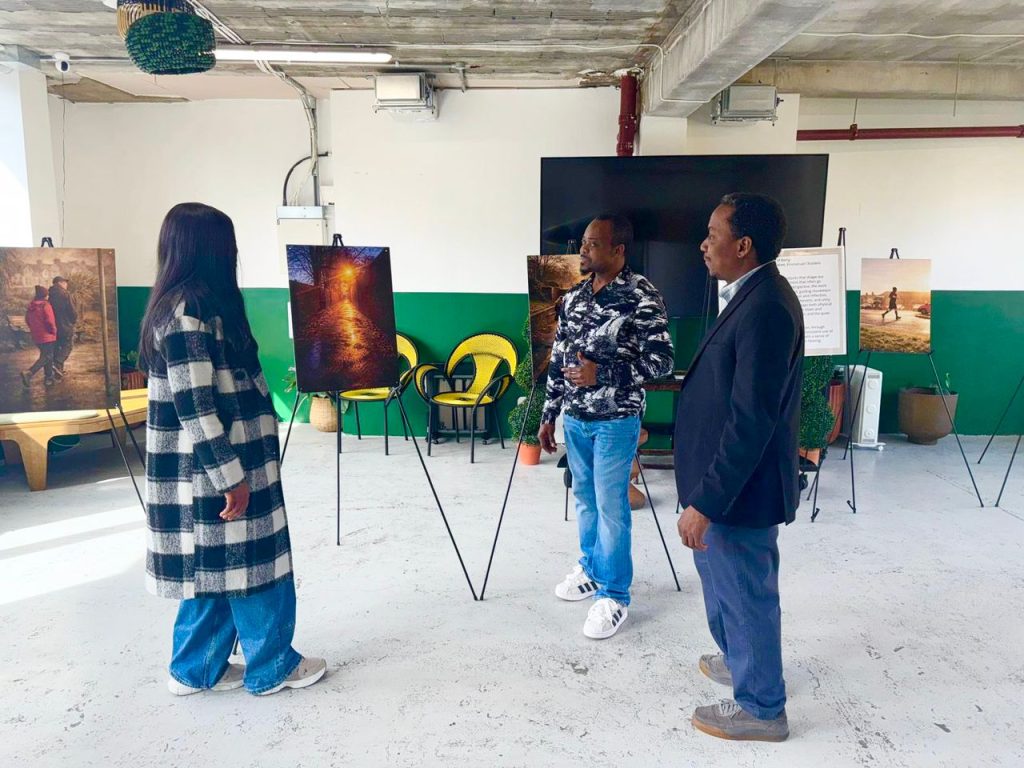
The just-concluded solo exhibition, “The Quiet Geometry of Being,” by fine art photographer Orisakwe Emmanuel Chizitere, has been widely celebrated as a profound and immersive artistic experience. Hosted at The African Centre, the one-day exhibition drew an engaged audience of art enthusiasts, collectors, curators, and members of the public, affirming Chizitere’s growing influence within the contemporary photography scene. Held on April 19, 2026, at the Centre’s iconic location on Great Suffolk Street, the exhibition offered a deeply reflective body of work that explored identity, stillness, movement, and the subtle interplay between human presence and spatial environments. Through a compelling visual language, Chizitere invited viewers into a contemplative dialogue about existence and perception. The exhibition title, “The Quiet Geometry of Being,” encapsulated the artist’s exploration of form, balance, and emotional resonance. Each photograph demonstrated a meticulous attention to composition, light, and narrative, transforming everyday moments into evocative visual poetry. Attendees were particularly struck by the way Chizitere’s work bridged documentary realism with abstract introspection, creating images that felt both grounded and transcendent. Visitors described the exhibition as “meditative,” “intellectually stimulating,” and “emotionally moving,” with many noting the artist’s ability to find harmony in ordinary spaces and fleeting moments. The setting at The African Centre further enriched the experience, providing a culturally significant backdrop that aligned with the exhibition’s themes of identity and belonging. Curators and critics in attendance praised Chizitere’s evolving artistic voice, highlighting his distinctive approach to storytelling through photography. His work continues to challenge conventional perspectives, positioning him as a compelling voice in contemporary African and diasporic art. Speaking after the exhibition, Chizitere expressed gratitude for the overwhelming support and engagement:“This body of work is deeply personal, and seeing how people connected with it in their own ways was incredibly meaningful. It reinforces the idea that stillness can speak volumes.” The successful turnout and critical reception mark an important milestone in the artist’s career, signaling increased anticipation for future exhibitions and projects. Collectors and galleries have already expressed strong interest in further collaborations, underscoring the exhibition’s impact beyond its one-day run. As the doors close on “The Quiet Geometry of Being,” its resonance continues lingering in the minds of those who experienced it and affirming the enduring power of photography to reveal the unseen structures of human existence.
Through the Lens of Presence: Fine Art Photographer Deborah Abosede Ibeme Unveils Rituals of Presence
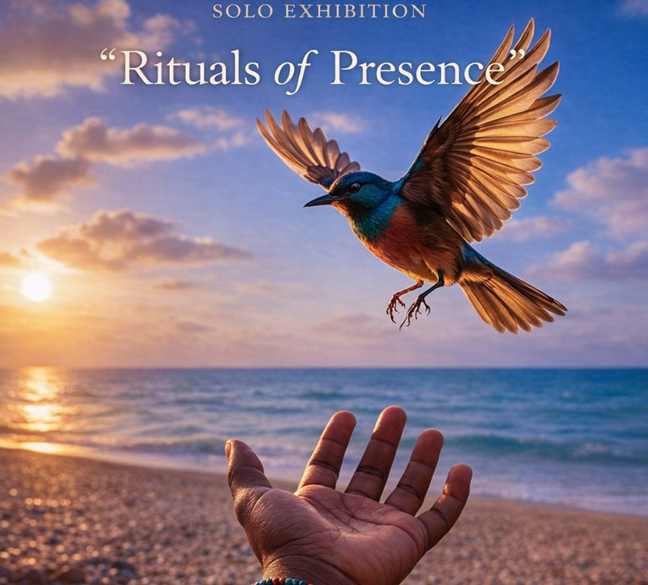
London’s contemporary art scene welcomes a deeply introspective and visually arresting showcase this spring, as fine art photographer Deborah Abosede Ibeme presents her solo exhibition, Rituals of Presence, on April 25, 2026, at The African Centre. Known for her evocative photographic language, Ibeme works at the intersection of storytelling and stillness using the camera not just as a tool for capture, but as a medium for reflection. In Rituals of Presence, she brings this approach to life through a compelling series that explores identity, spirituality, and the subtle rituals that shape human experience. This one-day exhibition, transforms the gallery into a contemplative environment where each image invites pause. Ibeme’s compositions are rich with symbolism: gestures of offering, moments of suspension, and natural elements that echo themes of transition and release. Her work asks viewers not just to observe, but to engage emotionally and inwardly. As a fine art photographer, Ibeme distinguishes herself through her ability to translate intangible experiences into visual form. Her images carry a sense of quiet power, bridging personal narrative with broader cultural resonance. Rituals of Presence reflects this signature approach, offering a body of work that is both intimate and expansive. More than a traditional exhibition, this presentation functions as a visual meditation an exploration of what it means to be grounded in a fast-moving world. It speaks to those navigating complexity, inviting them into a space of awareness, connection, and stillness. With Rituals of Presence, Deborah Abosede Ibeme affirms her place as a distinctive voice in fine art photography one whose work lingers long after it is seen.
What the Camera Remembers: Deborah Abosede Ibemeand the Work of Cultural Archiving

There are two kinds of forgetting. The kind that happens when memory fails, and thekind that happens when no one thought to remember in the first place. The second kindis the more dangerous one. It does not feel like loss. It feels like the way things have always been. Somewhere in Africa , and specifically in the Niger Delta, a woman ties her wrapper in a particular way. The non decorative knot she makes at her waist is a signature and adeclaration of marital status that communicates to anyone who knows how to read itthat something specific is true about who she is and where she comes from. Hergrandmother tied it the same way, even her grandmother’s grandmother before that.The knowledge lives in the hands before it lives anywhere else, and if the hands stop,and perhaps the generation that carries this specific literacy does not pass it forward, the knowledge becomes uncommon and ultimately invisible. And, what becomesinvisible long enough eventually becomes as if it never was. This is the specific crisis that Deborah Abosede Ibeme has built a significant portion of her practice around addressing with the patient, sustained, technically rigorousresponse of an artist who understood early that photography practiced at this level ofintentionality is a form of institutional memory, and not just the bare image-making. It serves as the construction of a record that the future can consult, and the present can also be held accountable by, that the past can rest inside without disappearing.She calls it cultural archiving. The term is precise and worth sitting with. An archive is not a collection of beautiful things. An archive is a system of preservation, ordered,intentional, built with the understanding that its value compounds over time. What is archived today becomes irreplaceable tomorrow. What is not archived today is simply gone. How an Archive Begins The Cultural Preservation Series: the documentary-inspired body of work that beganformally in 2022 and continues to the present was not Deborah’s first engagement withthese themes. The themes preceded the series. In fact, they preceded, in some sense,the photography itself. Growing up in Warri, she absorbed the specific visual and symbolic vocabulary of theNiger Delta. She encountered the Ijaw cosmology in everything within her environment;the fabrics her elders wore, the ceremonies she witnessed, the particular way certainobjects were handled with a care that communicated their spiritual weight beforeanyone explained it to her. She learned how meaning is carried in material culture, howa community’s deepest knowledge does not live in its libraries or its official records but in its hands, bodies, domestic rituals, and its adornment. She also grew up watching that knowledge become gradually less legible through theerosion that modernity produces everywhere it arrives. For instance, young people whono longer tie the knot that way, or ceremonies observed with decreasing specificity, oreven objects that migrate from contexts of meaning to contexts of decoration. Albeit the knowledge not being lost catastrophically, it leaks quietly, generation by generation, through gaps that no one is filling quickly enough. The Cultural Preservation Series is her attempt to fill some of those gaps. And shedoesn’t intend a nostalgic return or indulgence, because she is not a nostalgic artist,and her work carries none of the melancholy of someone mourning a past they wishcould be recovered. She actualises this with documentation, a precise, technicallyexcellent, visually authoritative act of saying: “this existed, this was real, this is what it looked like, this is what it meant, and it deserves to be held in this quality of light.” The African Womanhood Series:Running parallel to the Cultural Preservation Series, and in many ways, inseparablefrom it is the African Womanhood Series, which began in 2021 and represents the mostsustained single thread of Deborah’s practice.If the Cultural Preservation Series is primarily concerned with “what” is being lost, the African Womanhood Series is concerned with “who” is carrying it. These are apparently not two different subjects. With closer attention, one would find they are the same subject, only approached from different directions, always meeting at the body of the African woman. In Deborah’s understanding of Niger Delta cultural life, the African woman is not simply a participant in cultural tradition but a primary custodian because, she is the one who ties the knot, the one who knows which fabric is appropriate for which ceremony, which object must not be touched by certain hands, which song is sung at which threshold of life. She is in fact the living archive.Photographing her wouldn’t merely be to make a portrait, rather would be to photographthe archive itself. In other words, this means that to turn the camera on the woman is to turn it on the knowledge she carries, and to do so with the visual gravity and technical precision that the knowledge deserves is to make an argument about its value.An argument that says: this woman, and what she holds, is worth this quality of attention. This is the argument the African Womanhood Series has been making since 2021, frame by careful frame, and it has been making it with increasing sophistication and power with each new body of work. “Where Ancestors Still Breathe”:“Where Ancestors Still Breathe was her first public exhibition of this archival practice. The title is a theological statement disguised as a poetic one. In the cosmological traditions of the Niger Delta, traditions that are themselves part of what her archive is working to preserve, the ancestors are active presences and not just historical figures. They are not behind us in time, but beside us in space, breathing through the decisionswe make, the bodies we inherit, the practices we maintain or abandon. The exhibition’stitle was meant to state a truth that the culture itself holds as literal: the ancestors arehere. They are breathing. The question is whether we are listening.The works in this exhibition, produced with the full weight of her developing visuallanguage, the symbolic objects, the painterly light, the monumental subjects, werereceived by a Lagos audience that includes some of Nigeria’s most sophisticated artviewers. The response