
Harry Styles Makes the Case for Ballerina Flats as the Ultimate Airport Shoe
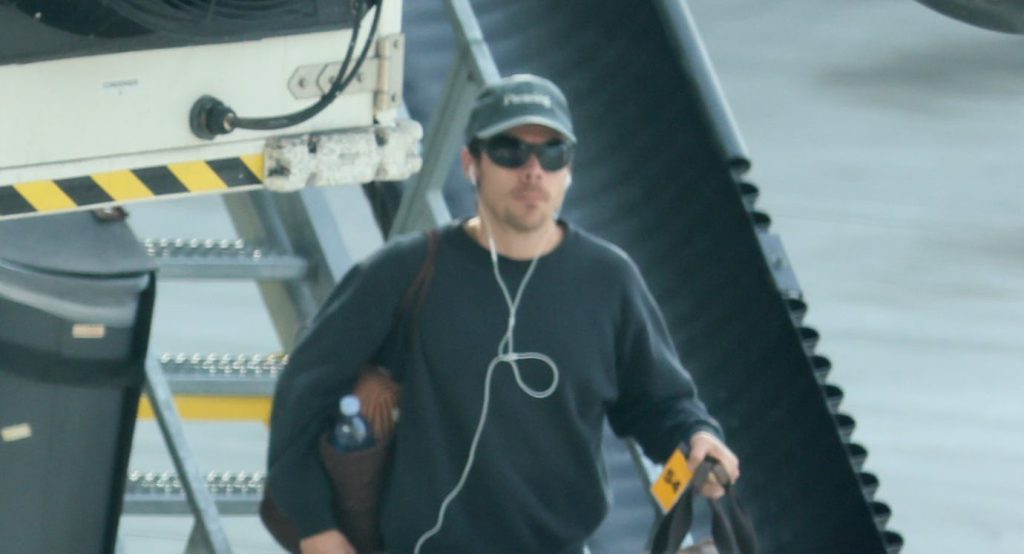
Harry Styles steps out at LAX in Miu Miu Élan ballet flats, making a bold case for ballerina shoes as the next big menswear trend.
80s Nostalgia Takes Centre Stage at the Love and New Notes Premiere
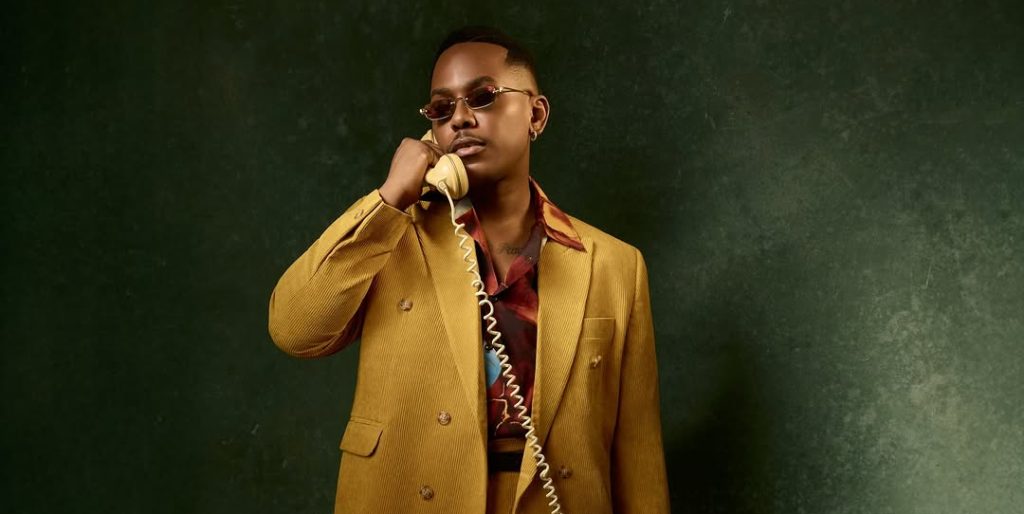
Timini Egbuson and the cast of Love and New Notes embraced bold 80s-inspired fashion at the film’s premiere, delivering nostalgic tailoring, vibrant prints, and statement accessories.
Selena Gomez Masters After-Dark Minimalism in a Sleek All-Black Khaite Moment
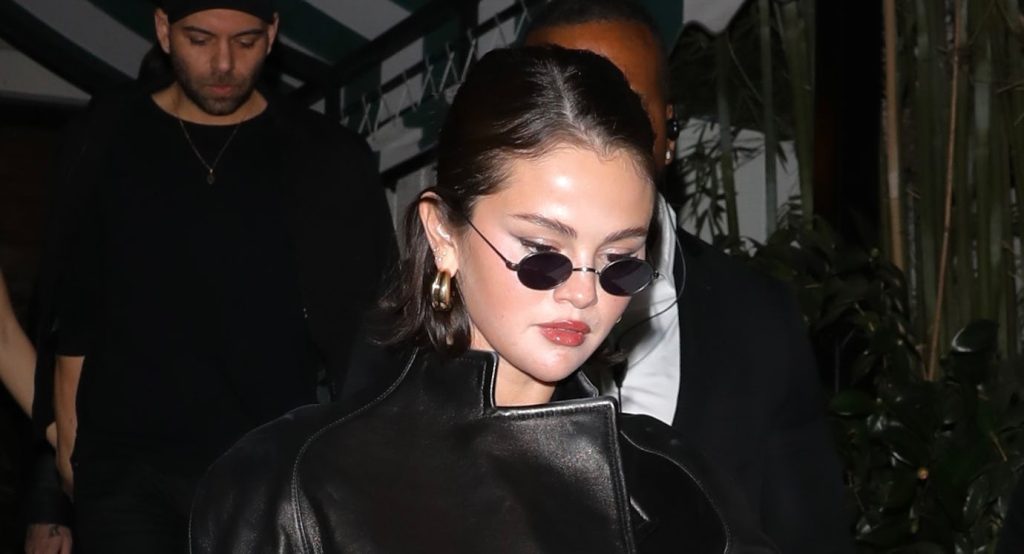
Selena Gomez proves the enduring power of monochrome dressing, stepping out in a sleek all-black look featuring a Khaite leather coat, DKNY trousers, and Jimmy Choo pumps in West Hollywood.
Angelina Jolie Stuns in Sheer Embellished Gown at Couture Paris Premiere
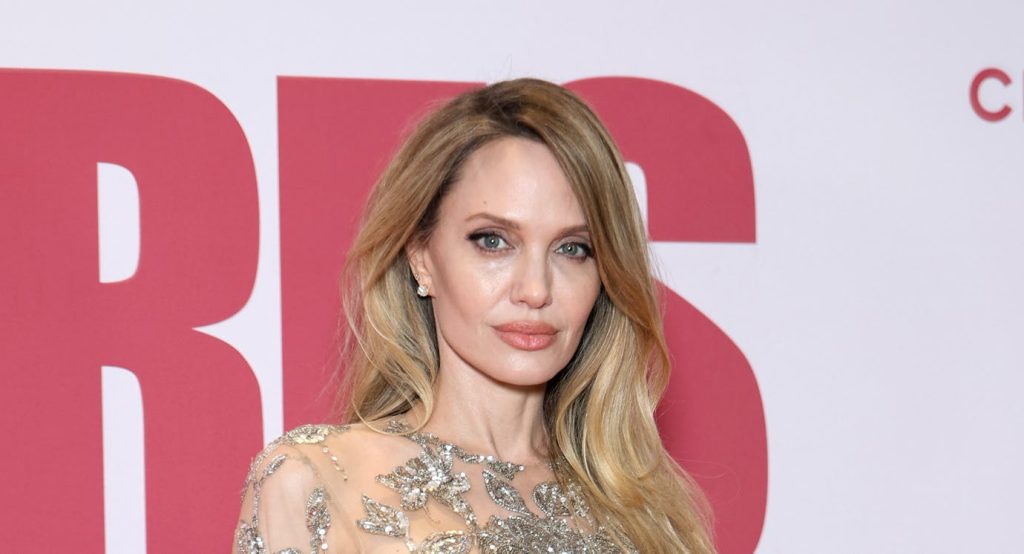
Angelina Jolie turns heads at the Paris premiere of Couture, wearing a shimmering embellished sheer gown that marks one of her boldest red carpet fashion moments yet.
Bad Bunny Makes Super Bowl History With First All-Spanish Halftime Show
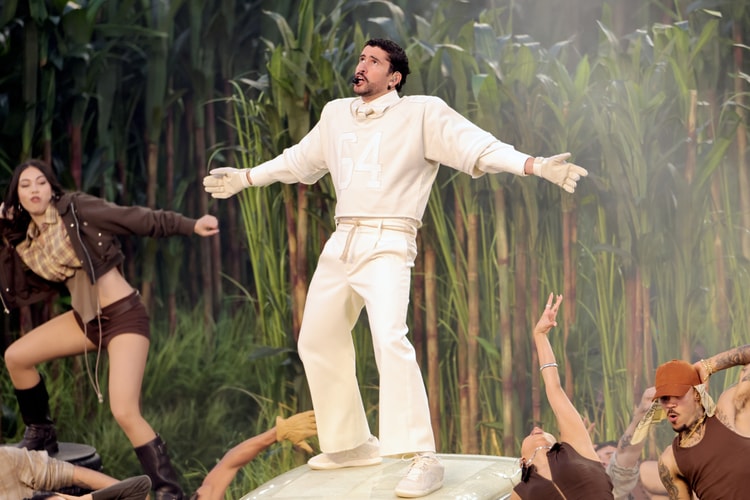
Bad Bunny’s Super Bowl halftime show was more than a performance, it was a cultural declaration broadcast to one of the largest global audiences in entertainment. Last night, Benito Antonio Martínez Ocasio, known worldwide as Bad Bunny, delivered one of the most historic halftime shows to date, becoming the first male solo Latin artist to headline the Super Bowl and the first performer to deliver an entire set in Spanish. In doing so, he transformed the stage into a vibrant tribute to Puerto Rican heritage, centering the performance on identity, language and cultural pride. The production leaned heavily into symbolism. A traditional casita, a garita inspired by the fortresses of Old San Juan, and energetic Bomba dancers anchored the visual narrative, grounding the spectacle in Caribbean tradition while maintaining the cinematic scale expected of the halftime stage. Surprise appearances from Cardi B, Lady Gaga, Karol G, Pedro Pascal, and Jessica Alba heightened the sense of global crossover, reinforcing the moment’s cultural reach. Fashion, as always, played a critical role in storytelling. Lady Gaga appeared in a custom blue pleated ruffle dress by Luar, designed by Dominican-American designer Raul Lopez and finished with a flor de maga brooch, Puerto Rico’s national flower, a subtle yet powerful detail. Dancers wore knit designs by Puerto Rican designer Jomary Segarra, spotlighting regional creative talent on one of the world’s most visible platforms. Bad Bunny’s own wardrobe choice delivered perhaps the evening’s most unexpected statement. Rather than opting for a traditional luxury house, the star wore an all-white Zara look, featuring a cropped jersey and rope-tied trousers. The decision underscored his long-standing ability to merge accessibility with cultural symbolism, suggesting that the message of unity and representation mattered more than prestige branding. Whether hinting at a future collaboration or simply choosing relatability for a global audience, the look reinforced his reputation as an artist who consistently bridges the gap between high fashion, streetwear, and cultural storytelling. The result was a halftime performance that felt less like a singular concert moment and more like a milestone in the global visibility of Spanish-language music, one that confirmed Bad Bunny’s position not only as a chart-topping star but as a defining cultural force of his generation.
The Standout Team Kits Defining Milano Cortina 2026
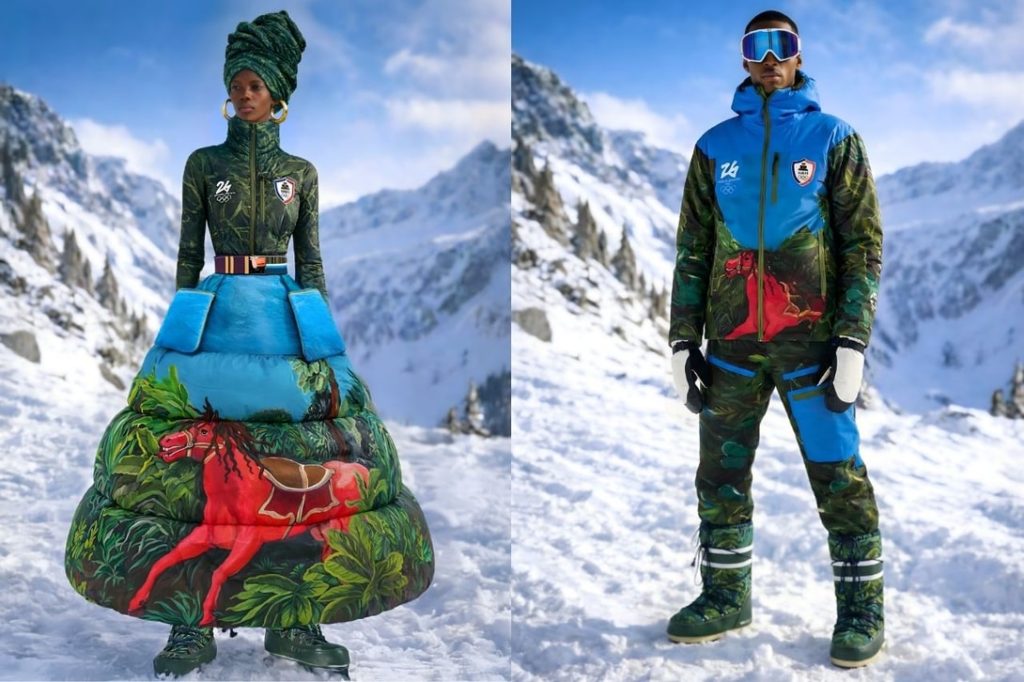
If Fashion Month is the industry’s traditional runway, the Winter Olympics might just be its most unexpected extension. As Milano Cortina 2026 approaches, the official team kits arriving from across the globe prove that performance dressing has entered a new era—one where heritage, technology, and national storytelling collide in spectacular fashion. For decades, Olympic uniforms quietly shaped the language of sportswear, long before luxury houses embraced puffers and technical outerwear as everyday essentials. Now, the Games stand as one of fashion’s most influential global showcases, where heritage labels, athletic innovators, and unexpected collaborators design garments meant not only to perform under extreme conditions but also to define cultural presence on a world stage. Haiti and Stella Jean Haiti enters the Winter Olympics for the first time in Nordic skiing, and its uniforms designed by are already among the most talked-about looks of the Games. Incorporating hand-painted artwork inspired by celebrated Haitian artist Edouard Duval-Carrié, the designs celebrate Haiti’s history as the first independent Black republic while bringing vibrant Caribbean colour to the Alpine landscape. Canada and Lululemon For its third Olympic cycle as Team Canada’s official outfitter, Lululemon leans into geography as inspiration. Puffers feature subtle topographical map detailing, while two-toned maple leaf motifs and iceberg-inspired shades of blue and green anchor the collection’s cold-weather palette, merging performance engineering with distinctly national symbolism. United States and Ralph Lauren Since 2008, Ralph Lauren has defined Team USA’s ceremony dressing, and 2026 continues the tradition. Fair Isle beanies and mittens, cable-knit coordinated sets and heritage-inspired layering pieces deliver the brand’s signature balance of athletic polish and classic Americana, ensuring the opening and closing ceremonies remain one of the Games’ most anticipated style moments. Iceland and 66°North Celebrating its 100-year anniversary, Icelandic outerwear brand 66°North outfits the nation’s Olympic and Paralympic teams in minimalist all-white ensembles inspired by the country’s ice caps. Subtle flag detailing appears along the zippers through a red-to-blue gradient, reinforcing national identity without disrupting the collection’s clean, glacial aesthetic. Brazil and Moncler Nearly six decades after its last Olympic partnership, Moncler returns to the Games by outfitting Brazil, delivering sleek cold-weather tailoring infused with the nation’s colour story. Ceremony looks feature sculptural white coats and skirts paired with capes lined in Brazilian flag tones, while performance ensembles incorporate deep blue bases accented with green detailing an elegant translation of tropical vibrancy into alpine readiness.
Adidas Honors Bob Marley’s Legacy With a Football-Inspired Capsule Collection
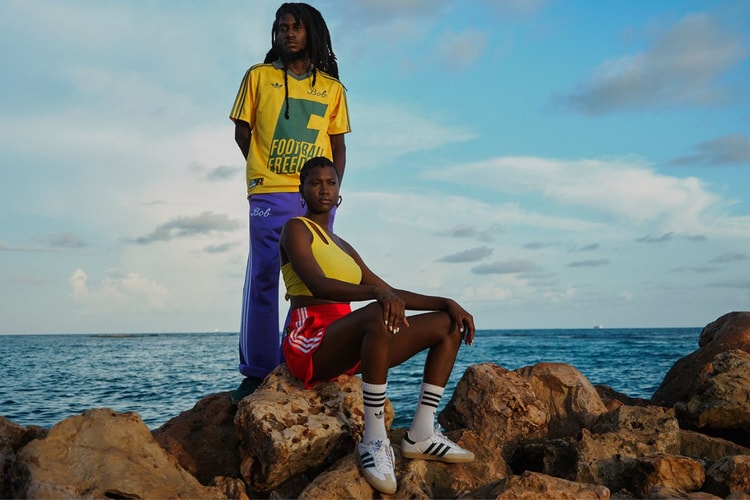
adidas partners with the Bob Marley Foundation to release the “Football is Freedom” capsule, an eight-piece collection inspired by the reggae legend’s love of sport, music and Jamaican culture.
Fathia Williams Celebrates Her Birthday in Two Distinct Looks
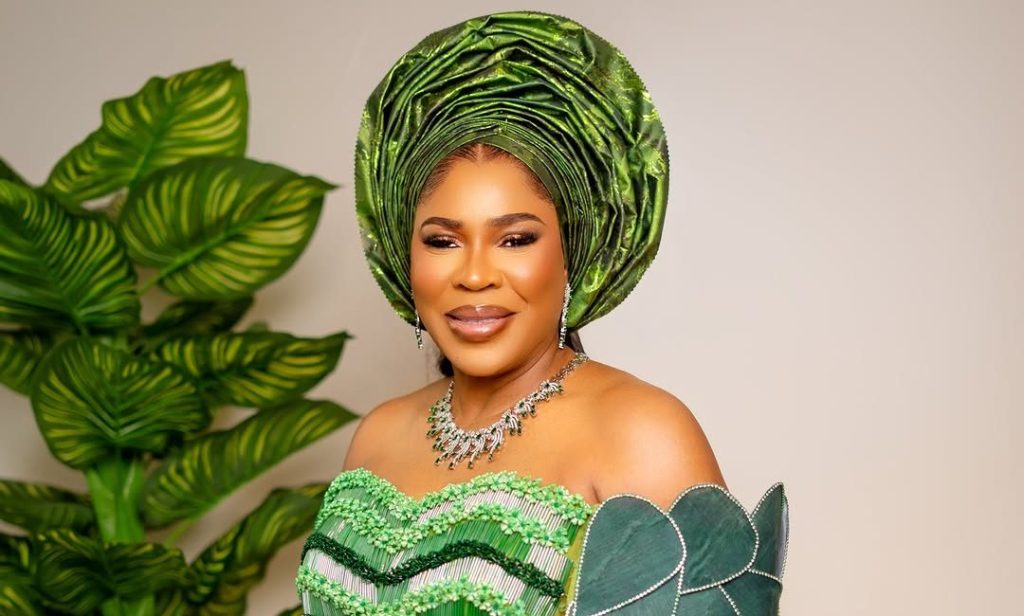
Birthdays often invite reinvention, and Fathia Williams chose to mark hers not with a single statement, but with two distinct expressions of celebration—each reflecting a different mood, yet united by intention. The first look leans into tradition. Williams appeared in a rich emerald green aso-oke ensemble, featuring an off-shoulder beaded bodice with soft puff sleeves and a fitted waist that flowed seamlessly into a sequin-detailed skirt. A matching gele framed the look, while a bold diamond necklace added a polished finishing touch. The result was classic celebratory dressing—structured, regal and unmistakably festive. For her second appearance, Williams shifted the narrative entirely, trading ceremonial texture for contemporary sparkle. A crystal-embellished denim jacket with ruched sleeves, paired with a coordinating mini skirt, transformed the everyday fabric into a spotlight-ready statement. Styled with statement jewellery and voluminous curls, the look carried a playful confidence that balanced the refinement of the earlier ensemble. Alongside the images, the actress shared a reflective caption centred on gratitude, faith and the promise of new beginnings—allowing the message, much like the styling, to remain intentional rather than excessive. Together, both looks formed a cohesive birthday portrait: one grounded in heritage, the other in modern expression, each capturing a different side of celebration.
Chioma Adeleke’s Nguyen Cong Tri Gown Delivered Quiet Drama at the 2026 Grammys
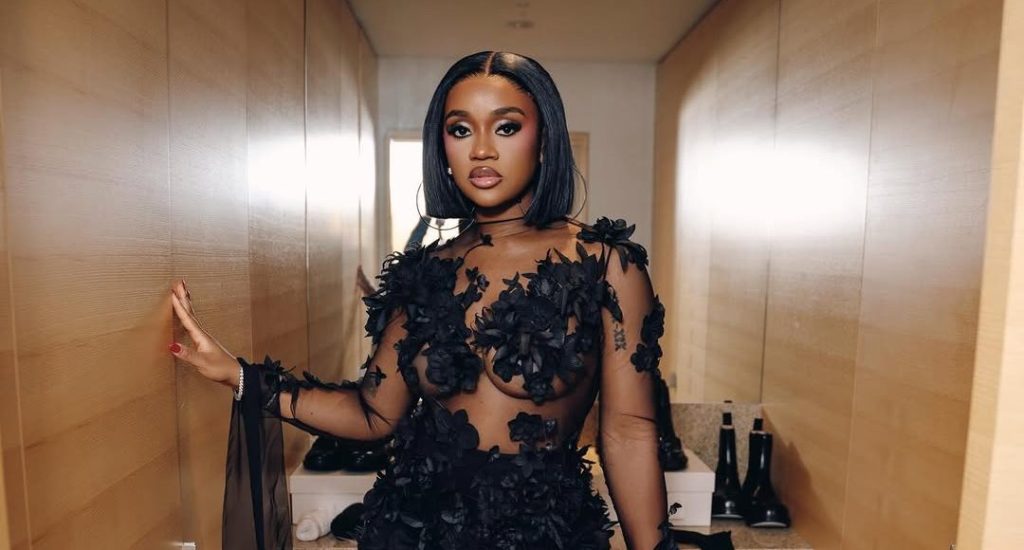
Chioma Adeleke attended the 2026 Grammy Awards in a custom floral gown by Nguyen Cong Tri, styled with Christian Louboutin heels and Justine Clenquet jewellery for a look defined by understated elegance.
Veekee James Blossoms in Stunning Nature-Inspired Maternity Shoot
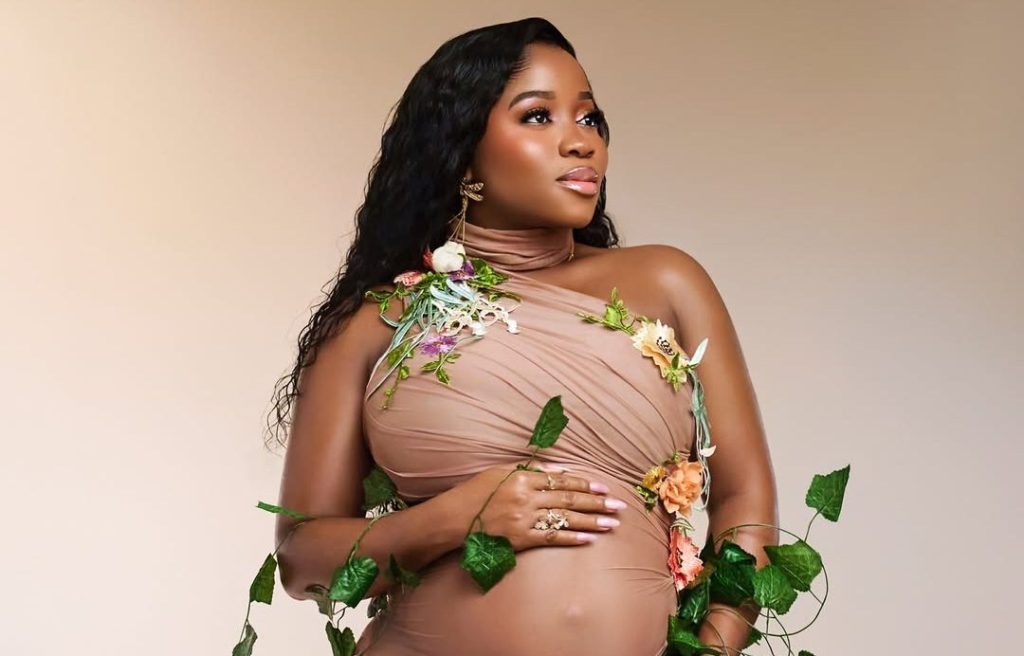
Fashion designer Veekee James embraces her “hot preggy era” in a lush garden-inspired maternity shoot, featuring a nude ruched gown adorned with floral accents and ivy.