

Ojude Oba 2025: Inside Nigeria’s Most Fashion-Forward Cultural Festival

Every year, just after Eid al-Kabir, the town of Ijebu-Ode sheds its everyday skin and emerges as a dazzling theatre of culture, colour, and couture. Welcome to Ojude Oba—Nigeria’s most photogenic, fashion-forward, and culturally immersive festival. It’s more than a spectacle. It’s a homecoming. It’s a history lesson in motion. It’s Met Gala meets Yoruba heritage—with agbadas, horses, and a thunderous beat of tradition. Where It All Began Long before Ojude Oba became a trending topic on social media or a fashion editor’s dream, it began as an act of gratitude. In the 19th century, newly converted Muslims in Ijebu-Ode, led by Imam Tunwatoba, paid homage to the Awujale—Oba Ademuyewo Afidipotemole—for his religious tolerance. What started as a small, devout gesture has since evolved into one of West Africa’s most iconic cultural exports. Today, Ojude Oba is not just a tradition—it’s a cultural manifesto. A living, breathing expression of Ijebu identity and Yoruba grandeur. What Makes It Unmissable? The Regberegbe Renaissance First up, meet the Regberegbe groups—age-grade collectives of Ijebu sons and daughters who don’t just show up; they show out. Think perfectly choreographed fashion moments, with each group debuting custom-made outfits that fuse tradition with contemporary flair. No repeats, ever. From Sanyan silks to Adire motifs, this is textile storytelling at its finest. The Balogun Spectacle Then come the Balogun families, descendants of ancient Ijebu warriors. Their arrival is a full-blown dramatic entrance: gun salutes, rhythmic chants, and horses dressed more opulently than most red carpet attendees. It’s power, pageantry, and pride in full gallop. The Fashion Archive That Walks Each year’s edition creates a visual archive of style—new fabrics, silhouettes, and accessories that reflect not only fashion evolution but also socio-political currents. From Aso Oke revived with Swarovski embellishments to Adire printed with political symbols, every outfit tells a story. What to Expect at Ojude Oba 2025 If you thought 2024’s edition broke the internet (cue Farooq Oreagba’s now-iconic look), prepare yourself—2025 is set to go even harder. Expect: From cultural scholars to TikTok style analysts, everyone will be tuned in. Final Word Ojude Oba isn’t just a festival—it’s a statement. A declaration that Nigerian culture is alive, luxurious, and unapologetically stylish. In a world where many traditions are shrinking, Ojude Oba is doing the exact opposite: it’s expanding, evolving, and getting more glamorous by the year. So, whether you’re going live from Ijebu-Ode or watching the hashtags roll in, one thing is clear: In the kingdom of cultural fashion, Ojude Oba reigns supreme.
Tems Stunned in Bold Blue as She Accepted the Diamond Award at Billboard’s Global Power Players Night
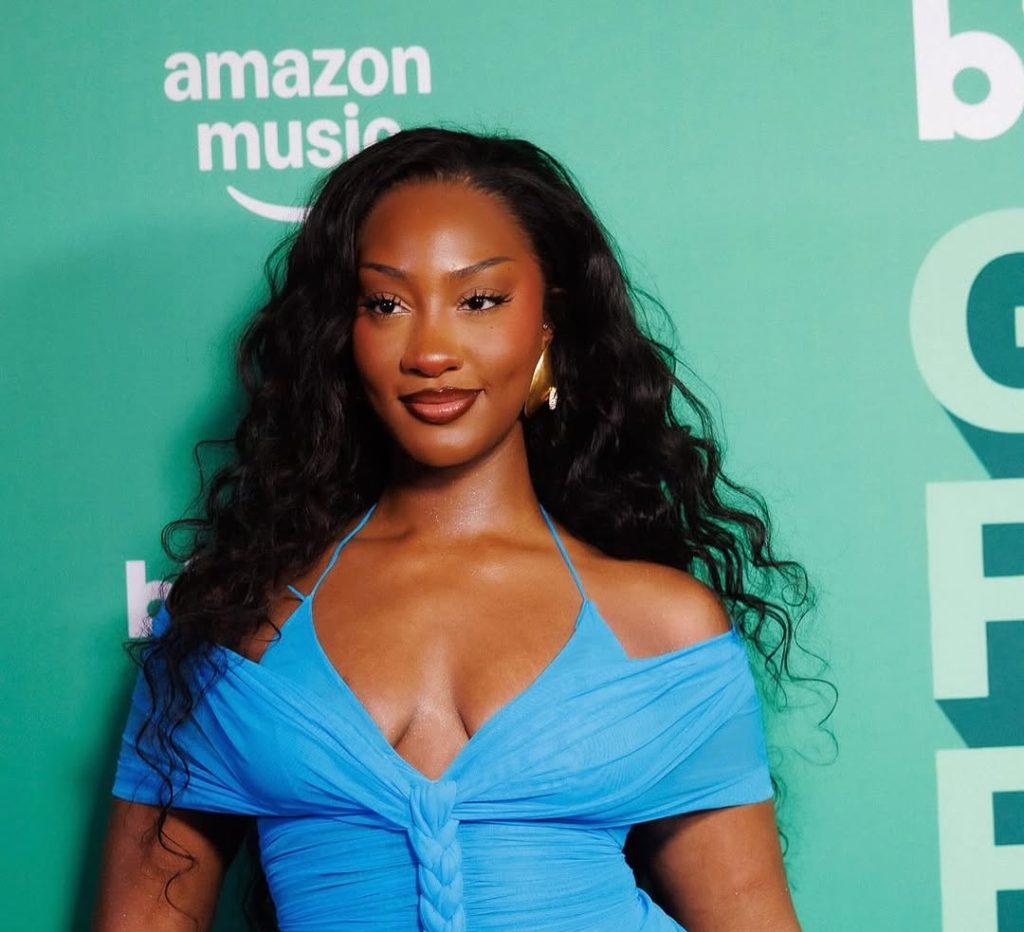
Tems walked into the room, picked up the Diamond Award, and reminded us—yet again—why she’s in a league of her own. At the first-ever Billboard Global Power Players event held in London, the Nigerian singer-songwriter was honoured for her cultural and musical impact on the global stage. But before she took the mic to thank literally the world, she did what Tems always does first: she wore the moment. Tems stepped out in a blue mini dress that whispered “effortless” but screamed “icon.” The off-the-shoulder number featured delicate ruching and a single braided detail running down the front—a subtle flex of texture and structure. Paired with soft waves, understated glam, and minimal gold jewellery, the look said everything without saying too much. It wasn’t just a red carpet win—it was a style thesis. One that said: you don’t need to overdo it when your presence already carries weight. After being introduced by Nkosiyati Khumalo, Billboard Africa’s incoming editor, Tems delivered a speech that hit all the right notes. She acknowledged not just the honour of receiving the Diamond Award, but the significance of the moment for African music. “Being African and a musician is a whole new world,” she said. “This has been a really great honour, especially given that African music is moving to heights that have never been seen before, and Billboard is one of the key players in moving that needle forward.” While the Billboard Global Power Players event was packed with influential names from across the music industry, Tems was undeniably the moment. With this Diamond Award, she joins a rare class of global creatives who are not just riding the wave of African music’s rise—but shaping it. See all the stunning photos from the night below—and take notes. Photo Credit: Tems/Instagram
Dakota Johnson and Chris Martin Have Split After 8 Years—And Honestly, I’m Not Okay

We regret to inform you that Chrota—yes, we’re still calling them that—is officially no more. After eight very cozy, very private years together, Dakota Johnson and Chris Martin have decided to call it quits. And yes, it’s devastating. The Materialists star and the Coldplay frontman were the kind of couple that didn’t need red carpets or matching outfits to prove their bond. They just existed—quietly, effortlessly, and always in Malibu. So naturally, this breakup feels like the end of an indie film we didn’t know we were watching. Wait, Weren’t They Just in India Together? Yes. Yes, they were. Dakota had recently joined Chris while he was touring in India, and they were seen together in Malibu not long before that. Despite rumors of a split last August, her rep was quick to shut things down, confirming they were still “happily together.” Fast forward to June 4, and now multiple sources are confirming the breakup to People—and apparently, this time it’s final. So… What Happened? In true Hollywood fashion, the exact reason for the breakup is vague—“little things kept adding up,” according to The Daily Mail. One insider claims Dakota fought hard to keep the relationship alive, particularly because of her bond with Chris’s kids, Apple and Moses (forever icons, name-wise). Another source told The Sun that age and family planning were dealbreakers. Dakota, 35, reportedly still had hopes of having children, while Chris, 48, felt he’d already ticked that box. “They really tried,” the insider said. “But the age gap kept creeping in.” Were They Secretly Engaged? Apparently, yes. According to People, Dakota and Chris had been “quietly engaged for years” but were in no rush to walk down the aisle. Dakota even sparked ring rumors back in 2020 when she was spotted wearing a chunky emerald stunner on that finger. Our Final Words on Chrota In a world full of PR stunts and red carpet theatrics, Dakota and Chris were refreshingly low-key. No couple selfies, no matching tattoos—just lots of privacy, and, allegedly, a lot of cozy house parties. And now? Just heartbreak. As for Dakota, insiders say she’s “devastated” about not being around Chris’s kids anymore. We’re devastated about… all of it. Here’s to eight years of low-key love, soft-core indie romance, and whatever “Fix You” now sounds like post-breakup. Wishing them healing, clarity—and hopefully a rebound we can root for.
Emily Ratajkowski Channels Coastal Cool in Gucci’s GG Monogram Campaign at Cannes
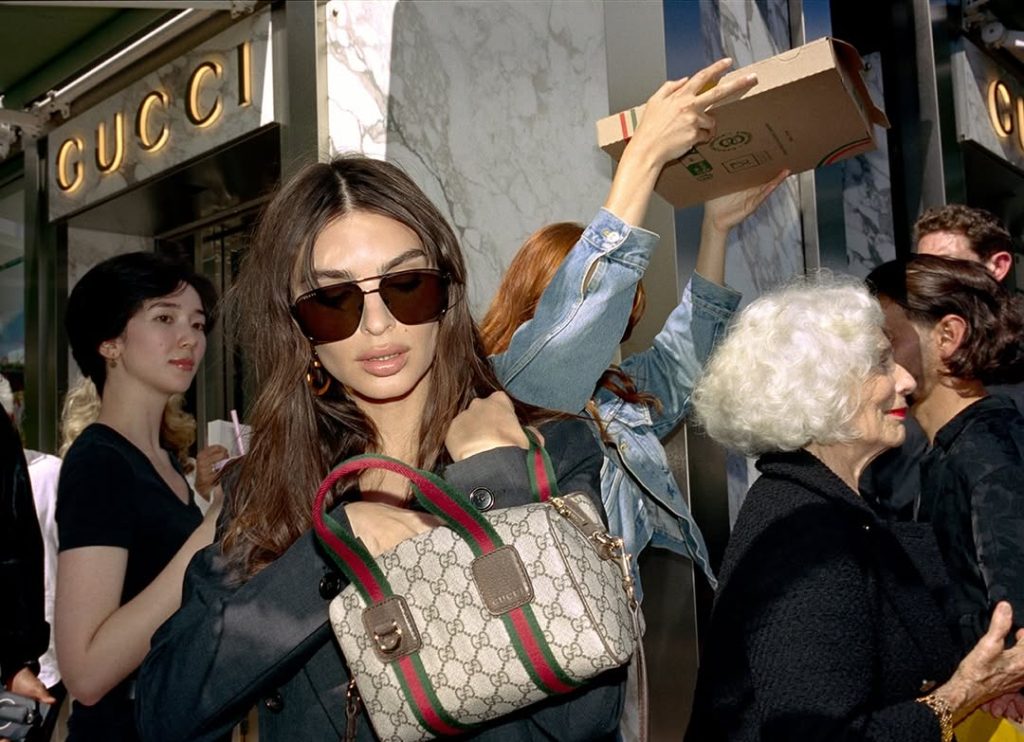
Gucci has always been fluent in glamour—but the brand’s latest campaign set against the soft glow of Cannes proves it’s just as fluent in contradiction. Starring Emily Ratajkowski and shot by documentary-style street photographer Daniel Arnold, the new visuals celebrate Gucci’s ever-iconic GG Monogram, reframed through themes of stillness and movement, presence and ease. In a series of images that feel part candid, part curated, we see Emrata glide from cobblestone city scenes to the calm shores of the French Riviera. Whether surrounded by crowds or oceanside solitude, the GG Monogram remains a quiet constant—timeless, tactile, and unmistakably Gucci. At the heart of the campaign? A showcase of signature silhouettes: Debuted during Gucci’s Cruise 2026 show in Florence, the Giglio bag is more than just arm candy. It’s a love letter to heritage—named after the fleur-de-lis emblem synonymous with Florence since the Middle Ages. Tapping into over 100 years of craftsmanship, the Giglio balances archival romance with 2026-ready edge. For the minimalists who love a monogram, the new chapter of Gucci’s Ophidia collection features GG Monogram-coated canvas, forest green cotton lining, and that signature Web stripe that whispers quiet luxury. And yes—the Mini GG duffle has been downsized and redefined for modern wearers. What happens when a heritage house plays on duality at Cannes? A campaign that feels as thoughtful as it is iconic. With Emily Ratajkowski as the effortlessly cool muse and the GG Monogram as the ever-present thread, Gucci delivers a visual story that bridges generations—and wardrobes. Take a closer look at the campaign above and shop the collection now at Gucci.com.
Nigerian-American Star Kiki Iriafen Named WNBA Rookie of the Month!
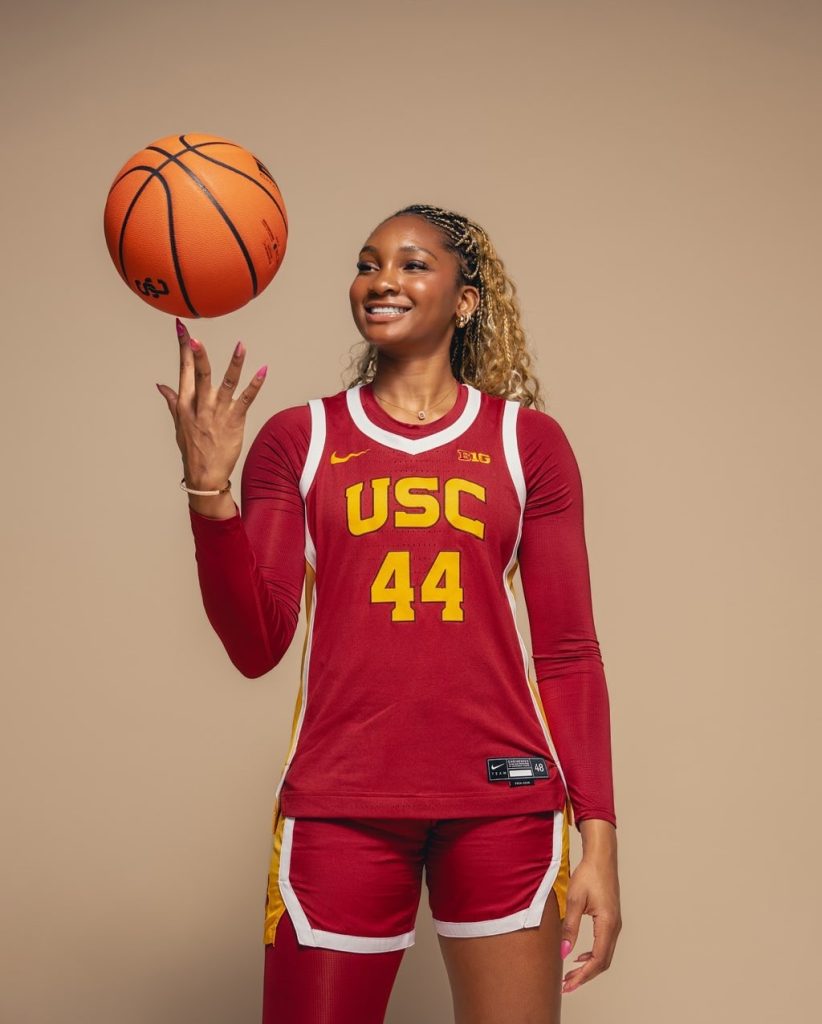
If you didn’t know her name before May 2025, you definitely do now. Kiki Iriafen has arrived—and she’s already making WNBA history. The Nigerian-American Washington Mystics forward has just been crowned the Kia WNBA Rookie of the Month, making her the first-ever Mystics player to receive the honour. Let’s be clear: she didn’t just show up—she dominated. A Rookie Stat Line That Reads Like a Veteran’s Résumé Across seven games in her first month as a pro, Iriafen averaged 13.9 points and 10.1 rebounds, while shooting an impressive 47.4% from the field. That performance ranked her: Oh, and she didn’t stop there. From May 18 to 25, Iriafen posted four consecutive double-doubles, a feat that only one other rookie—Natalie Williams in 1999—has managed in WNBA history. To top it off, she became the fastest Mystics rookie ever to hit 50 points and 50 rebounds. Not even the franchise’s greats moved that quickly. Joining the Legends—In Just One Month Let’s talk context. The last WNBA rookie to average at least 12 points, 10 rebounds, and over 47% shooting in their opening month? That would be Tina Charles in 2010. The last time any Mystics player hit that mark? Crystal Langhorne, fifteen years ago. In short, Iriafen’s doing what hasn’t been done in over a decade—on both league and franchise levels. And she’s doing it straight out the gate. What’s Next for Iriafen? Currently averaging 14.6 points, 10.0 rebounds, and 51.7% shooting in just 28.3 minutes per game, the 2025 No. 4 overall pick isn’t just meeting expectations—she’s exceeding them with poise, power, and precision.
“Iyalode” Brings Power, Patriarchy and Purpose to the Big Screen
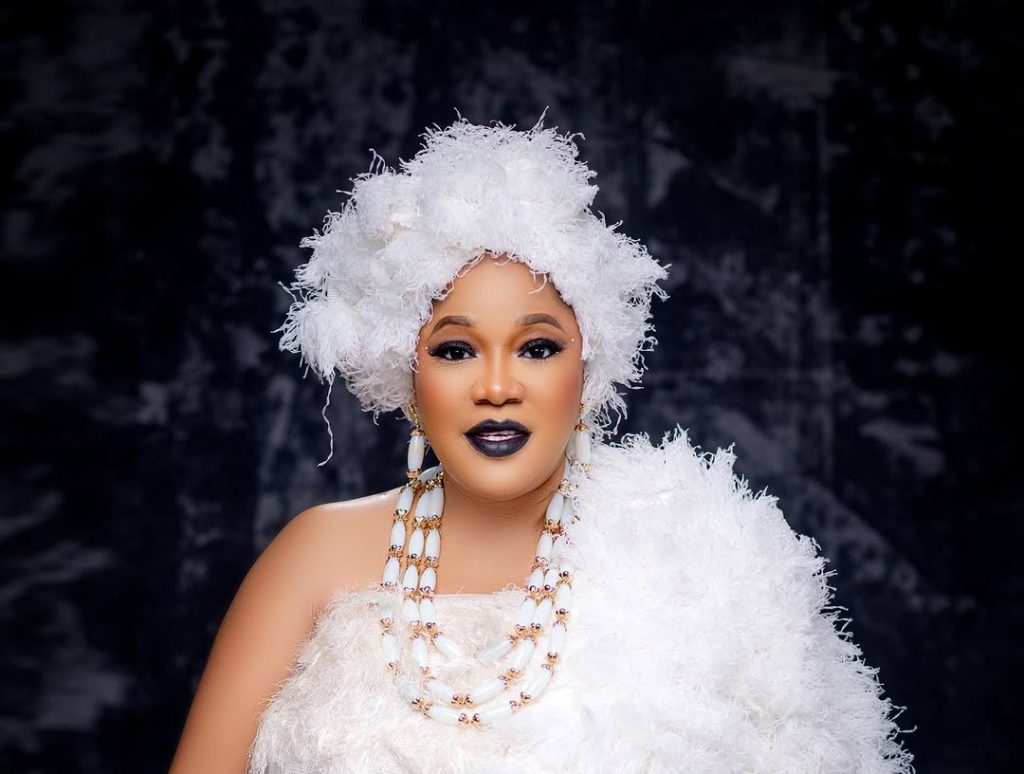
Courage wears many crowns. In Iyalode, she builds her own. Opening in cinemas on June 6, Iyalode is the latest Nollywood period drama shaking up the genre with a fierce female lead at its centre. Directed by Adebayo Tijani and co-produced by Toyin Abraham and Kolawole Ajeyemi, the film blends historical gravitas with a deeply human story about power, legacy, and choosing a voice over silence. Set against a richly woven cultural backdrop, Iyalode follows the journey of a woman who dares to challenge the societal mould carved out for her. Rather than simply inherit authority, she redefines it—turning a traditional title into a personal mission. The ensemble cast is stacked with Nollywood powerhouses—Toyin Abraham, Kolawole Ajeyemi, Bukky Wright, Kehinde Bankole, Ibrahim Chatta, Peju Ogunmola, Aisha Lawal, and more—each contributing to a narrative pulsing with intensity and cultural resonance. While fictional, the film draws heavily from the lived realities of women in historical and contemporary Nigeria, offering commentary on gender roles, leadership, and resistance within patriarchal systems. It’s the kind of film that doesn’t just retell the past—it interrogates it. Iyalode joins a growing canon of Nigerian films that place complex female protagonists at the centre of period and political storytelling, continuing Nollywood’s turn toward narratives that are both grounded and grand. Watch the trailer here—and mark your calendars.
You’ve Got to See How the Stars Turned Up For Toyin Abraham’s Iyalode Premiere
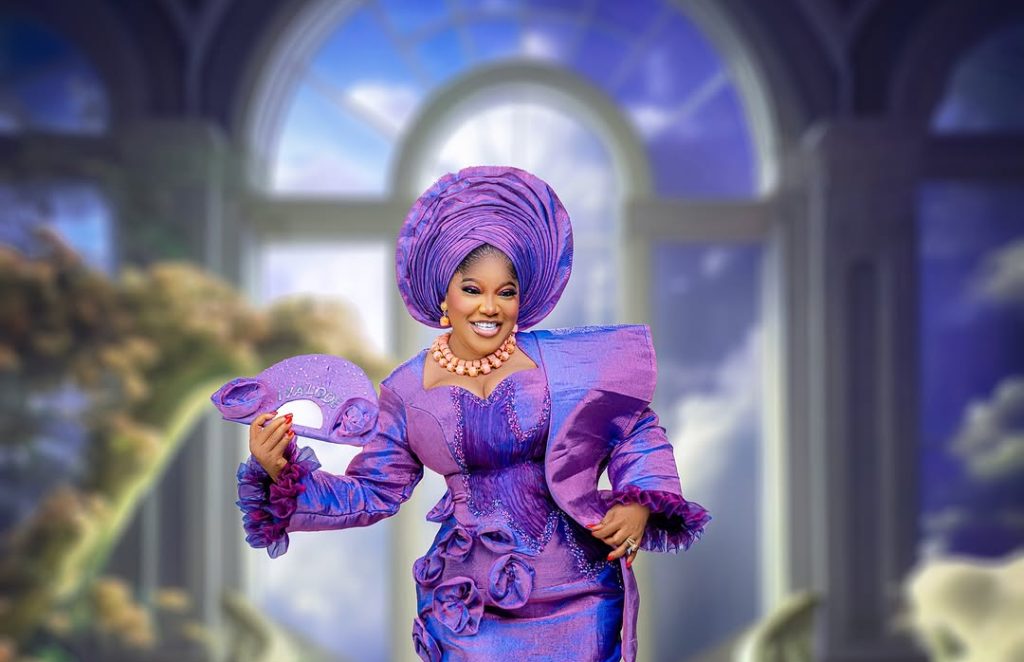
Somewhere between high fashion and high drama, the stars pulled up to Toyin Abraham’s Iyalode premiere and asked: “What if your overly helpful aunty was also your stylist?” And honestly? We need her number. The official theme—“Dress Like an Over Sabi Aunty”—was one of those briefs that could’ve gone sideways fast. But in true Nigerian fashion, the celebs said, “Hold my gele.” And proceeded to do the most—with strategy, sparkle, and zero shame. For the uninitiated: “Over sabi” is Pidgin for someone who knows everything, says everything, and doesn’t care if you didn’t ask. Now imagine that energy, wrapped in organza, feathers, gold lamé, and more corsetry than a Renaissance fair. That’s what the red carpet looked like. There were sculptural shoulders and fabrics that defied gravity. Dramatic entrances? Oh, absolutely. Toyin Abraham herself changed outfits mid-premiere like she was hosting the AMVCAs and officiating a wedding. Meanwhile, Mercy Aigbe arrived in a literal carriage. Cinderella could never. This wasn’t just fashion—it was theatre. It was satire. It was celebratory chaos disguised as couture. Because let’s be honest: Nigerians don’t just dress for occasions. We dress as the occasion. So if you’re still wondering whether anyone took the theme too far, the answer is yes. Gloriously so. Scroll through the looks and take notes. Or better still—channel your inner Over Sabi Aunty and critique every one. Toyin Abraham Mercy Aigbe Bimbo Ademoye Veekee James Sandra Okunzuwa Eyinju oluwa Ify Mogekwu
Veekee James Steals the Show in Ghanaian Kente at “Iyalode” Premiere
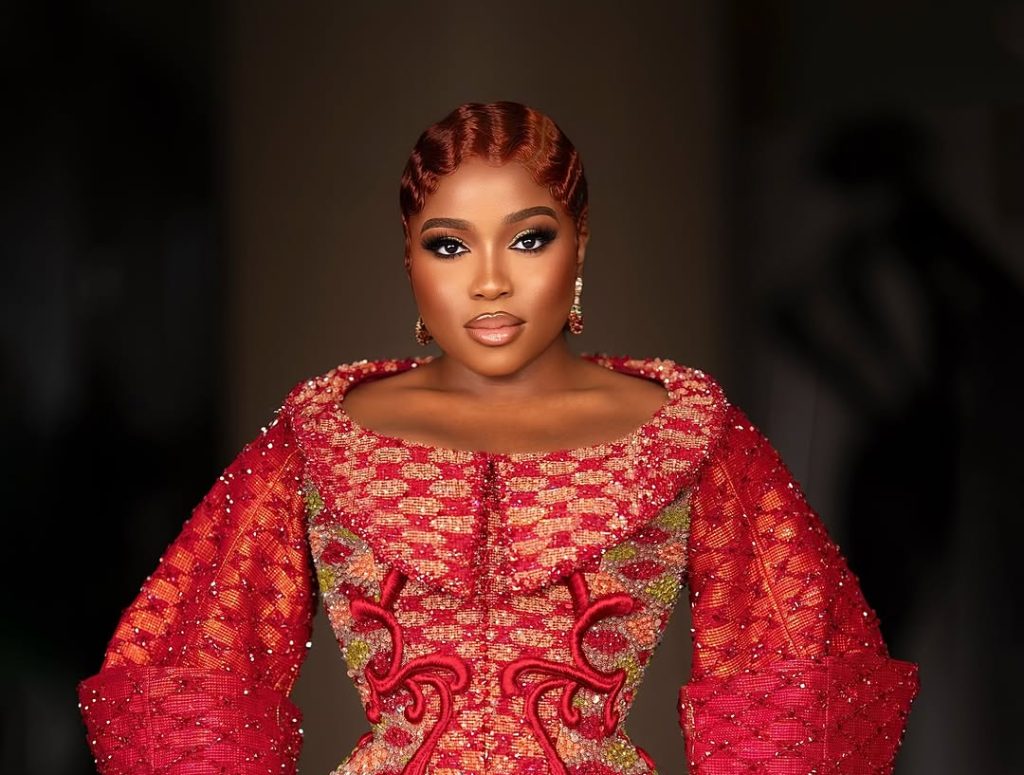
In a moment that felt equal parts movie star and monarch, Veekee walked in draped in a custom Ghanaian kente gown that could’ve easily doubled as architectural sculpture—if buildings wore sequins and had better posture. The look wasn’t begging for attention. It already had it. Made in Ghana and soaked in West African artistry, the gown was a maximalist fever dream: rich reds, coral flashes, sneaky hits of green, and beadwork so intricate it could’ve passed for mosaic. Sculpted at the waist, clenched at the hips, and anchored by sharp, defined shoulders—Veekee’s silhouette was less “red carpet ready” and more “get out of my frame, I am the frame.” The scoop neckline? Soft enough to say, “I’m approachable.” The high braided updo? A quiet flex that said, “But also, I don’t do chaos.” And don’t even get us started on the red clutch—textured, tonal, and visually in sync like it was styled by intuition, not Pinterest. It’s not new for Veekee to serve a lewk. But what she did here was serve context. A nod to heritage. A lesson in tailoring. A warning shot to every influencer who thinks a corset counts as couture. The dress wasn’t just fashion. It was finesse. And for anyone still unsure if she knew the weight of what she wore? The smirk, the stance, the “I planned this months ago” glow on her face said it all. The only thing unchic about this moment was everyone else’s attempt to compete. See more photos. (Or just save them. You’ll need references.) Photo Credit: Veekee James/Instagram
Eniafe Momodu Is a Walking Archive, a Production House, and a Cultural Shift
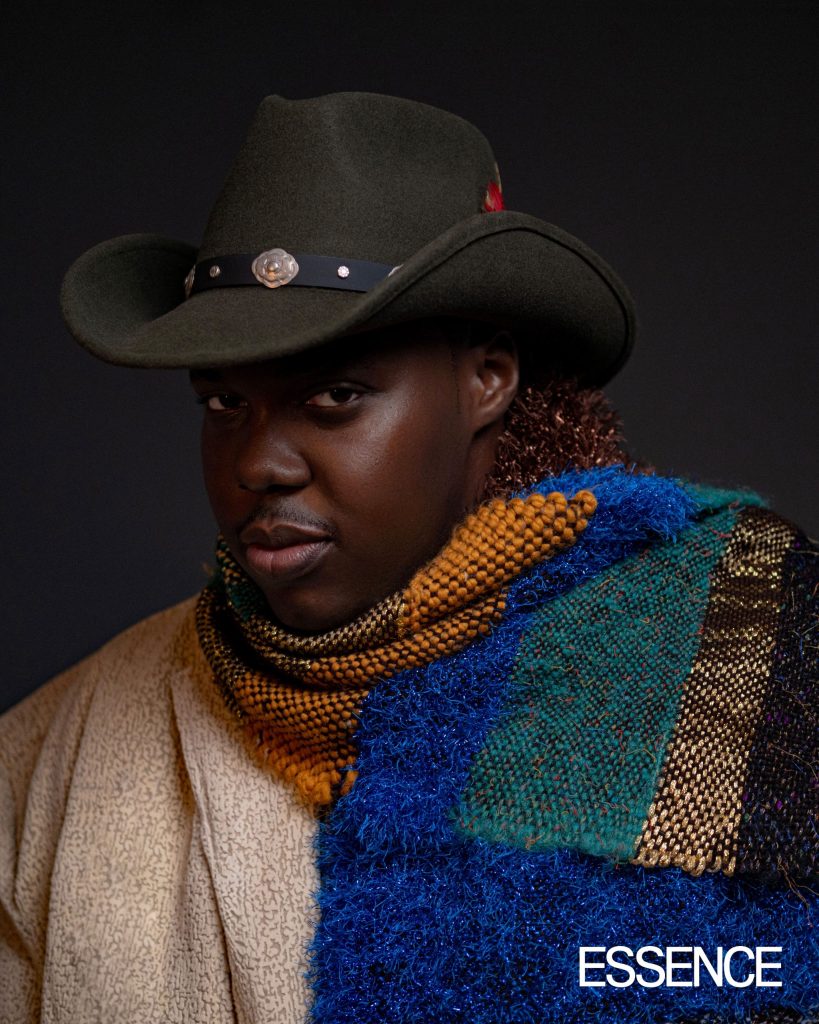
Nobody becomes “that guy” in fashion without a little chaos, a little flair, and a lot of receipts. And trust—Eniafe Momodu has all three. Eniafe is a 27-year-old London-born, Lagos-based photographer, writer, producer, and cultural curator—yes, all the hyphens. And while most of us are still deciding between Canva and CapCut, he’s busy co-producing Amazon documentaries, working with Nike, MAC, and Off-White, and leading creative direction for Beyoncé-adjacent fashion moments. (Yes, that Beyoncé.) His style? Let’s just say if André Leon Talley and a West African griot had a creative love child, it might look like Eniafe in a flowing crimson kaftan. But don’t get it twisted—he didn’t dress like this to be eccentric. He dressed like this to survive. Growing up big and tall, he once used fashion to disappear. Now? It’s how he dominates a room. And the fashion industry noticed. Brands like Fruché, Emmy Kasbit, and Pepper Row have all created looks inspired by him—or even named after him. Today, the silhouettes he once had to custom-make can be found off the rack. He’s no longer an outlier—he’s the blueprint. But here’s what hits harder than the clothes: the brain behind the beauty. Eniafe’s work is rooted in storytelling. Whether it’s photographing Temi Otedola, producing campaigns, or launching PRISM Creative (his own production + research agency), it’s always been about the why, not just the wow. His childhood? A multi-hyphenate origin story. His dad made him earn his first Nikon DSLR by scoring all A’s. (Spoiler: he did.) His entry into fashion? Getting paid by Fisayo Longe before he even asked for a rate card. His first big flex? Shooting Venus and Serena during their Lagos tour—at age 14. And now? He’s shaping the future of African style while archiving its past. Because West African fashion isn’t a trend. It’s history. It’s identity. And Eniafe is preserving it. Read the full story penned by Ugonna Ora-Owoh via the link.
African Creatives Shine at Cannes 2025 in Vlisco – A Celebration of Culture and Creativity
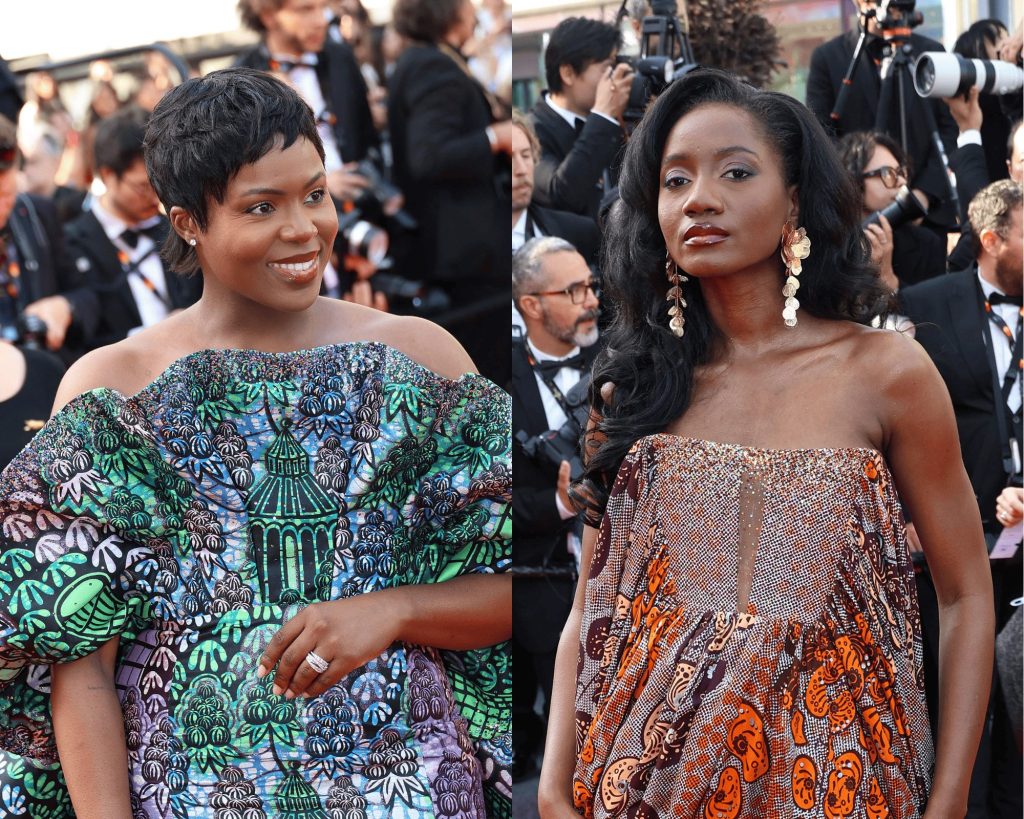
Actress Sophie Tankou and content creator Sylvanie Bessong made a memorable appearance on the red carpet of the 2025 Cannes Film Festival. Their presence was made possible by the iconic brand Vlisco, in collaboration with media outlet Brut. The two rising stars wore custom gowns designed by Francel Guezodje, Vlisco’s Head Couturier at the brand’s atelier in Cotonou, Benin. Sylvanie wore a Satin Royal dress – a romantic and glamorous fabric, with an airy drape and soft, fluid movement – adorned with Swarovski crystals. Sophie wore Vlisco’s iconic Grand Super-Wax – defined and crisp, with a touch of sparkle on the finish – also embellished with Swarovski crystals. This project, initiated by Vlisco, offered these young creatives a one-of-a-kind experience while celebrating their talent. “It’s a joy to see these young women bring their dreams to life and share their creativity and culture with the world,” said Perry Oosting, CEO of the Vlisco Group. By spotlighting their talent on a global stage like Cannes, Vlisco continues to honour and uplift the next generation of African creatives. More than just a brand representation, this is a true celebration of identity, art and savoir-faire through fashion. All fabrics featured in this story are available on Vlisco.com and through your trusted Vlisco retail partner. Explore the collection, find inspiration, and create your own one-of-a-kind look with a Vlisco print.