

Joy Fache James on Leather, Labour, and What Actually Happens Inside a Paciencia Production
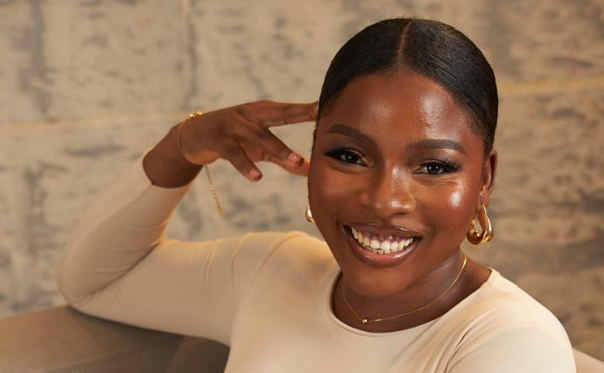
Inside Paciencia with Joy Fache James as she unpacks leather, weaving, and the philosophy behind slow, intentional bag making.
“I Don’t Design for the Woman Who Wants to Be Noticed” A Conversation with Joy Fache James, Founder of Paciencia
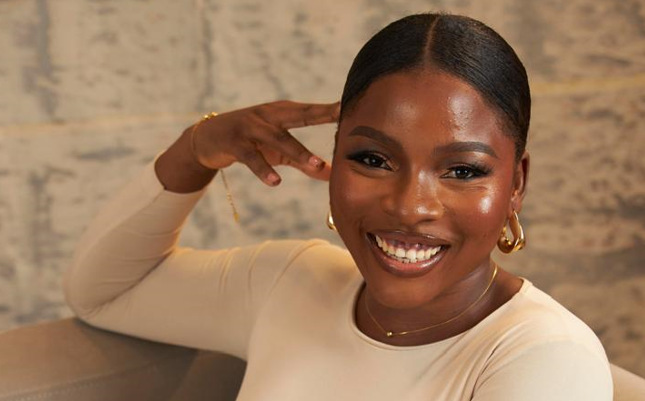
Joy Fache James is not what I expected, and I mean that as the highest possible compliment. There is a particular kind of energy that tends to follow Lagos brand founders who are gaining traction, a performing-of-the-journey quality, the sense that the story is being slightly shaped in real time for the benefit of whoever is listening. Joy does not have this. She speaks the way someone speaks who has been thinking carefully about something for long enough that the thinking has settled. Certain without being defensive and precise nor guarded. We met in Lagos in December, the tail end of a year in which Paciencia walked an Emmy Kasbit runway, won an industry award, and added customers in four countries to its growing base. I wanted to understand the person behind all of it. La Mode: Let’s start with the name. Paciencia. How did that happen? Joy: Honestly, that came before anything else. Before even the logo, or any collection. It was during my apprenticeship. I knew what I was committing to and I needed a word that was that commitment. What I aimed for was not a word about the product but about the standard I was holding myself to while making it. As you know, the fashion industry runs on speed. Seasonal urgency. The next thing before the current thing is understood. I wanted to name my brand after the quality most directly opposed to all of that. And then I wanted to build something that justified the name every single day. If I name it Paciencia and then rush a collection out before it’s ready, the name becomes a lie. I could not live with that. So the name is also a discipline. La Mode: What about the handwoven leather… Where did that come from? Joy: About that, I needed something structurally mine. Not aesthetically. I needed something that could exist on a Paciencia bag so consistently that it’ll almost not be mistaken to identify one when you see them randomly. The weaving came from that requirement. Leather weaving as a technique is not new. It exists across West African craft traditions and in other cultures. But I developed it into something specific to this brand. Consistent, refined, applied as a primary design element rather than an afterthought. The technique also enforces the philosophy, which I think is why it feels right. You cannot hurry the weaving. The tension of each strip, the alignment of each interlace, all these require attention that cannot be compressed. So the technique and the name are the same idea in different forms. La Mode: Alright, tell me about the woman you design for. Joy: I think She has moved past the stage where her bag needs to speak on her behalf. She is not looking for a status signal or a logo that does her introduction before she opens her mouth. What she wants is something that satisfies her own standard. The woman I make my bags for needs something she picks up in the morning and feels, in the weight of the leather and the way the clasp opens, that it was made by someone who cares about the same things she cares about. I don’t design for the woman who wants to be noticed. I design for the woman who already knows she is. La Mode: That’s interesting and that really stands out for me. Meanwhile, Emmy Kasbit selected Paciencia for his runway this year. In your second commercial year. How did that happen? Joy: It happened because the work earned it. That is the most honest answer I can give without being over modest. Fact is, Emmy Kasbit does not select accessories to fill a gap on a runway. If you are well acquainted with him, you’ll know that he only selects accessories that contribute to something, and that are right in relation to everything else he is doing. When his team came to us, what I felt was not surprise. It was more like a confirmation. Someone whose judgment I respect looked at this work and said it belongs in this context. That is the kind of confirmation that changes how you operate. Not because you needed permission to believe in the work, though, but because it recalibrates what you allow yourself to aim for. La Mode: You studied public health. You have an MBA. Neither is the obvious path to leather design. Joy: The MBA is in every operational decision I make. How I price. How I think about production costs relative to quality standards. How I have built the e-commerce operation. These are management decisions and having the framework for them from the beginning saved me from mistakes that many creative brands make early. Although the public health background is obviously a discipline wide apart from the creative industry, somehow it still shows up in how I think about community, about what structures need to exist for people to flourish, what access looks like when it is genuinely available versus when it is performed. When I think about She Creates Fashion Initiative, about what I want Paciencia to mean beyond the bags, I am thinking with that training. Systemically. About conditions rather than just individuals. La Mode: Speaking of the She Creates initiative…you launched that this year. Tell me about it. Joy: Yes. She Creates Fashion Initiative is a women-centred platform; fashion skills, business literacy, leadership, sustainable design. For young women and emerging creatives who want to build practices in this industry but do not have access to the complete toolkit. The creative talent in this industry is extraordinary. I encounter women constantly who have the eye, the instinct, the commitment. What is frequently missing is the business side like the pricing, the cash flow, the understanding of how to build a brand rather than just a product. She Creates is trying to close that specific gap through practical knowledge. La Mode: Where does Paciencia go from here? Joy: Well, It becomes a
Vera Collection at GTCO Fashion Weekend 2023: A Confident Statement in Lagos
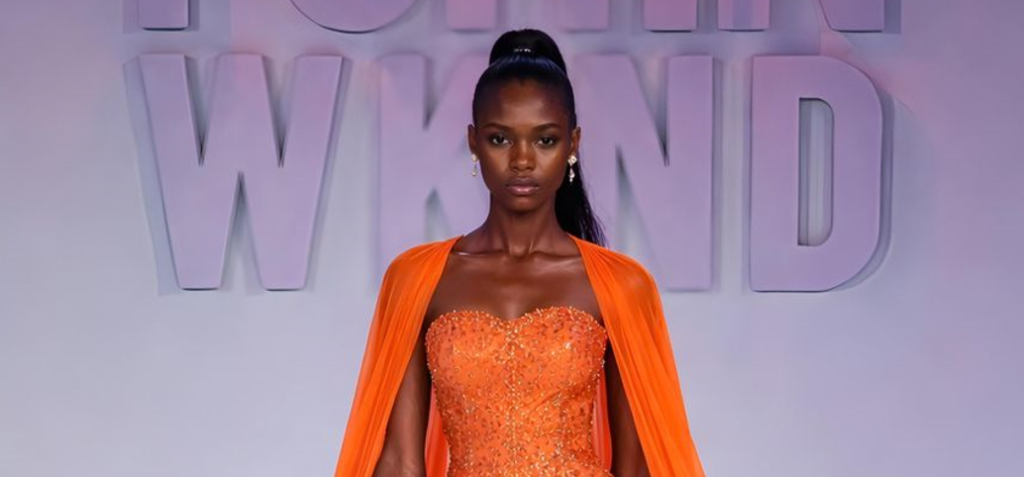
On November 11–12, 2023, Lagos once again became the center of fashion as GTCO Fashion Weekend brought together designers, industry leaders, and style lovers under one roof. Known for blending fashion and business, the event continues to be one of Africa’s most important style platforms. This year, one of the collections that truly stood out was the Vera Collection. From the moment the first model stepped onto the runway, it was clear that Vera came prepared. The presentation felt confident, clean, and intentional. Nothing was rushed. Nothing felt out of place. It was a showcase built on clarity and strong design. The Vera Collection focused on strength and elegance. The pieces were designed to highlight the female form in a flattering but refined way. There were fitted dresses that shaped the waist beautifully, structured pieces that gave a sharp and polished look, and flowing gowns that added just the right amount of drama. What made the collection special was its balance. The designs were bold but not overwhelming. Elegant but not dull. Each outfit felt like something a modern woman could wear to make a statement whether at a formal event, a red-carpet moment, or an important celebration. One of the strongest aspects of the show was the tailoring. The cuts were neat and precise. The garments moved effortlessly as the models walked, showing that the designs were not just made to look good standing still they were made to live and breathe on the runway. The silhouettes were clear and well thought out. Some looks hugged the body for a sleek effect, while others flowed softly, creating movement and drama. Together, they told a cohesive story. At an event like GTCO Fashion Weekend, details matter. The audience includes buyers, stylists, and fashion insiders who pay attention to finishing and construction. The Vera Collection did not disappoint. The fabrics looked rich and well chosen. The finishing was clean. Every piece looked complete and ready for both the runway and the market. That level of care is what makes a brand stand out in a competitive space. GTCO Fashion Weekend is more than just a fashion show it is a platform for growth and visibility. Vera used that stage well. The collection felt mature and focused. It reflected a brand that understands its audience and knows what it stands for. By the time the final walk happened, the message was clear: Vera is designing for women who want to feel powerful, elegant, and confident without trying too hard. The Vera Collection at GTCO Fashion Weekend 2023 was a reminder that strong design does not need to be loud. With clean silhouettes, quality fabrics, and confident presentation, the brand delivered a memorable showcase. Lagos once again proved why it remains a key fashion capital in Africa and Vera proved it is a name to keep watching.
Glory Agbonita Ehizuelen at Tranoï Paris 2023: Agbons-GL Design Showcasing African Elegance on the Global Stage
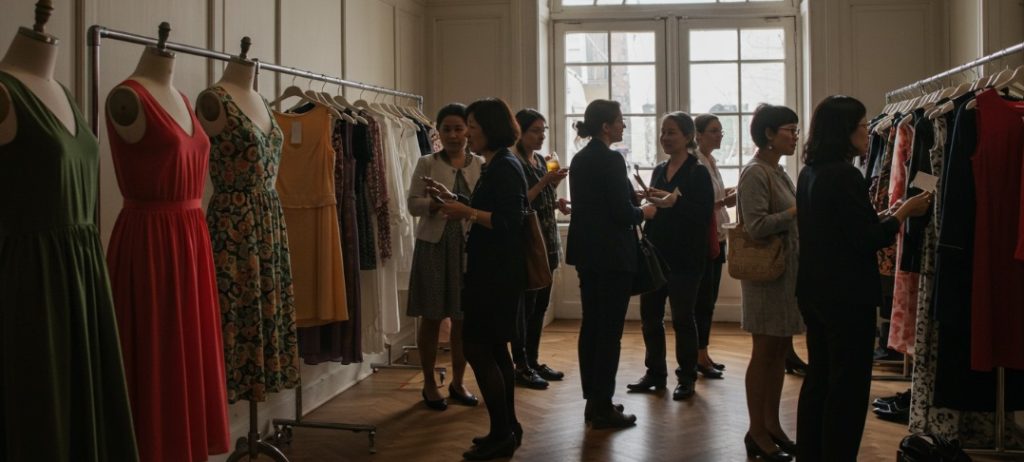
From September 28th to October 1st, 2023, Paris once again affirmed its reputation as the heart of fashion innovation during the Tranoï Fashion Trade Show, an event known for spotlighting designers who are shaping the future of the industry. Among the visionary creatives who exhibited was Glory Agbonita Ehizuelen, Creative Director of Agbons-GL Design, presenting a collection that seamlessly merged African cultural heritage with global contemporary appeal. Glory’s exhibition was not just a showcase of garments but a celebration of identity and craftsmanship. Her designs spoke in bold yet elegant tones, weaving together traditional African textiles, vibrant prints, and sophisticated silhouettes that echoed resilience and pride. Each piece embodied a story, reminding the world that African fashion is not confined to the continent — it is a global force with timeless influence. Visitors to the Agbons-GL stand experienced more than fabric and form. They encountered a creative vision built on heritage, sustainability, and empowerment. Glory’s approach to design emphasizes not only aesthetic excellence but also a commitment to preserving cultural authenticity and promoting ethical fashion practices. In a trade show celebrated for innovation and originality, her work stood out for its authenticity and depth. The Tranoï platform, renowned for connecting designers with international buyers, press, and tastemakers, provided the perfect stage for Agbons-GL to affirm its place in the global fashion conversation. With flowing pieces that moved like art in motion and structured designs that embodied confidence and elegance, Glory’s collection resonated with audiences far beyond Paris. Her participation in Tranoï Paris 2023 marked another milestone in her mission to position African fashion at the center of the global stage. Through Agbons-GL, Glory Agbonita Ehizuelen continues to show that fashion is more than clothing — it is culture, it is power, and it is a universal language of expression. At Tranoï Paris 2023, Agbons-GL Design reminded the world that Africa’s story is beautiful, bold, and without end.
“Threads of the Unspoken”: Deborah Abosede Ibeme’s New Solo in Ughelli Is the MostHonest Exhibition of African Womanhood You Will SeeThis Year
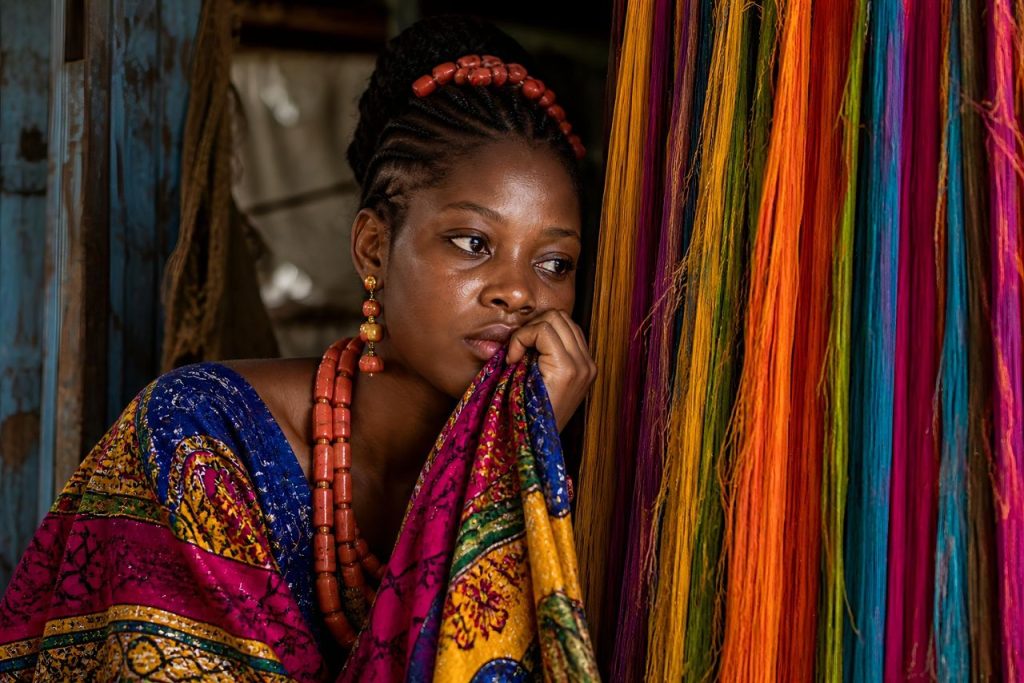
Deborah Abosede Ibeme hosts her solo exhibition titled “Threads of the Unspoken”. It isher second solo exhibition after her debut at the Nike Art Gallery in Lagos last year,announced with a completeness that debut exhibitions rarely manage, that somethingsignificant had arrived in Nigerian photography. This year, she’s hosting at Onobrak Art Centre. Onobrak is not a name that appears onthe usual lists. It is not in Lagos nor in Abuja. It does not feature in the seasonalroundups of must-see exhibitions that circulate among the people who determine, through the collective weight of their attention, what Nigerian fine art considers important this month. The centre is located in Ughelli, a Delta State city with its own density and character and history, operating quietly, seriously, in a region that the metropolitan gallery circuit has not yet learned to look at with the attention it deserves. “Threads of the Unspoken” is what Deborah’s practice looks like when it goes deeper,when it moves from declaration into excavation, from the formal establishment of avisual language into the more difficult and more important work of using that languageto say something that has not been said before, about people who have not beenshown before, in a place that has not been shown before. The exhibition is nine works. All black and white. All of them, shot with the tonalprecision and symbolic density that have become Deborah’s signature, the deepcontrasts, the deliberate light, and the sense that every element in every frame isearning its place. The subjects are mostly women. The subject, underneath and behindall of it, is what women carry without being asked whether they are willing to carry it, and what it looks like when they carry it anyway, with the specific grace that endurance produces in a body over time. The first work that stops you is the one nearest the entrance, and it stops you because it refuses to give you what portraiture usually gives you first, which is “a face”. The studio portrait is titled “Veiled Majesty”. The image, black and white, shot from the shoulders up, the background a clean,neutral grey. A woman in an enormous gélé, the fabric wrapped with such architecturalprecision and such structural ambition that it dominates the entire upper half of theframe. The gélé is metallic, textured, luminous even in monochrome. It’s folded andpinned into a form that is simultaneously headdress and sculpture, adornment andstatement. Multiple strands of beads cascade from her throat. Her bare shoulders arevisible below, a small scar on the upper arm the only detail that reminds you, gently, that a human body is beneath all of this. And her face, entirely concealed. Wrapped inside the gélé, present only as absence, as the space the fabric has claimed completely. Most photographers, confronted with a subject whose face is hidden, treat it as a problem, but Deborah in “Veiled Majesty”, treats it as an argument. What the image is saying, and at that with considerable force, is that first, identity does not require a face to be legible. That’s loud. It also asserts that authority does not require expression, and majesty does not require eyes. What remains when the face is removed, the posture, the adornment, the specific way the gélé has been wrapped withthe particular knowledge that belongs to the woman who wrapped it, is sufficient. Evenmore than sufficient, it is, “Veiled Majesty”, argues, the whole story. As a matter of fact, the face would have been a distraction. A viewer could land on the face and feel they have arrived at the meaning, meanwhile, they are more to be perceived and wrapped in. By removing the face, Deborah removes the landing spot and asks the viewer to stay in the discomfort of not knowing where to rest until, gradually, they begin to understand that the fabric itself is the face. That the wrapping is the identity. An understanding that what is worn, how it is worn, and what it communicates to anyone who knows how to read it, is as legible as any facial expression the woman might have offered. “The Good Effect” is the second work on our highlight and it is everything “Veiled Majesty” withholds. An older woman, outdoors, a village background softened almost to the quality of apainted backdrop. Visibly seen in the distance are thatched huts, a flat expanse ofground, a grey and open sky. She is laughing. Apparently, her laughter is not aperformance for the camera, nor is she offering the managed smile that most photographic subjects produce when asked to express joy. She’s laughing with the total,unconsidered abandon of someone in the middle of something genuinely funny. Hereyes are closed, her head tilts slightly back, and her mouth wide open. The laugh is socomplete it has temporarily taken over her entire face, her entire body, and the frameentirely. She holds a clay pot. Both hands wrapped around it, drawn close to her body, the wayyou hold something you value and I don’t mean carefully, but familiarly. The pot isdecorated with geometric patterns etched into the clay in a tradition that is specific to the pottery practices of the Niger Delta, each mark a form of knowledge passed downthrough the hands of women who made pots before her and women who will makethem after. Silver bracelets at her wrists. Large circular earrings. A printed headwrap. A wrapper tied across her chest. Every element of adornment communicates something, her age, her status, her belonging to a specific place and community and tradition. And she wears all of it with the unconsidered ease of someone who has never thought of these things as costume. Placed beside the concealment and architectural gravity of “Veiled Majesty”, thiswoman’s laughter is the most radical thing in the exhibition. Joy is not radical in theactual sense of it, but this specific joy, in this specific body, held in this quality of photographic attention, refuses every narrative that has been constructed aroundwomen like her. She isn’t suffering, enduring, not performing dignity for an audience that requires
Glory Agbonita Ehizuelen at Haute Couture Fashion Week Paris 2023: Agbons-GL Designs Bringing Africa to the World’s Stage
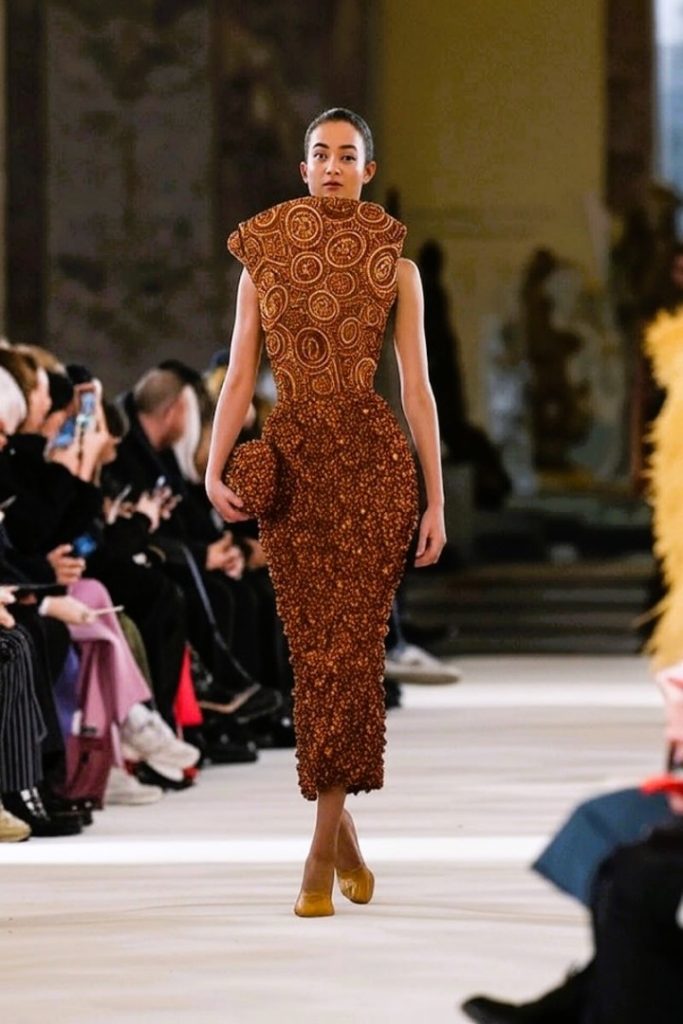
From July 3rd to 6th, 2023, Paris the global capital of fashion opened its doors to creativity at its finest during Haute Couture Fashion Week. Among the visionary designers who graced the stage, Glory Agbonita Ehizuelen, Creative Director of Agbons-GL Design, delivered a showcase that left the audience in awe, blending Africa’s cultural heartbeat with the sophistication of haute couture. Her collection was more than an exhibition of style it was a cultural statement. Each garment told a story rooted in African tradition, expressed through rich textiles, daring prints, and silhouettes that captured both strength and femininity. The runway became a celebration of heritage, showing the world that African design belongs at the very center of global couture. The pieces reflected a harmony of contrasts: bold yet refined, traditional yet innovative, deeply cultural yet undeniably modern. Flowing fabrics moved like poetry under the lights, while structured cuts revealed precision and mastery. It was fashion with rhythm every step exuding pride, resilience, and artistry. The Paris audience responded with admiration, recognizing that this was not just couture; it was Africa’s timeless story brought to life. For Glory, fashion is more than aesthetics. Through Agbons-GL, she champions sustainability, identity, and empowerment, proving that couture can also carry conscience. Her Paris showcase emphasized that fashion has the power to preserve culture while opening new pathways for creativity and global unity. Her participation in Haute Couture Fashion Week Paris 2023 marked a defining milestone not only for her career but also for the presence of African fashion on one of the world’s most prestigious stages. It was a moment that reminded the industry that Africa is not simply influencing fashion; it is shaping it. With Agbons-GL, Glory Agbonita Ehizuelen continues to redefine couture weaving together heritage and modernity, telling Africa’s story with elegance, pride, and no end.
Marvic Chijioke Okeugo, Photographer, Active Member of the African Artists’ Foundation (AAF)

Marvic Chijioke Okeugo is a contemporary photographer and visual storyteller whose work engages culture, identity, and lived African experiences through a thoughtful visual lens. He has been an active member of the African Artists’ Foundation (AAF) since January 2022, aligning his creative practice with one of Africa’s most influential contemporary art institutions. The African Artists’ Foundation (AAF) is a leading non-profit organization dedicated to the promotion and development of contemporary African art. Founded by renowned curator Azu Nwagbogu, the foundation has played a significant role in shaping Africa’s visual culture through exhibitions, festivals, artist development programs, and international collaborations. AAF supports artists working across photography, fine art, multimedia, and curatorial practice, with a strong emphasis on artistic excellence, cultural relevance, and social engagement. Over the years, AAF has been associated with and has supported a network of highly respected African artists and photographers whose works have achieved both local and international recognition. These include George Osodi, an award-winning documentary photographer known for his powerful visual narratives on social and political issues; Andrew Esiebo, a globally recognized photojournalist whose work explores African identity, resilience, and everyday life; and Yagazie Emezi, a visual storyteller celebrated for her intimate documentation of culture, gender, and social justice themes. The foundation has also been linked with photographers such as Akintunde Akinleye, whose work focuses on documentary and lifestyle photography with strong cultural depth; Tam Fiofori, a veteran photojournalist widely regarded for his historical documentation of Nigeria’s political and cultural landscape; and Tunde Owolabi, a contemporary photographer and visual artist whose work blends storytelling with experimental approaches to African narratives. Collectively, these artists represent the depth, diversity, and global relevance of the AAF creative community. AAF operates on clear artistic criteria, supporting creatives whose work demonstrates originality, conceptual strength, consistency, and relevance to contemporary African realities. Photographers are particularly encouraged to use their practice as tools for documentation, storytelling, and cultural preservation. As a photographer, Marvic Chijioke Okeugo’s practice aligns closely with these values. Since joining the foundation in 2022, he has remained actively engaged within its creative ecosystem, contributing to and benefiting from a community committed to collaboration, professional growth, and artistic integrity. Marvic’s continued involvement with the African Artists’ Foundation places him among a respected network of African creatives working collectively to advance photography and visual storytelling as powerful instruments of representation, dialogue, and cultural memory.
The Grammar of Light: Understanding Deborah AbosedeIbeme’s Visual Language

Literally, when you stand in front of a Deborah Abosede Ibeme photograph long enough, you will notice something that shifts from the aesthetic experience it begins with, to a recognition of technical mastery, the quality of light that feels less like illumination and more like revelation, and then, the compositional weight that holds every element in a tension so precise it reads as inevitable. You register all of this in the first few seconds, the way you register the intelligence of a room before you have spoken to anyone in it. But then something else happens. The image begins to speak. Not loudly, and also not with the aggressive legibility of work that announces its own meaning, but in the patient, layered way that a conversation deepens after the pleasantries are done. You begin to notice what the fabric is saying, to understand what the subject’s stillness is holding. And then, ultimately, you begin to feel, with a specificity that is almost uncomfortable, that you are not looking at a photograph. You are reading one. This is what it means to encounter a visual language rather than a visual style. Every serious artist eventually develops a style. The rarest ones develop a language, something with its own grammar, its own rules of meaning, and it’s way of making the world legible. Style is the surface. Language is the structure beneath, the grammar of decisions that makes the surface say what it says. The African Womanhood Series, which Deborah began in 2021 as the conceptual anchor of her practice, is where the language first becomes legible. These are works that examine resilience, spirituality, and generational legacy among African women, but you risk missing what makes them remarkable if you focus on just describing them by their themes alone. The themes are the content. The language is how the content iscarried. And in works like “Veiled Majesty” and “Strength of The River Mother”, both produced within this foundational period and now available as limited-edition prints, the carrying is the achievement. The argument does not sit on top of the image. It is inside it, distributed across every decision she made before the shutter fired. Consider what she is doing with light in these earliest works. Most photographers think of light as a technical problem to be solved, a condition of the environment to be managed, corrected, made serviceable. Deborah treats it as a philosophical position to be taken. The light in her images is never ambient, never accidental, never simply the available illumination of a space. It is designed, constructed through studio lighting rigs she configures herself, reaching toward what she has described as a very specific quality: the weight before the ceremony. Warm. Dense. Full of what is about to happen. The kind of light that exists in the hour before something irreversible occurs, a rite, a birth, a crossing. In “Veiled Majesty”, this light falls on the subject with the deliberateness of a formal acknowledgment. It does not illuminate the woman so much as consecrate her, the shadows falling not to obscure but to define, to give the figure the kind of architectural presence that Dutch Golden Age portraiture gave to its subjects through precisely the same tonal logic. The reference is not decorative. In her earliest works, Deborah was already in conscious dialogue with Rembrandt and Vermeer, studying what those painters understood about the relationship between darkness and significance, and translating that understanding into a photographic practice applied to subject matter those painters never engaged with. Not imitation. Translation. The result is something that belongs to neither tradition entirely and to both simultaneously. Her shadows in her works are as carefully considered as her highlights. She works in deep tonal contrasts areas of rich, almost architectural darkness against which the subject emerges with a defined authority that is, in the context of images of African women, quietly radical. In a visual culture that has frequently photographed African women in conditions of flatness, even technically competent flatness, her light makes an assertion that her work is not a snapshot of a life, rather a formal acknowledgment of one. What the light does, the objects confirm. And if you walk slowly through any frame from this period and you will encounter things that do not belong to the category of props. Cowrie shells. Clay vessels. Traditional wrapper cloths tied in ways that carry specific regional meanings. Ritual implements drawn from Ijaw and Urhobo cosmological traditions. Fabrics, aso-oke, akwete, hand-dyed textiles, selected not for their visual beauty alone but for what they communicate to an eye that knows how to read them. In “Strength of The River Mother”, for instance, the relationship between the subject’s posture, the cloth she wears, and the objects surrounding her is not compositional arrangement. What you encounter is symbolic sentence construction. Each element is aword. The image is a statement. And the statement, about feminine power, the specific weight of the River Mother figure in Ijaw cosmology, about the relationship between endurance and divinity in Niger Delta spiritual tradition requires all three elements to be accurate, not merely beautiful, in order to hold its meaning. This is the distinction that separates Deborah’s use of symbolic material from the decorative Africanist aesthetic that photography has frequently produced. That’s when we say she speaks symbols instead of borrowing them. And in the earliest works of the African Womanhood Series, she was already speaking them with a fluency that suggested years of study not just months. The cowrie shell is instructive here. In the visual grammar of the Niger Delta, the cowrie is not a decorative element but a marker of value, of spiritual protection, and of feminine power. It’s a currency older than paper and a symbol older than many of the languages that might try to describe it. When it appears in her works, it is not there because it looks interesting against dark skin. No. It is there because it means something specific, and she knows
Glory Agbonita Ehizuelen at Aberdeen Fashion Week 2022: Agbons-GL Redefining African Elegance
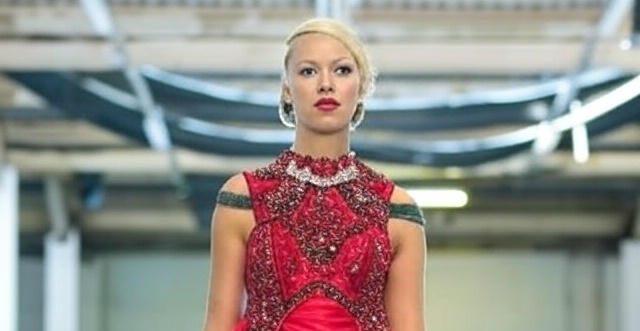
From May 12th to 14th, 2022, the vibrant city of Aberdeen, Scotland, became a stage for global creativity as Aberdeen Fashion Week celebrated innovation, culture, and diversity in fashion. Among the designers who captivated audiences, Glory Agbonita Ehizuelen, Creative Director of Agbons-GL Design, delivered a showcase that once again proved why her brand is a force to be reckoned with. A CREATIVE VOICE WITH ROOTS IN HERITAGE Glory’s work has always transcended aesthetics — it’s about telling Africa’s story through threads, patterns, and movement. At Aberdeen Fashion Week, she unveiled a collection that wove together her signature boldness with the subtleties of timeless elegance. Her designs drew from the richness of African fabrics and textures, yet spoke to a global audience, reminding everyone that heritage is not a boundary, but a universal language. Each piece carried the essence of cultural pride, yet with a modern silhouette that placed her collection at the intersection of tradition and contemporary fashion. THE SHOWCASE: A CELEBRATION OF STRENGTH & FEMININITY On the runway, Agbons-GL designs moved like poetry. Flowing fabrics revealed effortless grace. Bold prints and patterns reflected identity and belonging. Refined tailoring embodied confidence, power, and resilience. Every garment whispered stories of Africa’s resilience, beauty, and creativity, while radiating a distinctly feminine strength that drew admiration from the audience. For Glory, the Aberdeen stage was not just about presentation it was about representation. Representation of Africa, of women, and of sustainable artistry. A VISION ROOTED IN PURPOSE More than fashion, Agbons-GL Design is a platform for impact. Glory continues to emphasize sustainability and ethical creativity, proving that fashion can be both striking and socially responsible. Her ability to blend cultural preservation with forward-thinking design has positioned her as a leader redefining African fashion on international stages. ABERDEEN REMEMBERED HER NAME At Aberdeen Fashion Week 2022, Glory Agbonita Ehizuelen didn’t just showcase clothing she showcased a movement. One that celebrates African heritage, elevates female strength, and champions sustainable fashion. For those in attendance, her designs were not just admired they were felt. They reminded the world that African creativity has no borders, no limits, and no end. With every showcase, Glory cements her legacy: Agbons-GL is not just a fashion label …it is Africa’s timeless story, stitched in elegance, worn with pride, and shared with the world.
“Where Ancestors Still Breathe”Deborah Abosede Ibeme’s Debut Solo at the Nike ArtGallery Is the Most Assured First Exhibition Lagos HasSeen in Years
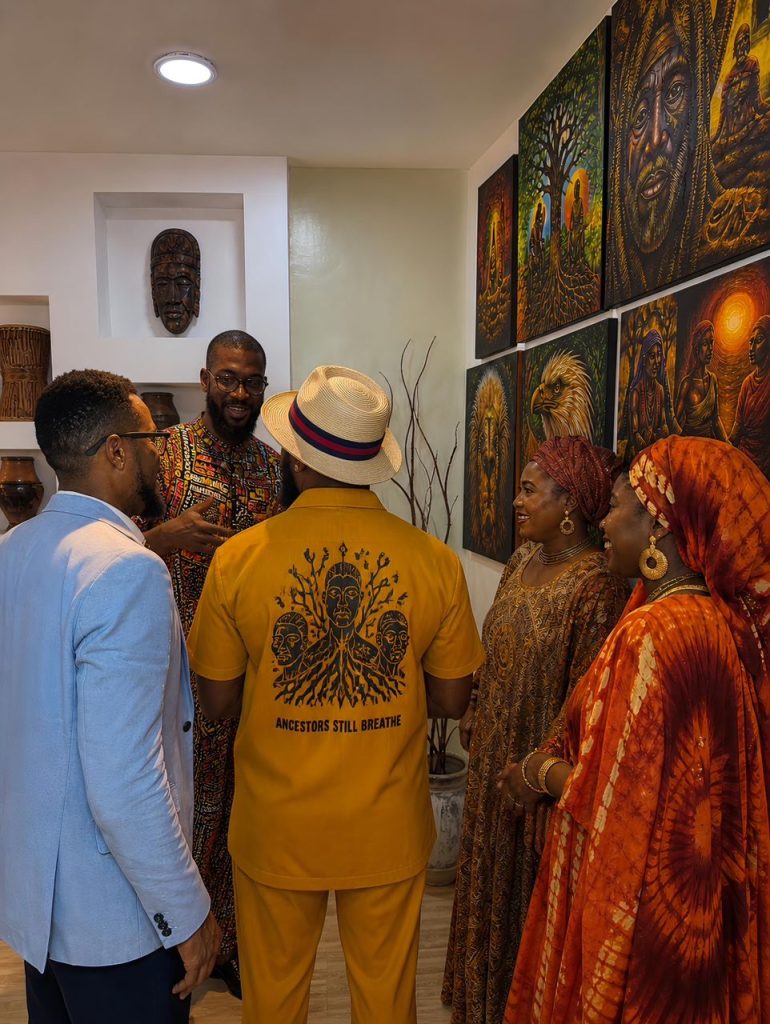
On a Tuesday evening in March, the Nike Art Gallery on Lekki Expressway fills with theparticular energy of an opening night that feels like more than an opening night. Thecrowd is the usual Lagos art crowd, collectors, creatives, critics, the culturally curious. But there is something in the quality of attention in the room that is different from theusual. With the usual opening nights where people circulate, loosely organised socialperformance around the presence of art on walls. With this exhibition, the atmospherewas one such that the crowd were standing in front of the photographs, speaking in thelowered voices that people use when they are not entirely sure what they are feeling butare certain they are feeling something. The exhibition titled “Where Ancestors Still Breathe”, a solo show with eight large-formatfine art photographs, each one mounted with the kind of care and spatial considerationthat tells you the person who made them understands that how a work is presented ispart of what the work is saying. The photographer, Deborah Abosede Ibeme is a Warri,based fine artist. She has been working professionally as a fine art photographer for twoyears.Two years.It is worth pausing on that before moving any further. A little note on The Nike Art Gallery shows that the gallery is reputable for showing worknot just because an artist is promising but because the work is ready. This is one ofNigeria’s most significant cultural institutions, a space with a permanent collection ofover eight thousand works, a history of exhibiting artists whose practices have shapedNigerian fine art across generations, and an audience whose sophistication has beenbuilt through years of sustained engagement with the best available. When aphotographer mounts a solo here, the implicit argument of the institution is that the workbelongs in this space, not as a developmental gesture or an early-career investment,but as a statement of current achievement. “Where Ancestors Still Breathe” belongs inthis space. Completely, without qualification, on its own terms. The exhibition occupies the gallery with a quality that is immediately present before anyindividual work has been closely examined. The light inside the photographs, and itwould be more accurate to call it the light Deborah builds inside the photographs, (sincenothing about it is accidental,) establishes a temperature for the whole space. Warm.Dense. Carrying the specific weight of a moment just before the ceremony. It is the kindof light that makes a room feel held rather than simply illuminated, and it draws visitorstoward the works with the mild, insistent pull of something that wants to be stood in frontof. The subject of the exhibition is announced in the title and explored in the works with aphilosophical seriousness that curatorial language rarely achieves. “Where AncestorsStill Breathe” takes its name and its central argument from the cosmological tradition ofthe Niger Delta, specifically the Ijaw and Urhobo understanding that the ancestors arenot historical figures but active presences. “Not behind us in time, but beside us inspace,” as Deborah herself would assert. Breathing through the choices we make, thebodies we inhabit, the practices we maintain or allow to slip quietly out of the livingworld. This is not metaphor in the tradition Deborah is working within. It is ontology, aspecific and seriously held account of how reality is structured, of who is in the roomand what their relationship to the living is. The photographs do not illustrate this belief. They embody it. They are built, and builtmost definitely fits this context because this images do have the quality of beingconstructed, and it is so, to make the ancestral presence tangible. To give it a visualform that a viewer can stand in front of and feel, in the body, before the mind has hadthe chance to organise what is being experienced into something more manageable.Move into the works themselves and the first thing that demands attention is the use ofsymbolic objects. These are not props. That word is inadequate and inaccurate for whatDeborah is doing with the material she places in her frames. Cowrie shells appear inseveral of the works, arranged with a precision that is communicative rather thandecorative. In the visual grammar of the Niger Delta, the cowrie carries specificmeaning: value, spiritual protection, feminine power, a cultural currency. When theyappear in these images, they are doing the work of vocabulary. They make a statementabout the woman in the frame, about what she carries and what she is worth, in alanguage that the image does not need to translate because the image was built in thatlanguage from the beginning. Wrapper cloths appear across the exhibition tied with a specificity that communicates tothose who know how to read it, the knot, the arrangement, the choice of fabric itselfcarrying information about identity, status, ceremonial context. Clay vessels. Ritualimplements drawn from Urhobo and Ijaw tradition. Each object placed with the care ofsomeone who has spent serious time understanding what the object means beforedeciding whether it belongs in the frame. This level of symbolic accuracy is one of the most intellectually significant qualities ofthe exhibition and one of the most difficult to achieve. Photography has a long history ofusing African cultural material, fabrics, objects, adornment as visual texture, as thesignifiers of a generalised cultural identity that adds atmosphere to an image withoutadding meaning. “Where Ancestors Still Breathe” does not do this. The objects in theseframes are specific, accurately deployed, and integral to the meaning of the images theyappear in. Remove them and the images lose something they cannot afford to lose.This is the difference between a photographer who has researched a culture and aphotographer who is working from inside one. The subjects of the photographs are mostly women. This is not incidental.The African Womanhood Series, the body of work from which these exhibition piecesare drawn is built on the understanding that the African woman is not simply aparticipant in cultural tradition but its primary custodian. She is the one who knowswhich fabric belongs to which ceremony, which object must be handled with which care,which gesture communicates what to whom in which context. She is, in Deborah’sframing, the living archive, the