
Few novels spark as much divided opinion as Wuthering Heights, the gothic masterpiece by Emily Brontë that has long been criticized and celebrated in equal measure for its dark portrayal of obsessive love, revenge, and emotional destruction. So when filmmaker Emerald Fennell announced her cinematic interpretation, controversy was almost inevitable and anticipation quickly followed.
Fennell, whose work often explores the more unsettling corners of desire and power (as seen in Saltburn), approaches the material not as a strict literary retelling but as an emotional interpretation shaped by how the novel feels rather than how it reads. The result is a film that is intensely sensory, provocative, and unmistakably hers.
A Story Fueled by Obsession
At its core, Wuthering Heights remains the story of Catherine Earnshaw and Heathcliff, two people bound together by a love that is as destructive as it is magnetic. When Catherine marries Edgar Linton instead of Heathcliff, it ignites a decades-long chain of vengeance, heartbreak, and emotional warfare that reshapes both families’ destinies. Fennell’s adaptation keeps this central tragedy intact while amplifying the psychological and romantic tension that drives it.
The chemistry between Margot Robbie and Jacob Elordi is electric, creating a Catherine–Heathcliff dynamic that feels both intoxicating and deeply volatile. Their performances lean heavily into the emotional extremes of the characters, positioning them less as traditional romantic leads and more as obsessive antiheroes locked in an inevitable emotional collision.
A Feast for the Senses
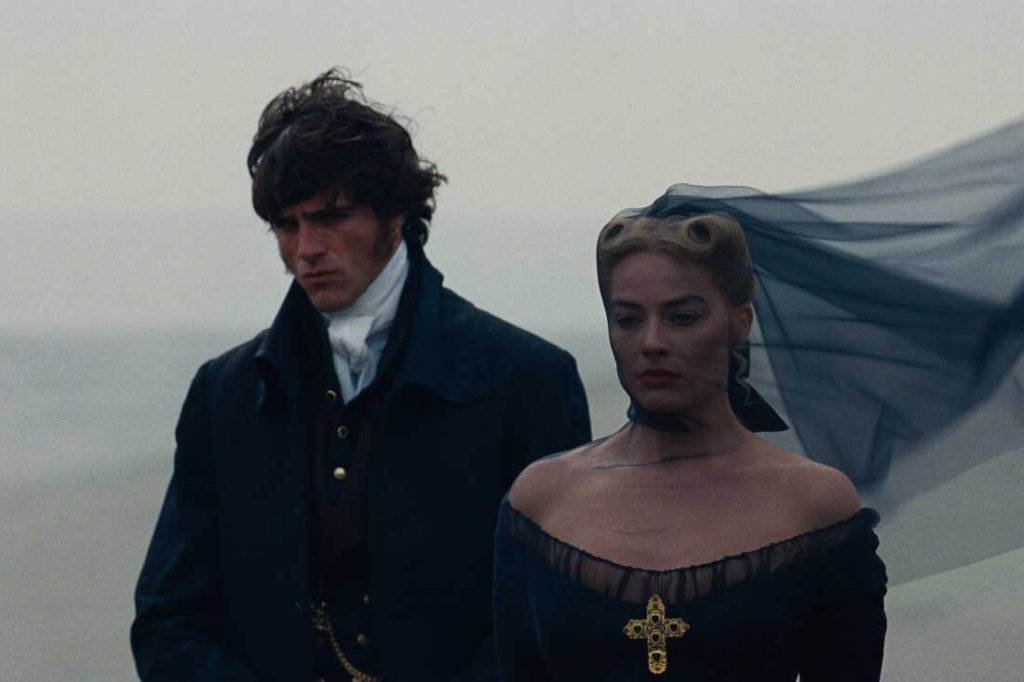
Visually, the film operates almost like a living painting. Rich color symbolism particularly the recurring presence of red reflects Catherine’s internal conflict between romantic longing and self-destruction. Fennell fills the frame with tactile imagery: wind-swept landscapes, candlelit interiors, and suffocatingly opulent rooms that mirror the characters’ emotional confinement. Even the grand setting of Thrushcross Grange feels less like a sanctuary and more like a beautifully decorated prison.
Religious allegory and symbolic staging run quietly throughout the narrative, suggesting that each character’s suffering is both chosen and inevitable. Catherine and Heathcliff, in particular, move between emotional masochism and cruelty, illustrating a devotion that thrives on both pain and possession.
Bold Choices, Divisive Reactions
Not every creative decision will satisfy purists. By narrowing its focus primarily to the central relationship and reducing elements of the novel’s later generational storyline, the film softens the full extent of Heathcliff’s long-term vengeance arc. Yet this shift also strengthens the emotional immediacy of the story, emphasizing doomed romance over sprawling revenge epic.
Ultimately, the adaptation is provocative, romantic, and intentionally unsettling, a version of Wuthering Heights that embraces the messiness of desire rather than attempting to tame it. It is, unmistakably, an Emerald Fennell film: stylish, controversial, emotionally charged, and impossible to ignore.