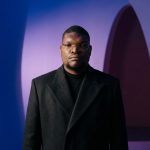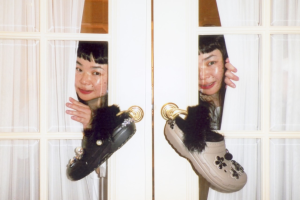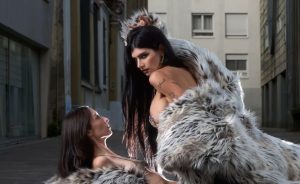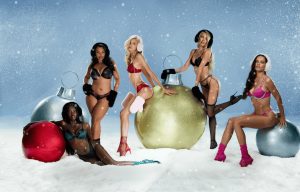
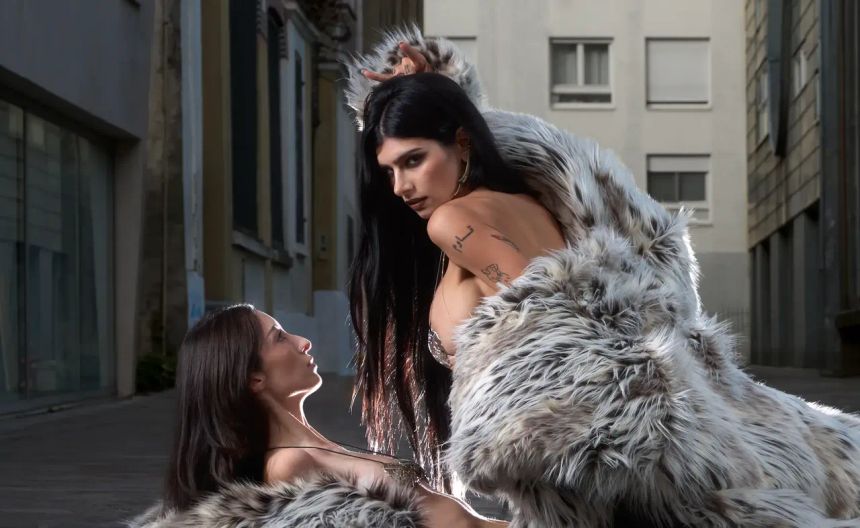
Mia Khalifa is not just walking the runway anymore. She is fronting entire campaigns, launching jewelry lines, and reshaping how the fashion world sees her. Her latest move puts her at the center of Trashy Clothing’s Fall/Winter 2026 campaign called “In Divine Trust,” a project that is equal parts political statement, high fashion, and unapologetic self-expression. Shot by photographer Pablo Mas, the campaign is the visual follow-up to the label’s first-ever physical runway show, which took place on March 6, 2026, at the Institut du Monde Arabe in Paris during Paris Fashion Week.
If you have not yet heard of Trashy Clothing, it is time you pay attention. Founded in 2017 by designers Shukri Lawrence and Omar Braika, the Palestinian-rooted label has built a cult following by blending satire, streetwear, regional craftsmanship, and sharp political commentary into clothing that refuses to be ignored. The brand works directly with artisan communities across Palestine, Syria, and Jordan to keep traditional techniques alive, all while pushing a fashion narrative that is equal parts fun and defiant. Their self-described “anti-luxury luxury” approach has earned them a spot in the wardrobes of names like Julia Fox, Morad, and Rema, but this season is the moment the world could not look away.
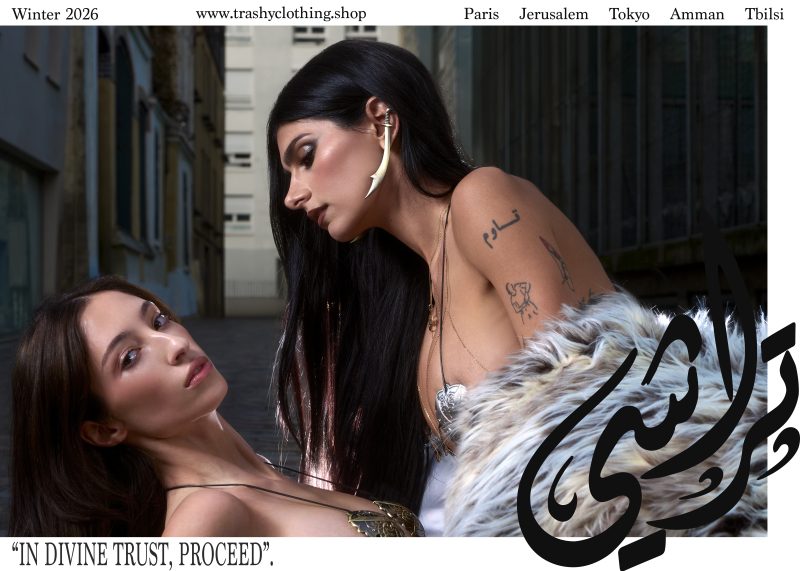
The “In Divine Trust” collection takes its name and creative energy from Divine Intervention, the 2002 film by Palestinian director Elia Suleiman. The movie uses dark humor, surrealism, and quiet observation to explore the contradictions of daily life under occupation, and the designers have translated that same energy into fabric. As Lawrence and Braika wrote in the show notes, “Under occupation, ordinary life unfolds beside military presence. Surveillance exists next to salons. Checkpoints stand beside gyms.” The garments carry that tension in their construction, mixing military-inspired silhouettes, cargo details, and heavy hardware with streetwear staples like slogan polos, baggy jorts, and padded gilets. Regional touches, including fez-like hats, keffiyeh patterns, draped scarves, and ornamental breastplates, ground the collection in its cultural roots without turning it into a costume.
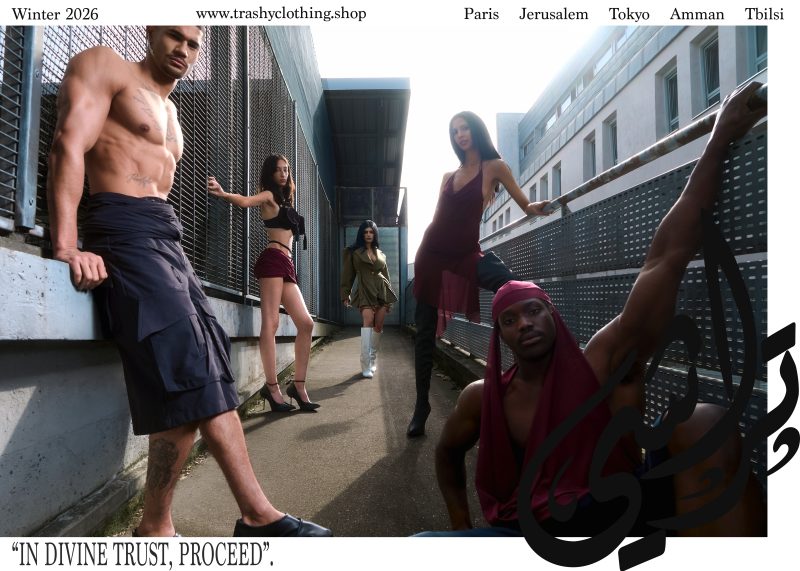
Khalifa’s role in all of this goes far beyond a single photo shoot. The collaboration between her and Trashy Clothing started about a year and a half ago, when the designers were asked to create a custom look for a Harley Weir photoshoot. That first piece, a sculptural bra shaped like a tarboosh (the traditional flat-topped Middle Eastern hat), became known as the “Khalifa Bra,” and the relationship grew from there. For the Paris show, Khalifa opened and closed the runway in a look built from coils of black rope wrapped around her torso, a fez-style bra, and gold body jewelry from her own brand, Sheytan. The Sheytan pieces, many of which feature sword-inspired forms, are described by the designers as “both ornament and symbolic protection,” objects that sit somewhere between adornment and armor.
The campaign itself, released after the show, leans into a darker, more feline glamour. Khalifa moves through the frames with a detached, almost hypnotic energy that mirrors the collection’s central idea: power is fragile, authority can be rendered meaningless by indifference, and sometimes the only thing holding you together is a kind of faith. The visual language is bold but controlled, provocative but thoughtful, and it positions Khalifa not as a celebrity guest but as a co-author of the brand’s story. She is, in every sense, a muse who has become a collaborator.
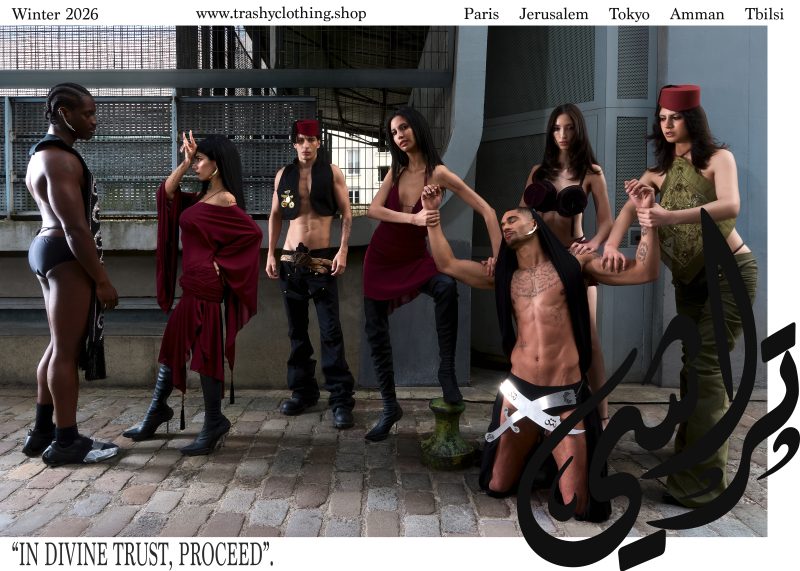
What makes this moment bigger than one campaign is what it signals about where fashion is heading. A queer, Palestinian, internet-born label is now staging shows in Paris, working with global celebrities, and telling stories that are political, personal, and unflinchingly honest.
The guest list at the Institut du Monde Arabe included Theodora, Lava La Rue, and Rhian Teasdale in the front row, while Palestinian model and activist Alana Hadid walked alongside Khalifa, adding another layer of cultural and political weight to the evening. The show ran for about half an hour across 33 looks, and every single one felt intentional, like a sentence in a larger argument about identity, resistance, and the right to take up space.