
From museum retrospectives to contemporary gallery presentations, a new wave of exhibitions is spotlighting the richness, complexity, and imagination of Black artistic expression across the globe. Marking a century since the first national observance of Black history in the United States, these shows center narratives of identity, memory, mythology, and future-making — affirming that Black art continues to shape the global cultural landscape in powerful ways.
Ifeyinwa Joy Chiamonwu: “Manuscripts of Tradition” at Jack Shainman Gallery
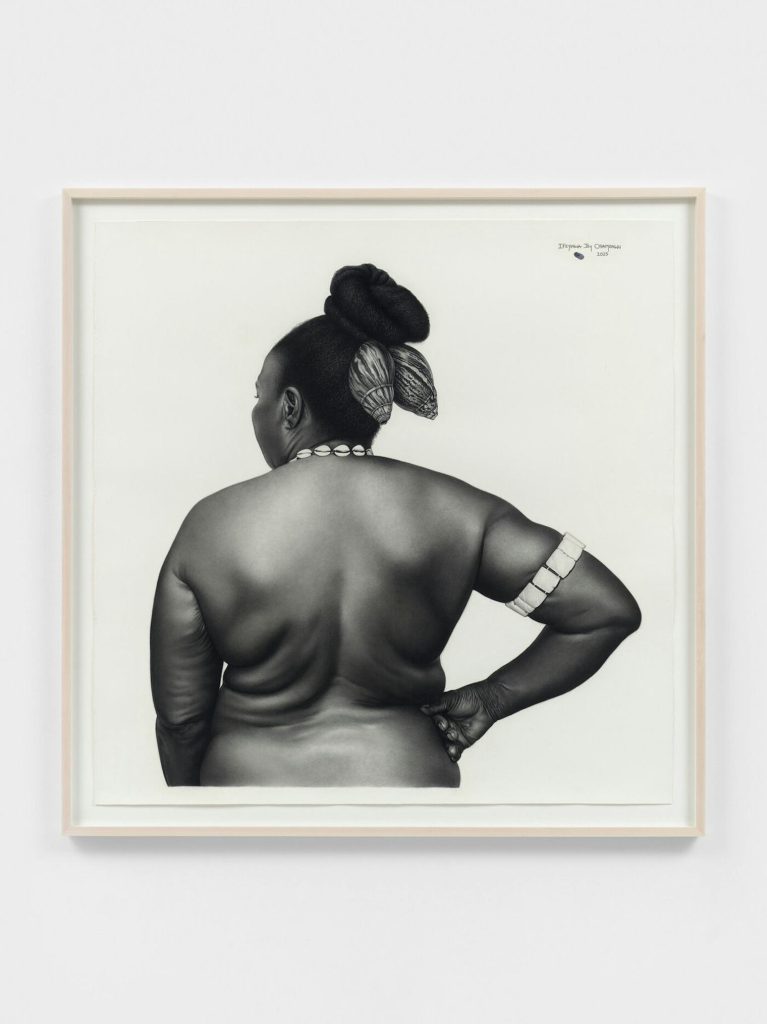
Courtesy of the artist and Jack Shainman Gallery. On view February 20 through March 28, 2026.
In Manuscripts of Tradition, Nigerian artist Ifeyinwa Joy Chiamonwu presents a deeply personal body of work rooted in Igbo cultural memory. Drawing from her upbringing in Anambra State, the exhibition features luminous oil paintings and works on paper portraying members of her community with dignity, warmth, and emotional immediacy.
While earlier works transformed subjects into mythological figures through vivid color and symbolism, this new series leans into the quiet poetry of everyday life. Friends and family appear in intimate portraits that celebrate the sacred within the ordinary, challenging reductive depictions of African life while asserting nuanced, self-defined representation. Through these images, Chiamonwu reframes tradition not as nostalgia, but as a living and evolving cultural language.
Firelei Báez at Museum of Contemporary Art Chicago
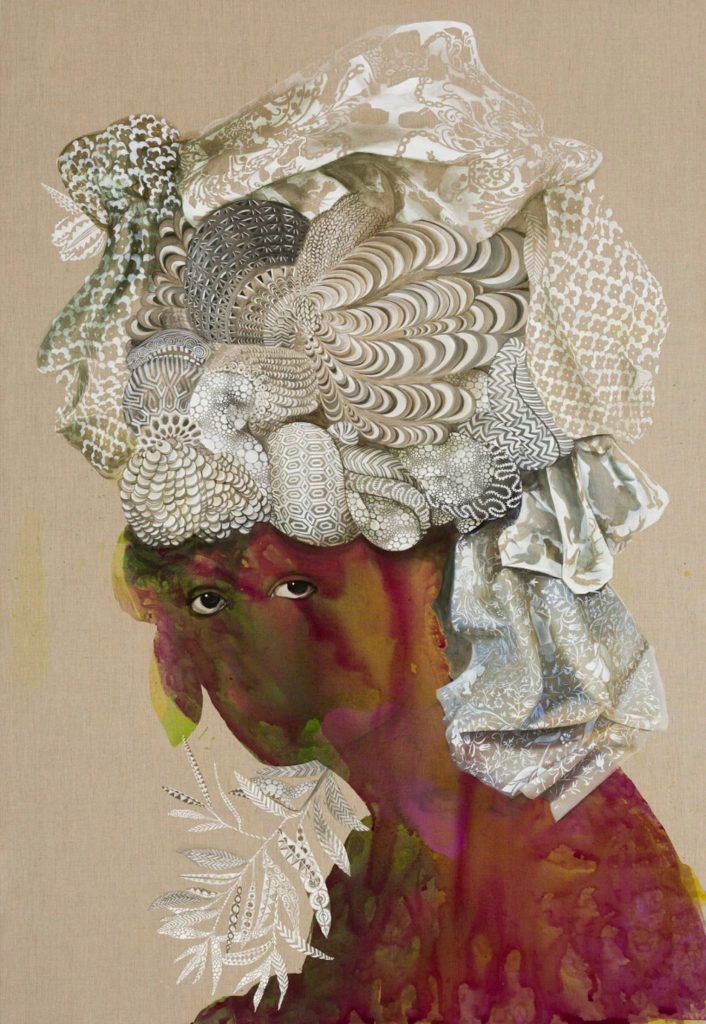
Pérez Art Museum Miami, museum purchase with funds provided by Lesie and Greg Ferrero and Rose Ellen Meyerhoff Greene. © Firelei Báez. Photo by Orion Tarridas. On view through May 31, 2026.
At the Museum of Contemporary Art Chicago, Firelei Báez’s first major mid-career survey in North America brings together two decades of drawings, paintings, and installations that reimagine history through speculative storytelling. Báez’s work often merges folklore, fantasy, and archival imagery, layering historical references with imagined narratives that challenge fixed notions of race, gender, and nationality.
Many pieces transform deaccessioned book pages, maps, and historical prints into richly textured compositions, proposing alternate histories while interrogating the colonial legacies that continue to shape the present. Through her practice, Báez constructs expansive visual worlds where the past, present, and future coexist — encouraging viewers to reconsider how cultural memory is written and rewritten.
Shani Crowe: “Red, Black & Green” at Museum of Contemporary African Diasporan Art
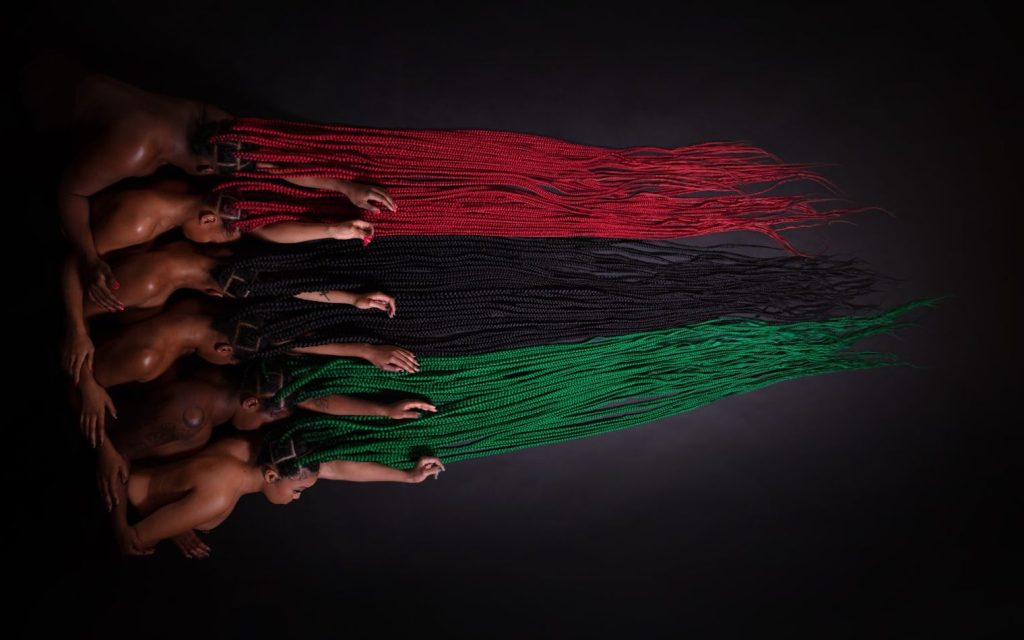
Courtesy of the Artist and MOCADA. On view through March 29, 2026.
Chicago-based artist Shani Crowe’s Red, Black & Green honors the Pan-African flag as both symbol and material language. Incorporating portraiture, textiles, performance, and sculpture, the exhibition reflects on the ideals of Pan-African unity popularized by activist Marcus Garvey while exploring how identity is expressed through adornment and ritual.
Crowe’s signature braided-hair installations form striking visual compositions, including SIS FLAG (2022), in which braided hair arranged across multiple figures recreates the colors of the liberation flag. Using materials ranging from cowrie shells to plastic beads and nylon cord, the artist bridges ancestral craft traditions with contemporary visual culture, transforming everyday materials into powerful markers of collective history and resilience.
Together, these exhibitions demonstrate the expansive scope of Black artistic practice today rooted in heritage yet forward-looking, deeply personal yet globally resonant. Across painting, installation, photography, and performance, each presentation underscores how Black artists continue to redefine representation while imagining new cultural futures.