
Can a luxury spectacle be sustainable if it looks wasteful?
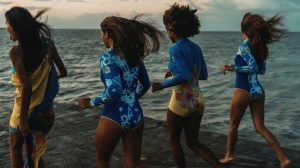
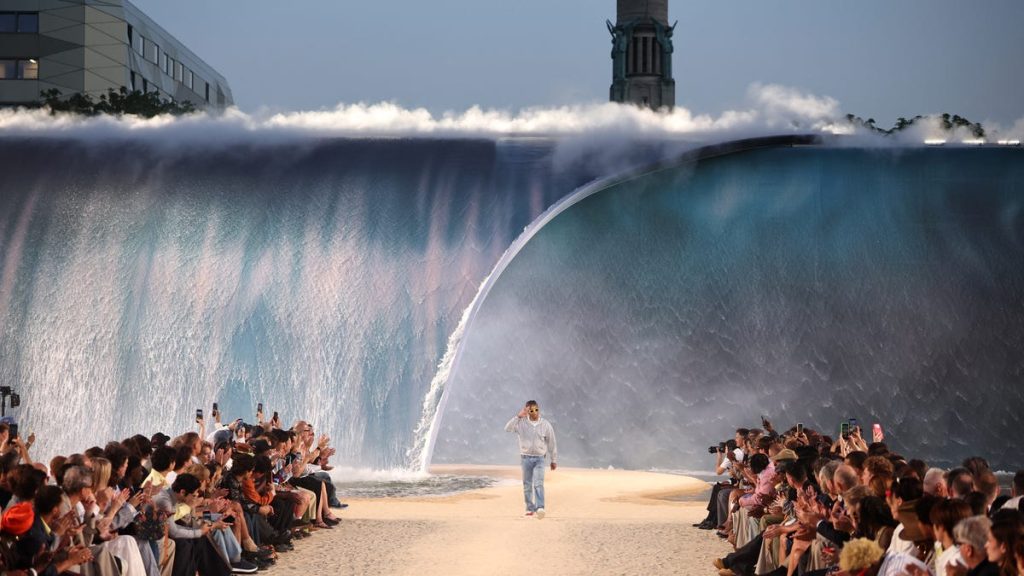
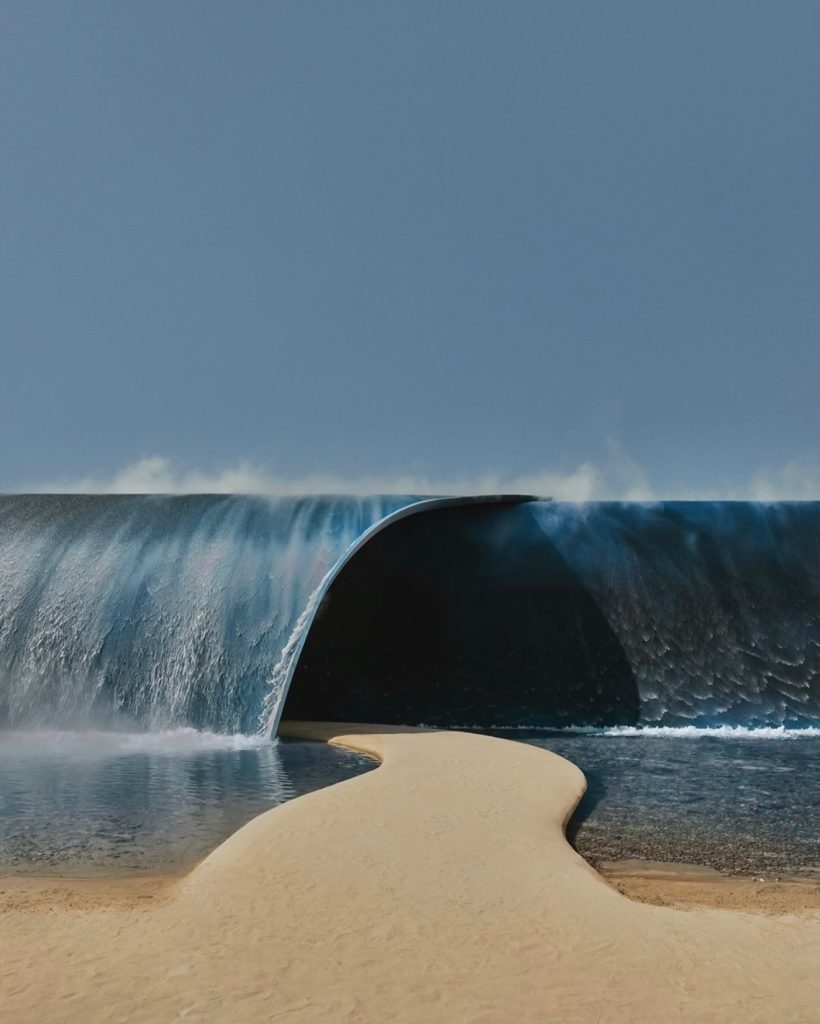
On the hottest night Paris has ever recorded, Louis Vuitton unveiled a towering artificial wave as the backdrop to Pharrell Williams‘ latest menswear show. The eight-metre-high installation transformed part of the Cité Internationale Universitaire into a beach-like landscape complete with sand, crashing water and a runway inspired by surf culture.
Within hours, however, the spectacle became the centre of a different conversation.
As temperatures climbed above 40 degrees Celsius across France and authorities warned residents about the dangers of extreme heat, images of a giant wave powered by the city’s water supply spread across social media, prompting criticism from local politicians, residents and environmental observers. For many, the installation appeared to embody a troubling contradiction: luxury’s appetite for spectacle at a moment when climate concerns are becoming increasingly urgent.
The backlash arrived despite Louis Vuitton’s insistence that the project was designed with sustainability in mind.
According to the brand and event organisers, the water circulated through a closed-loop system before being redirected into Paris’ sewer network. The sand used for the installation will be repurposed for volleyball courts and recycling initiatives, while seating and construction materials were reused or sourced through certified sustainable channels. The house also announced a coral restoration partnership as part of its broader environmental commitments.
From a technical standpoint, the project may have checked many of the boxes associated with responsible event production.
Yet the criticism highlights a growing challenge facing luxury brands: perception often matters as much as environmental metrics.
Consumers today are increasingly evaluating sustainability not only through carbon calculations and recycling programmes but through symbolism. In the middle of a record-breaking heatwave, a monumental wave installation inevitably carries a different meaning than it might have under normal circumstances. Regardless of how efficiently resources were managed, the imagery itself became difficult to separate from wider anxieties surrounding climate change, resource consumption and economic inequality.
The controversy also exposed another tension within modern fashion.
Luxury brands increasingly rely on large-scale cultural activations to maintain relevance. Runway shows are no longer simply presentations of clothing; they are immersive experiences designed to dominate social media, generate headlines and reinforce brand mythology. The more memorable the spectacle, the greater its potential impact.
Pharrell Williams’ wave achieved exactly that.
Rooted in themes of surf culture, travel and human connection to nature, the installation served as a physical extension of the collection’s narrative. But it also demonstrated how quickly a carefully crafted creative statement can be reinterpreted when external circumstances change.
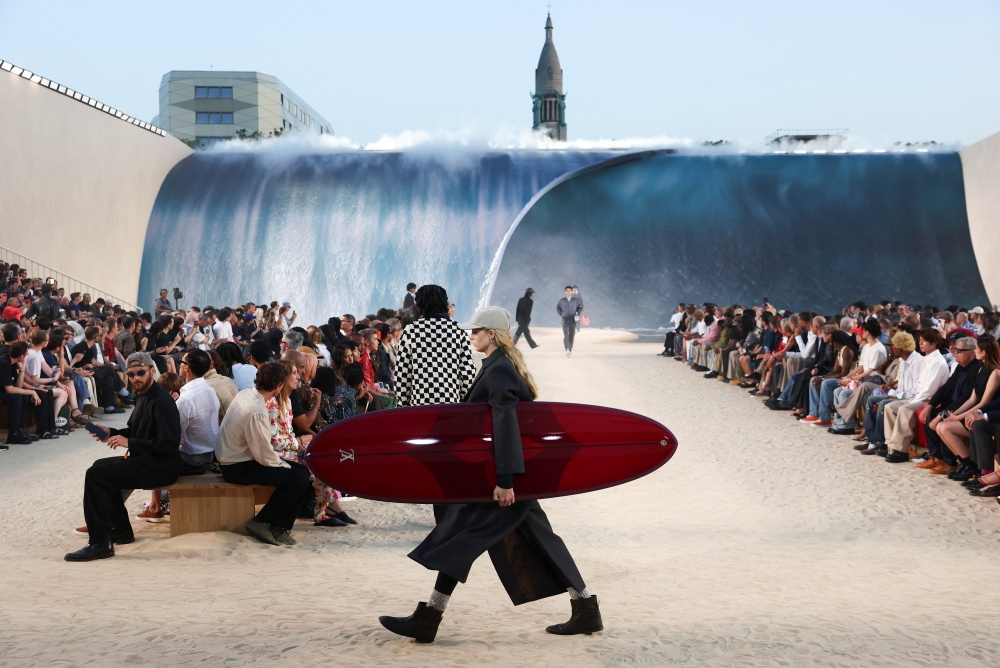
For residents of the student complex hosting the show, the issue extended beyond environmental symbolism. Some questioned why portions of their living environment were restricted for a luxury event while they navigated rising living costs and limited resources. The contrast between a global luxury giant and students facing financial pressures became part of the wider debate.
Ultimately, the Louis Vuitton wave may be remembered less for the clothes it accompanied and more for the questions it raised.
As fashion continues investing in increasingly ambitious experiences, brands face a new reality: sustainability is no longer judged solely by what is done behind the scenes. It is also judged by what people see.
And sometimes, the image of excess can be more powerful than the evidence of responsibility.