
Michael Rider’s first men’s show for Celine had a title: “Tough and Tender.” It also had a guest of honour, Oscar Isaac, arriving late in a deep purple shirt, cutting through the scaffolding and white panels of the Tennis Club de la Porte de Saint-Cloud like a man who understood the assignment.
That shade of purple showed up in the collection almost immediately. An obi belt. A loose overshirt. A sleeveless tee. An oversized leather bag. The colour was not a coincidence. It was a statement of mood neither aggressive nor soft, but somewhere in the middle. That tension is where Rider lives as a designer, and this collection made that clearer than anything he has shown so far.
The context matters here. Rider inherited one of the most loaded creative director positions in contemporary fashion. Before him: Phoebe Philo, whose decade at Celine redefined what intellectual women’s dressing could look like, and Hedi Slimane, who replaced her vocabulary entirely with rock-inflected slim silhouettes and a very different idea of what the house should be. Rider worked under Philo for ten years before leaving for Ralph Lauren. He arrived at Celine in 2025 carrying both legacies whether he wanted to or not.
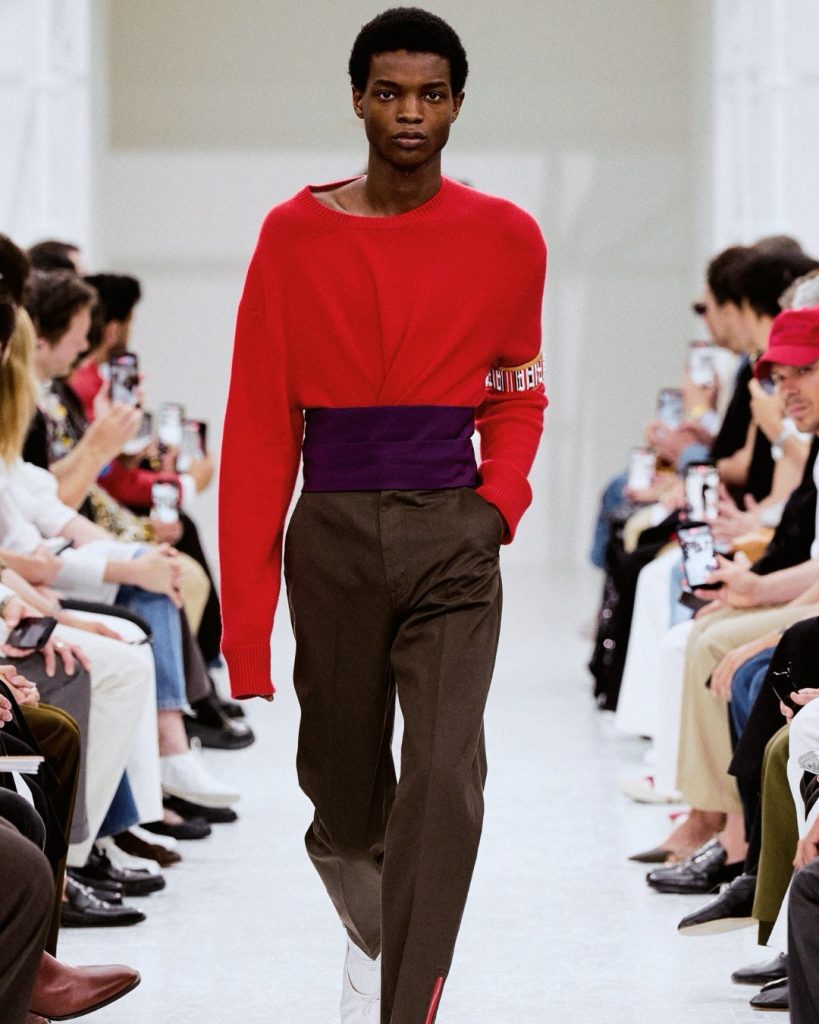
This collection was his clearest declaration that he intends to carry neither.
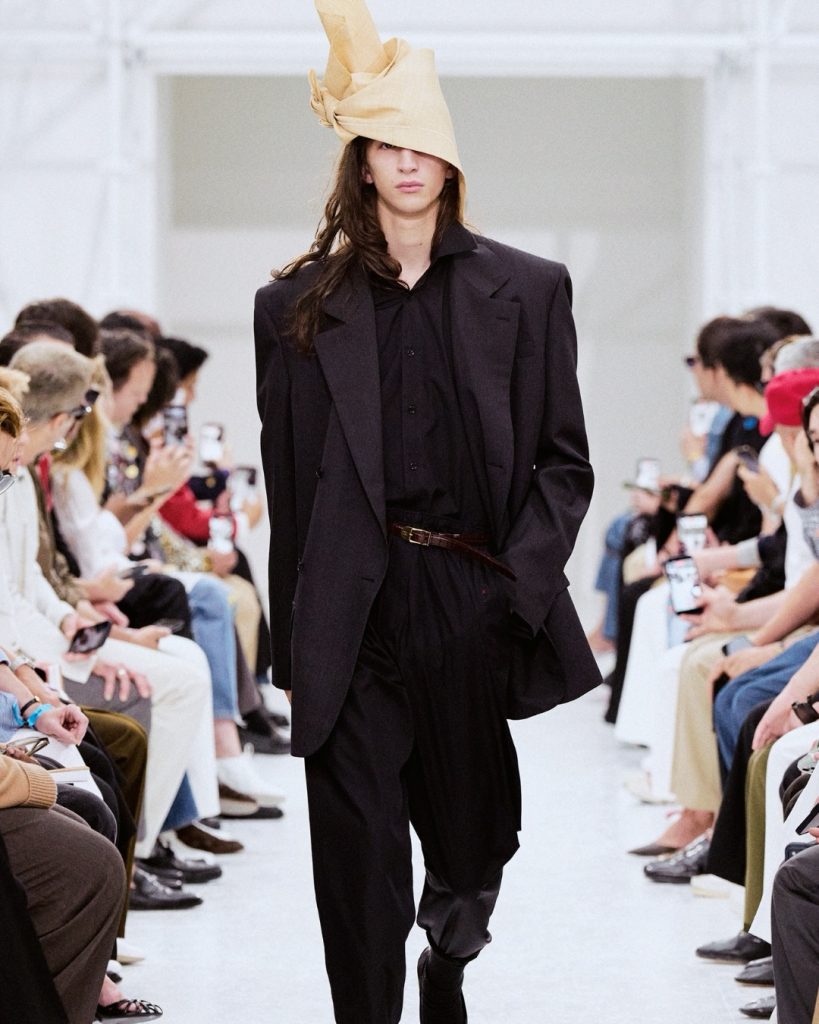
The silhouettes were slender but not skeletal. Sleeveless knit tops, satin shirts, lightweight wool worn close to the body, none of it drifted into the rock-star thinness that defined Slimane’s vision for the house. The tailoring had exaggerated shoulders and wide-leg cuts that moved with ease rather than performance. Gabardines, capes, roomy trenches. His men were described in the show notes as philosophers, artists, poets and the clothes held that idea without becoming theatrical about it.
The details are where Rider’s hand is most visible. A red leather pouch. A fabric flower pinned to a belt. Beaded necklaces spelling out “Celine.” Earrings, brooches, gloves, scarves, fringe. The accumulation of these touches across the collection built something that felt genuinely inhabited rather than styled. These were not accessories applied to complete a look. They were the look.
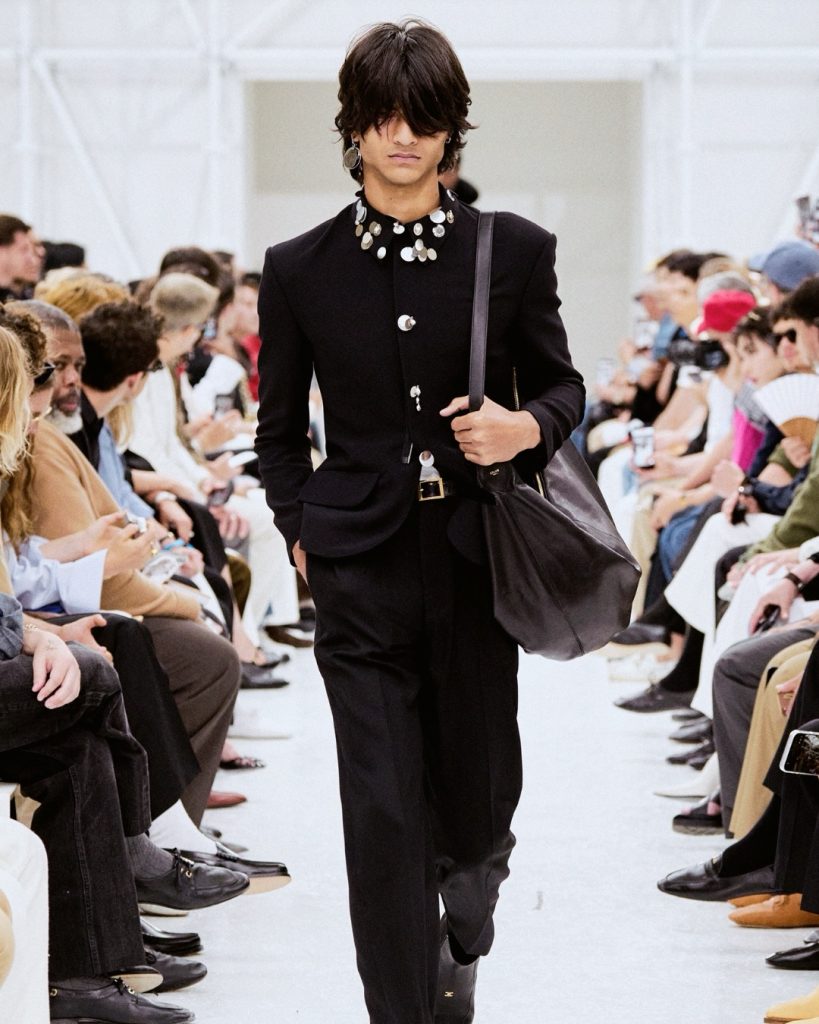
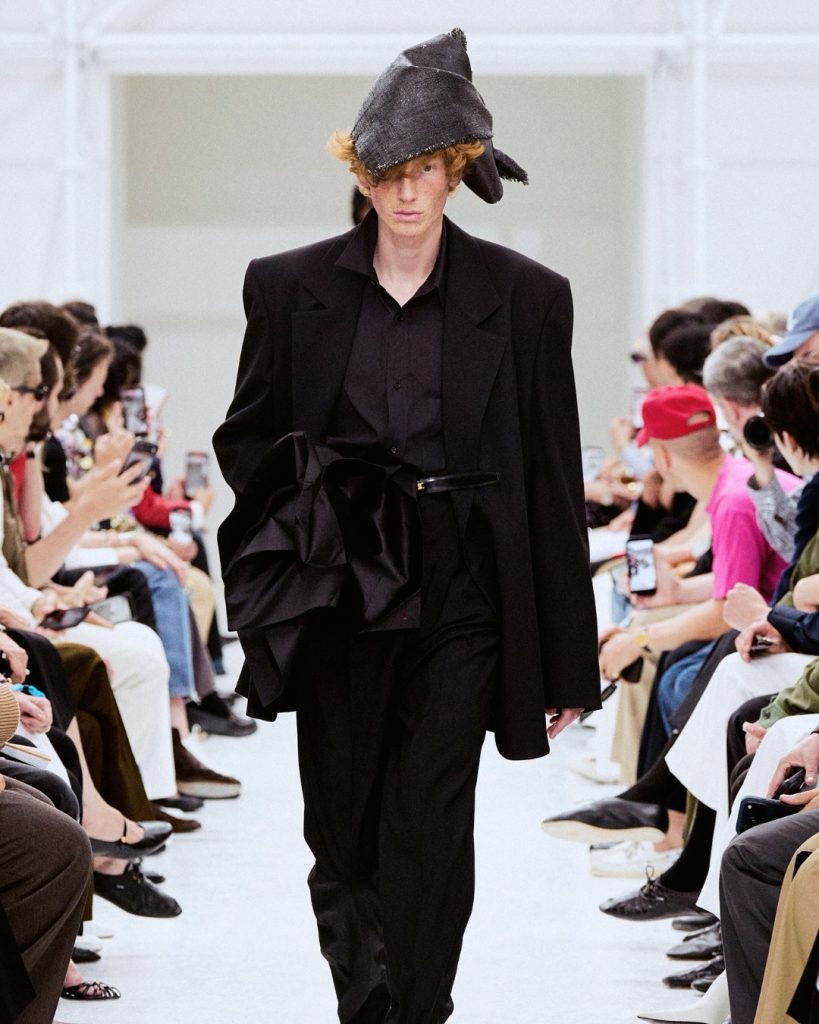
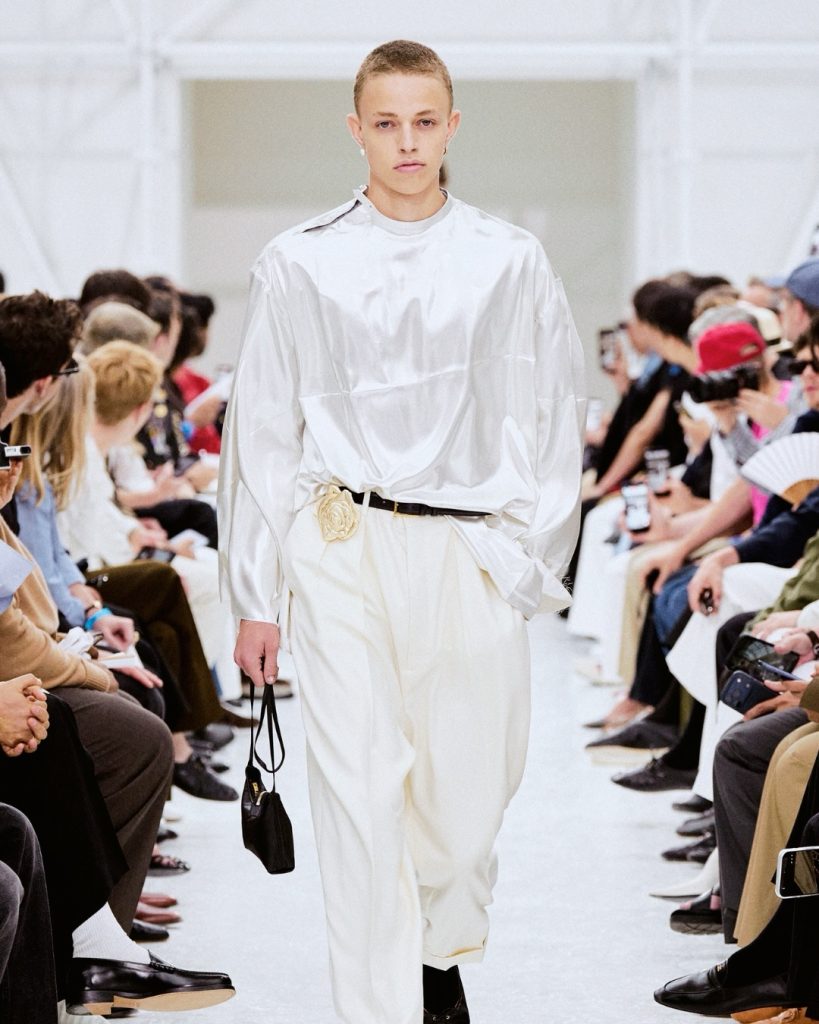
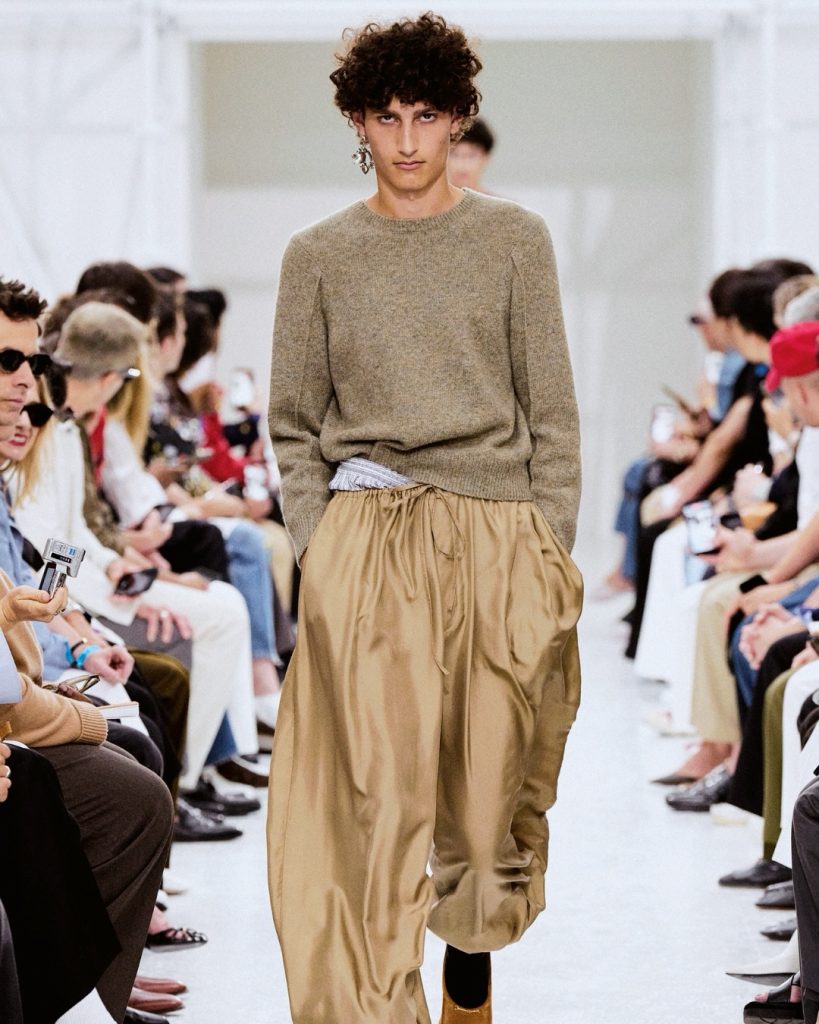
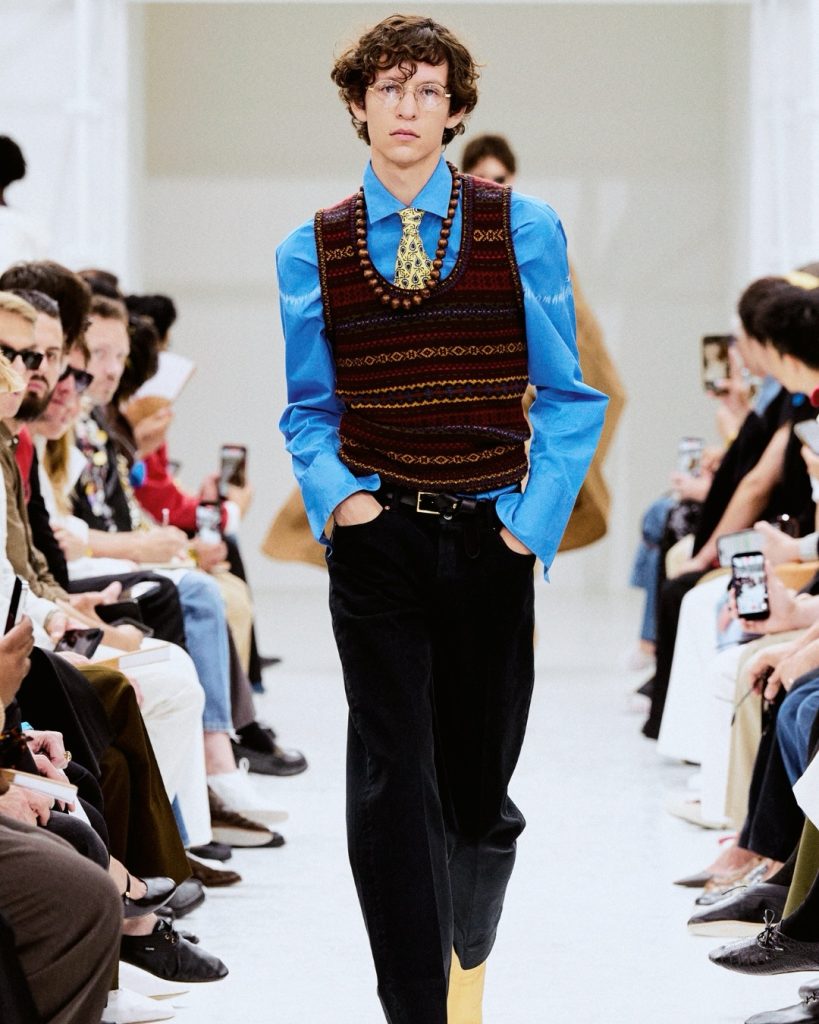
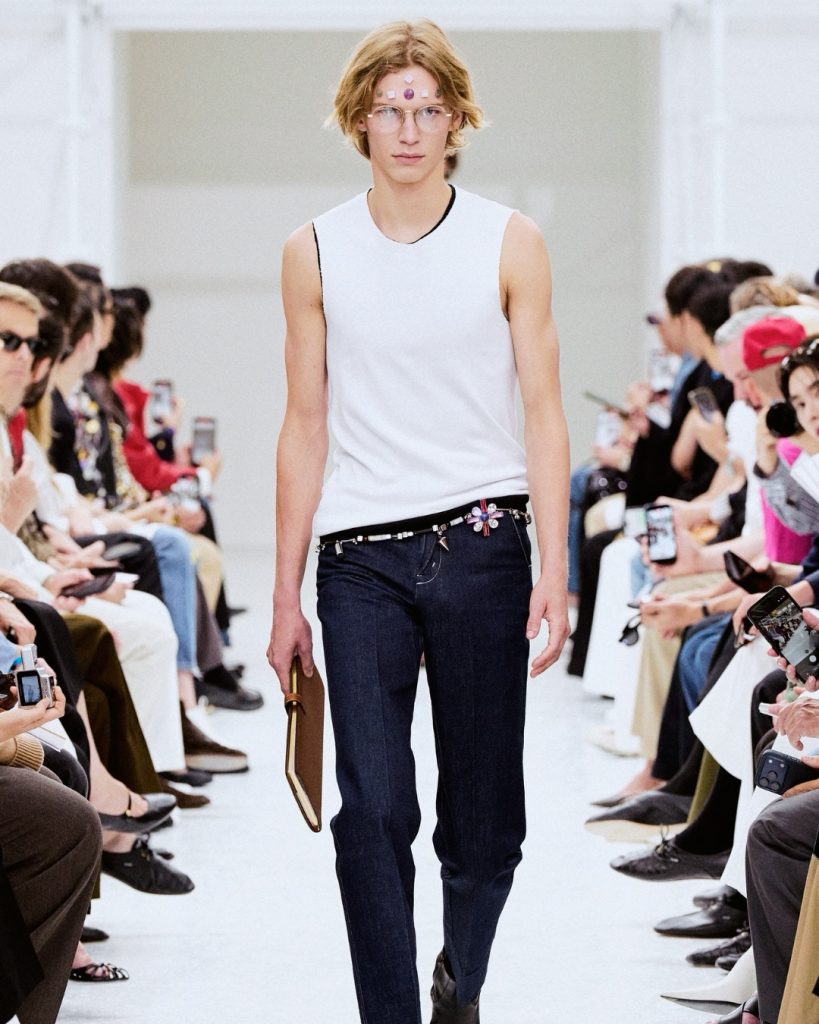
The footwear range alone communicated the breadth of his reference points, a reinterpretation of Reebok Classics alongside white cowboy boots, sophisticated sandals, and mules. That combination should not cohere. In Rider’s hands, it did, because the through-line was not aesthetic consistency but something closer to personal conviction.
His collection notes offered phrases rather than paragraphs: “Travel light.” “Make do with just a few exceptional pieces.” “Be yourself; follow your own intuition.” Fashion designers write collection notes that mean nothing all the time. Rider’s felt like they described what was actually on the runway which is rarer than it should be.
The final phrase he offered was the most telling: “Panache. And being completely unaware that you have it.”
He stepped forward at the end of the show to thunderous applause and left with a single humble wave.
He knew exactly what he had just done.