

An interview with Deborah Abosede Ibeme on Belief, Beauty, and What Photography Owes the People Inside It

From the very limited time and moment shared with Deborah Abosede Ibeme, it isdistinguishable the kind of artists who make work, and the ones who hold positions.Deborah is firmly, uncompromisingly the second kind. The Nigerian fine artphotographer whose solo exhibition “Rituals of Presence” is currently showing at theAfrican Centre, London does not simply produce images of African women. She hasbuilt, over five years of deliberate and philosophically rigorous practice, an entireframework for what photography is, what it owes its subjects, and what it demands ofthe people who look at it. We sat with her to go inside that framework and to understandthe beliefs that are driving one of the most serious fine art practices in contemporaryAfrican photography. La Mode : There is a question that finds every serious artist eventually, not what isthe work about, but what is it for. Have you answered that question for yourself? Deborah: I did answer it before I could make anything worth making.Photography, for me, is a vessel. Not a medium. A vessel. The distinction matters. Amedium is something you work with. A vessel is something that exists to carrysomething else, something that derives its significance entirely from what it holds andwhere it delivers it. When I pick up a camera, I am not picking up a tool for makingimages. I am picking up something that I am responsible for filling with the right contentsand delivering to the right place. The contents, in my case, are three things: memory, dignity, and transformation. Thoseare not casual words. They are the specific obligations the work carries. Memory,because the cultural knowledge I am working with, the cosmological traditions of theNiger Delta, the specific symbolic vocabulary of Ijaw and Urhobo spiritual life, lives inthe body and in practice before it exists anywhere else. When the body stops and thepractice ceases, the memory goes with it unless someone has held it in another form.Dignity, because the women I photograph have not always been photographed with it.The history of the camera in Africa is complicated in ways that I carry consciously everytime I set up a frame. And transformation, because the photograph that holds memoryand restores dignity does not leave its viewer unchanged. It asks something of them. Itrequires them to see differently. That asking and that requirement, is the transformation. La Mode: You have said that you don’t photograph women. You photograph whatwomen carry. Can you unpack that? Deborah: It is a rejection of the portrait tradition in its conventional sense, where thesubject is the endpoint, the thing the photograph is “of”. In my framework, the subject isnot the end but the beginning. The woman in the frame is not the subject in thephotographic sense but the carrier. She is the living repository of something the imageis trying to reach, something older and deeper and more important than any individualface. What women carry, in the specific context of my practice, is the accumulated weight of aculture’s deepest knowledge. The memory of how things were done. The rituals, theceremonies, the forms of adornment and communication and spiritual practice thatconstitute a community’s self-understanding across generations. They carry the grief ofwhat has been lost and the resilience of what has survived. They carry, in their posturesand their gestures and their faces, evidence of everything they have endured andeverything they have maintained despite the endurance.To photograph this carrying, to make it visible with the full technical and conceptualauthority I can bring to the work, is what the work owes its subjects. Not flattery. Noteven beauty, though beauty is present. The work owes them accuracy. The accuraterendering of what they carry, in a quality of light that makes the carrying look like what itis: a form of strength so complete it has become invisible to the culture that depends onit. La Mode: And what does the work not owe them? Deborah: Comfort. The work does not owe its subjects the version of themselves that iseasiest to receive. It does not owe them the performed grace of women who know theyare being watched and have learned to manage the watch. It does not owe them theflattering surface.The work owes them truth. And truth, in my practice, is more demanding and morehonoring than any of the alternatives. When a woman stands in front of my camera andwhat emerges is the full, unmanaged reality of who she is and what she carries, thenthat is a more profound form of respect than any beautiful lie I could ever construct. La Mode: The quality of stillness in your images is something every serious viewernotices immediately. But it reads as something more than a compositional choice. Deborah: Much more even. Stillness, for me, is not the absence of movement or theabsence of expression. It is the presence of concentration. The stillness of a containerholding something under pressure. The stillness of water before it floods. When people say my photographs are still, I hear a compliment they don’t know they’regiving. Because stillness is not absence. Stillness is the whole conversation.In the contemplative traditions of West African spiritual life that inform my work, stillnessis the form of activity. The state in which the most important things become audiblebecause the noise has been removed. The great portrait, whether painted orphotographed, is the one in which the subject appears to be thinking, in which thestillness contains an interior life so palpable it makes the viewer lean forward. I havemade the creation of that quality the central technical and philosophical ambition of mypractice. La Mode: Which is why the silence on your sets is deliberate. Deborah: The silence I create on set is not a working preference. It is an instruction toeveryone in the room, including the subject. It says: what is happening here issignificant. It deserves this quality of attention. Nothing is incidental. The subject doesnot need to perform for me. She does not need to give me anything. I am here to findwhat is already true about her and make it visible. The silence is the condition in which itbecomes possible to
Nike Launches “Project Goddess” Beauty Campaign
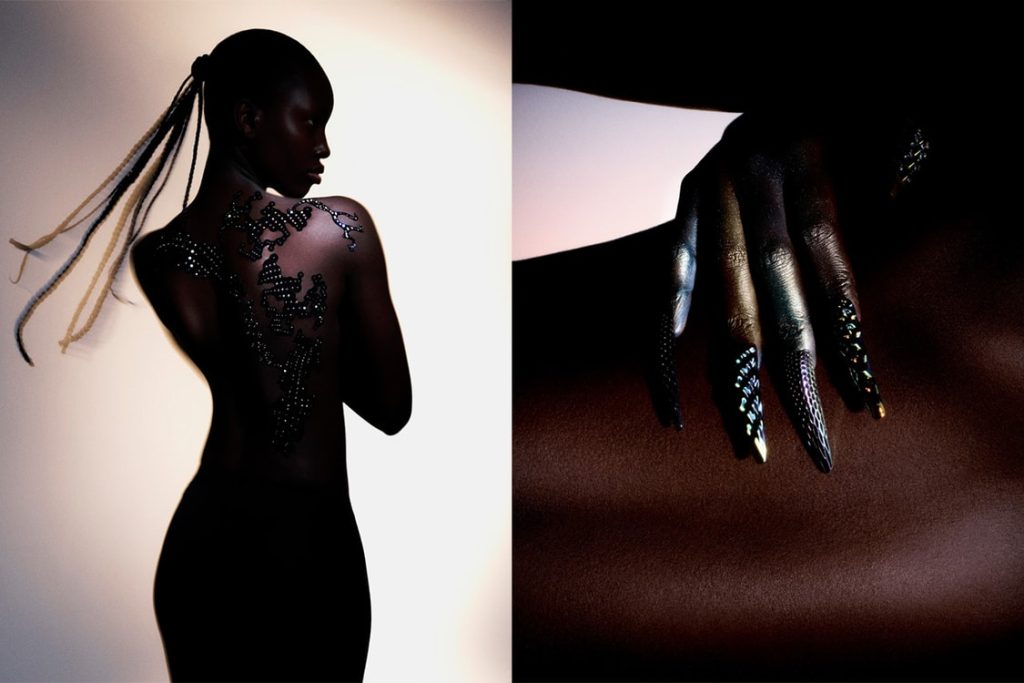
Nike is stepping into new territory, and it’s doing so with intention. With the launch of “Project Goddess,” the brand is challenging long-held perceptions around beauty, particularly the idea that makeup and athletic performance exist in separate worlds. At the core of the campaign is a simple but powerful idea: when you feel good, you perform better. To bring that vision to life, Nike collaborated with French makeup artist Marie Guillon and German photographer Kapfhammer, creating a series of visuals that blur the line between sport and beauty. The result is a dreamy yet grounded campaign that positions beauty not as vanity, but as strength. Internally, the project is driven by a team of innovators shaping the future of design. Senior innovator Landi Wilson, alongside computational designers Sarah Hammond and Yuan Mu, developed an unreleased collection that extends this philosophy into wearable form. The pieces themselves lean into the emotional side of performance how confidence, identity, and self-expression influence the way athletes show up. Rather than separating beauty from sport, “Project Goddess” brings them into the same conversation. Fronted by female athletes, the campaign highlights how personal rituals, whether it’s applying makeup or choosing what to wear, can be part of building strength. It’s a subtle but important shift: beauty is no longer positioned as distraction but as an extension of power.
Juma Jux and Priscilla Ojo Deliver Effortless Couple Style at The Return of Arinzo London Premiere

Juma Jux and Priscilla Ojo stun in coordinated white and gold looks at The Return of Arinzo London premiere.
Tower 28 Drops First-Ever Merch Collection for Skincare Lovers

Tower 28 debuts its first merch drop featuring crewnecks, claw clips, socks and more for skincare lovers.
Salomon x MM6 Maison Margiela SS26 Collection Drops

Salomon and MM6 Maison Margiela return for SS26 with gorpcore-inspired footwear, bags and hybrid designs.
Rihanna Stuns at Fenty Beauty Mumbai Pop-Up in Mugler
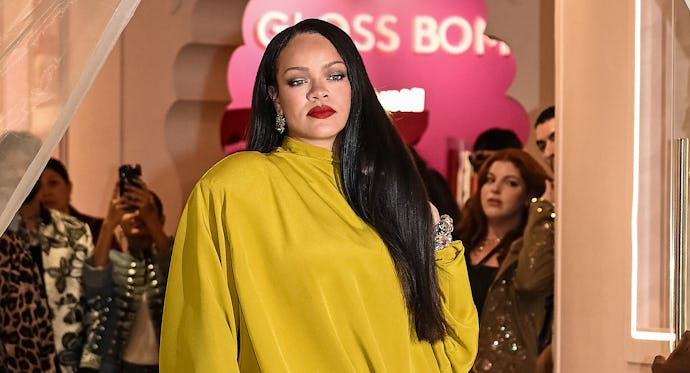
Rihanna wears Mugler and Alaïa at Fenty Beauty’s Mumbai pop-up, blending bold color with textured elegance.
Anne Hathaway Puts a Modern Spin on the Classic Tweed Skirt Suit

Anne Hathaway stuns in a modern tweed skirt suit during The Devil Wears Prada 2 press tour appearance.
Mabel Stars in Crocs “Do Your Thing” Campaign

Mabel fronts Crocs’ “Do Your Thing” campaign, showcasing bold self-expression with Classic and Buckled Clogs.
Shade Okoya Stuns at 49 in Tubobereni Mustard-Gold Gown
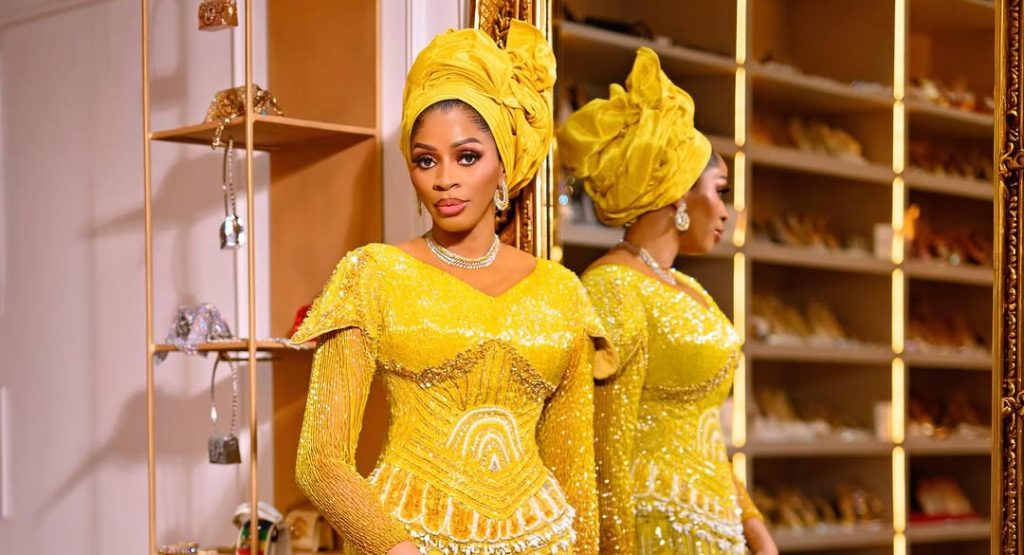
Shade Okoya celebrates her 49th birthday in a mustard-gold Tubobereni gown, styled with a sculptural gele and elegant detailing.
Presence Beyond the Physical: Rituals of Presence by Deborah Abosede Ibeme Leaves a Lasting Mark on London
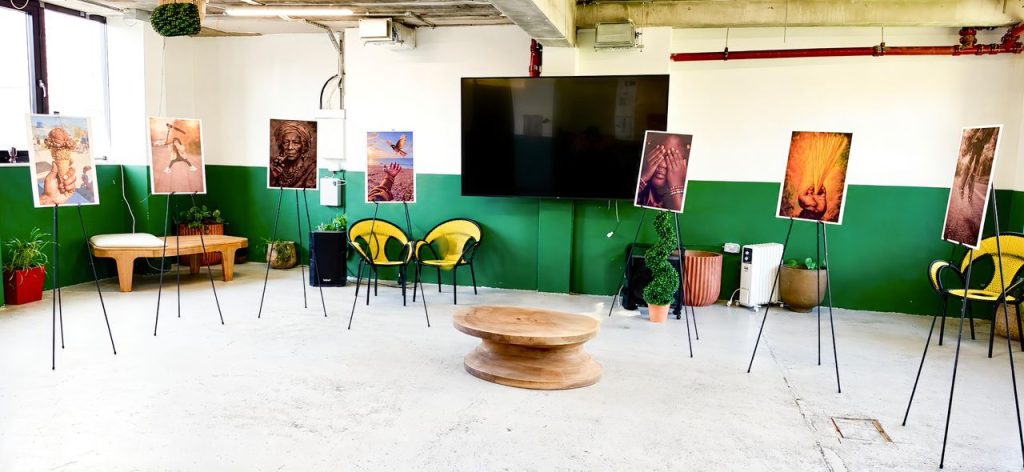
London, United Kingdom April 25, 2026 In a striking demonstration of the power of image over physical presence, fine art photographer Deborah Abosede Ibeme’s solo exhibition Rituals of Presence concluded at The African Centre, London, to critical engagement and public resonance despite the artist not being physically present. The exhibition drew a thoughtful and steady audience, each encountering a body of work that felt both intimate and expansive. In Ibeme’s absence, the photographs themselves carried the full weight of the conversation quietly commanding attention, reflection, and emotional response. Rituals of Presence examined what it means to truly exist in a moment spiritually, emotionally, and physically through carefully composed fine art photography rooted in symbolism and stillness. The works moved fluidly between themes of release and connection, inviting viewers into a contemplative space where the ordinary became sacred. A recurring visual language, hands extended, bodies grounded, elements in motion created a sense of dialogue between human vulnerability and natural forces. One particularly arresting motif, depicting an outstretched hand meeting a bird in flight along a coastal horizon, emerged as a powerful metaphor for surrender, trust, and unseen connection. Without the artist in the room, audiences leaned deeper into the work itself. Conversations unfolded organically, interpretations layered, and meaning became a shared experience rather than a guided one. Visitors described the exhibition as “quietly powerful,” “emotionally precise,” and “lingering long after leaving the space.” The African Centre provided a fitting environment for this encounter, reinforcing its commitment to elevating diasporic narratives and contemporary African artistry within London’s cultural landscape. Rituals of Presence ultimately demonstrated that absence does not diminish impact instead, it can amplify it. Ibeme’s work stood independently yet intimately connected to each viewer, proving that presence, in its truest form, transcends the physical. As anticipation builds, this body of work is expected to continue its journey through future exhibitions and international platforms, further establishing Deborah Abosede Ibeme as a distinct and necessary voice in contemporary fine art photography.