

H&M x Stella McCartney 2026 Collection Blends Sustainability with Iconic Style

H&M launches its second collaboration with Stella McCartney, featuring sustainable fabrics, archive-inspired designs, and signature Falabella details.
Osas Ighodaro Joins Global Cast of “Boyz Trip” Filming in Cape Town

Osas Ighodaro stars alongside Woody McClain and Hakeem Kae-Kazim in Boyz Trip, a South Africa-set action-comedy filming in Cape Town.
Olandria Carthen’s Coachella Glam Is the Golden Hour Beauty Blueprint

Olandria Carthen stuns at Coachella with a YSL Beauty toasted glam look featuring bronzy eyes, glowing skin, and a ‘90s-inspired lip combo.
Sade Adu and Fela Kuti Join Rock & Roll Hall of Fame 2026
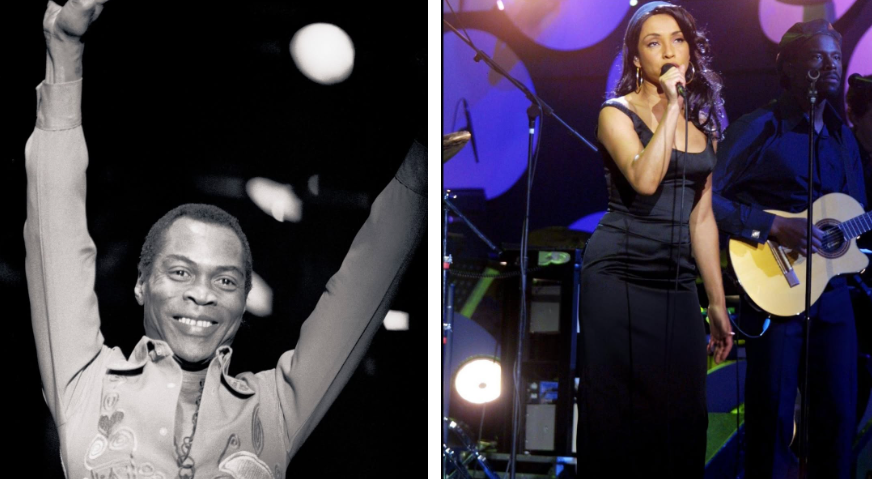
Sade Adu and Fela Kuti are inducted into the Rock & Roll Hall of Fame 2026, marking a historic moment for Nigerian music and global influence.
Hailey Bieber’s Coachella 2026 Style Showcases Her Fashion Range

Hailey Bieber’s Coachella looks ranged from casual streetwear to vintage Dior, blending fashion, family, and Rhode beauty moments.
Half Magic x Euphoria Is the Beauty Drop Fans Have Been Waiting For
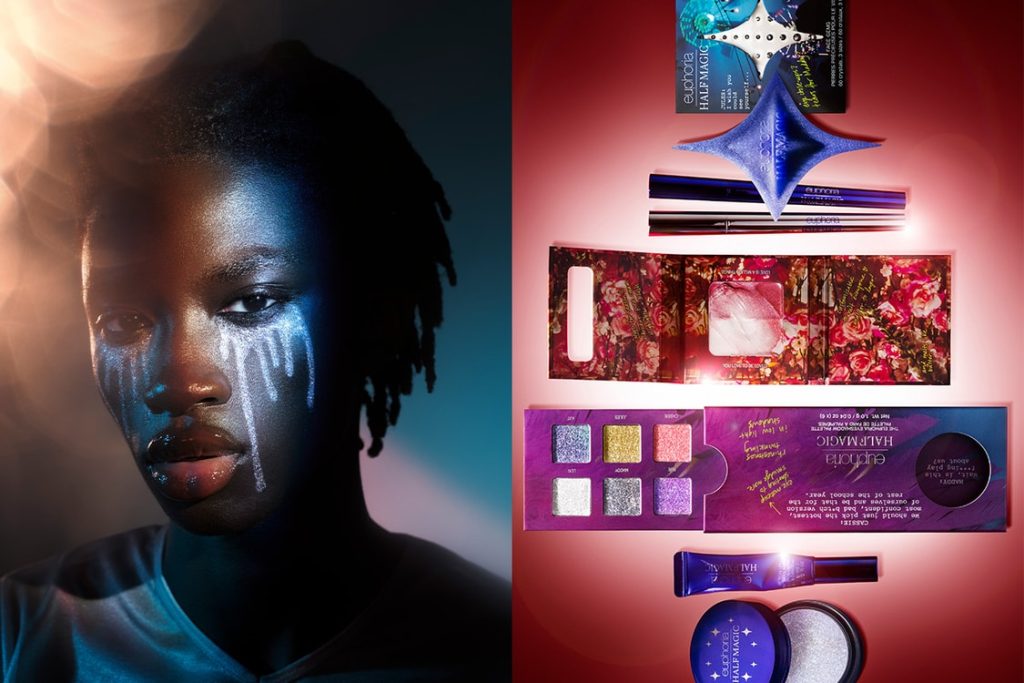
Half Magic teams up with Euphoria for a bold new beauty collection inspired by the show’s iconic makeup looks. Here’s everything to know.
What the Camera Remembers: Deborah Abosede Ibemeand the Work of Cultural Archiving

There are two kinds of forgetting. The kind that happens when memory fails, and thekind that happens when no one thought to remember in the first place. The second kindis the more dangerous one. It does not feel like loss. It feels like the way things have always been. Somewhere in Africa , and specifically in the Niger Delta, a woman ties her wrapper in a particular way. The non decorative knot she makes at her waist is a signature and adeclaration of marital status that communicates to anyone who knows how to read itthat something specific is true about who she is and where she comes from. Hergrandmother tied it the same way, even her grandmother’s grandmother before that.The knowledge lives in the hands before it lives anywhere else, and if the hands stop,and perhaps the generation that carries this specific literacy does not pass it forward, the knowledge becomes uncommon and ultimately invisible. And, what becomesinvisible long enough eventually becomes as if it never was. This is the specific crisis that Deborah Abosede Ibeme has built a significant portion of her practice around addressing with the patient, sustained, technically rigorousresponse of an artist who understood early that photography practiced at this level ofintentionality is a form of institutional memory, and not just the bare image-making. It serves as the construction of a record that the future can consult, and the present can also be held accountable by, that the past can rest inside without disappearing.She calls it cultural archiving. The term is precise and worth sitting with. An archive is not a collection of beautiful things. An archive is a system of preservation, ordered,intentional, built with the understanding that its value compounds over time. What is archived today becomes irreplaceable tomorrow. What is not archived today is simply gone. How an Archive Begins The Cultural Preservation Series: the documentary-inspired body of work that beganformally in 2022 and continues to the present was not Deborah’s first engagement withthese themes. The themes preceded the series. In fact, they preceded, in some sense,the photography itself. Growing up in Warri, she absorbed the specific visual and symbolic vocabulary of theNiger Delta. She encountered the Ijaw cosmology in everything within her environment;the fabrics her elders wore, the ceremonies she witnessed, the particular way certainobjects were handled with a care that communicated their spiritual weight beforeanyone explained it to her. She learned how meaning is carried in material culture, howa community’s deepest knowledge does not live in its libraries or its official records but in its hands, bodies, domestic rituals, and its adornment. She also grew up watching that knowledge become gradually less legible through theerosion that modernity produces everywhere it arrives. For instance, young people whono longer tie the knot that way, or ceremonies observed with decreasing specificity, oreven objects that migrate from contexts of meaning to contexts of decoration. Albeit the knowledge not being lost catastrophically, it leaks quietly, generation by generation, through gaps that no one is filling quickly enough. The Cultural Preservation Series is her attempt to fill some of those gaps. And shedoesn’t intend a nostalgic return or indulgence, because she is not a nostalgic artist,and her work carries none of the melancholy of someone mourning a past they wishcould be recovered. She actualises this with documentation, a precise, technicallyexcellent, visually authoritative act of saying: “this existed, this was real, this is what it looked like, this is what it meant, and it deserves to be held in this quality of light.” The African Womanhood Series:Running parallel to the Cultural Preservation Series, and in many ways, inseparablefrom it is the African Womanhood Series, which began in 2021 and represents the mostsustained single thread of Deborah’s practice.If the Cultural Preservation Series is primarily concerned with “what” is being lost, the African Womanhood Series is concerned with “who” is carrying it. These are apparently not two different subjects. With closer attention, one would find they are the same subject, only approached from different directions, always meeting at the body of the African woman. In Deborah’s understanding of Niger Delta cultural life, the African woman is not simply a participant in cultural tradition but a primary custodian because, she is the one who ties the knot, the one who knows which fabric is appropriate for which ceremony, which object must not be touched by certain hands, which song is sung at which threshold of life. She is in fact the living archive.Photographing her wouldn’t merely be to make a portrait, rather would be to photographthe archive itself. In other words, this means that to turn the camera on the woman is to turn it on the knowledge she carries, and to do so with the visual gravity and technical precision that the knowledge deserves is to make an argument about its value.An argument that says: this woman, and what she holds, is worth this quality of attention. This is the argument the African Womanhood Series has been making since 2021, frame by careful frame, and it has been making it with increasing sophistication and power with each new body of work. “Where Ancestors Still Breathe”:“Where Ancestors Still Breathe was her first public exhibition of this archival practice. The title is a theological statement disguised as a poetic one. In the cosmological traditions of the Niger Delta, traditions that are themselves part of what her archive is working to preserve, the ancestors are active presences and not just historical figures. They are not behind us in time, but beside us in space, breathing through the decisionswe make, the bodies we inherit, the practices we maintain or abandon. The exhibition’stitle was meant to state a truth that the culture itself holds as literal: the ancestors arehere. They are breathing. The question is whether we are listening.The works in this exhibition, produced with the full weight of her developing visuallanguage, the symbolic objects, the painterly light, the monumental subjects, werereceived by a Lagos audience that includes some of Nigeria’s most sophisticated artviewers. The response
Burberry’s “Life at the Lido” Campaign Brings Summer Nostalgia to High Summer 2026

Burberry unveils its High Summer 2026 campaign featuring Alva Claire, Simone Ashley, and Tom Blyth, celebrating British lido culture and seasonal style.
Cate Blanchett Redefines Cutout Dressing in Lanvin at the Olivier Awards 2026

Cate Blanchett wears a sculptural Lanvin Fall 2026 gown by Peter Copping at the Olivier Awards, showcasing modern cutout elegance and crystal detailing.
Diiadem’s 35th Birthday Turns Into a Champagne Lace Fashion Moment in Lagos
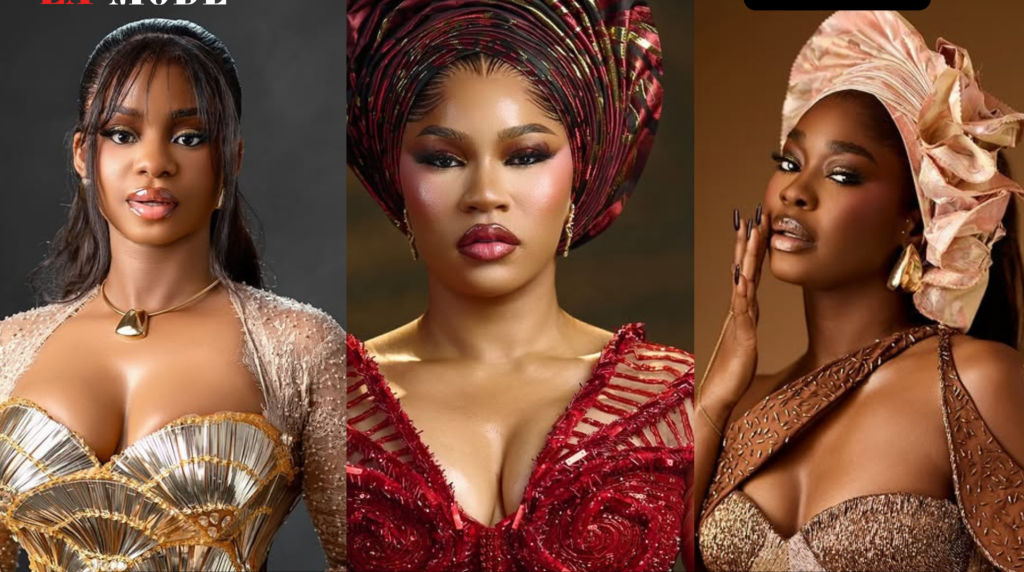
Nigerian stars and creatives interpret champagne lace and blush pink gele at Diiadem’s 35th birthday, showcasing bold gowns, beadwork, and sculptural silhouettes.